Can Angelfish Live In A 29 Gallon Tank? The Ultimate Guide
Yes, a single adult angelfish or a proven mated pair can live comfortably in a 29-gallon tank. Its 18-inch height provides the necessary vertical space for their long, majestic fins to develop properly without stress.
One of the most frequent questions I receive from new hobbyists is whether their favorite “king of the aquarium” can fit into a standard mid-sized setup. Can angelfish live in a 29 gallon tank safely while maintaining their long-term health and rich colors?
In my ten years of keeping Pterophyllum scalare, I have found that the 29-gallon aquarium is actually one of the most underrated sizes for these fish. While it lacks the horizontal length of a 40-gallon breeder, its height is a massive advantage for deep-bodied cichlids.
This guide will walk you through everything you need to know about setting up a successful 29-gallon environment. We will cover filtration, water chemistry, and the social dynamics that make or break an angelfish tank.
At a glance: Freshwater angelfish (Pterophyllum scalare)
- Temperature
- 76–84°F (24–29°C)
- Water pH
- 6.0–7.5
- Adult size
- 6 in long, 8 in tall (15 × 20 cm)
- Minimum tank
- 30 gal for a pair, 55 gal tall for a group
- Group size
- Pair or group of 5+
- Temperament
- Semi-aggressive, territorial when breeding
- Diet
- Omnivore: pellets, flakes, frozen bloodworm and brine shrimp
- Lifespan
- 10–12 years
Keeper’s tip: Choose a tall tank; height matters more than length for a fish that grows taller than it is long.
Understanding the Needs of Pterophyllum scalare
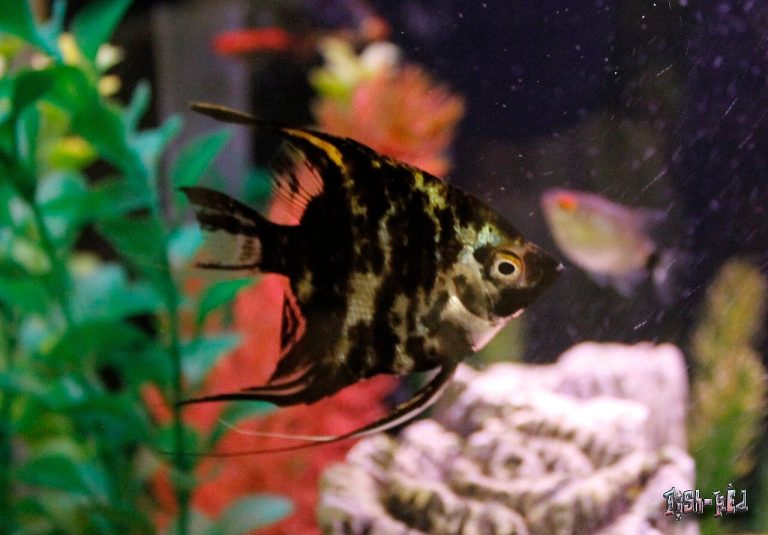
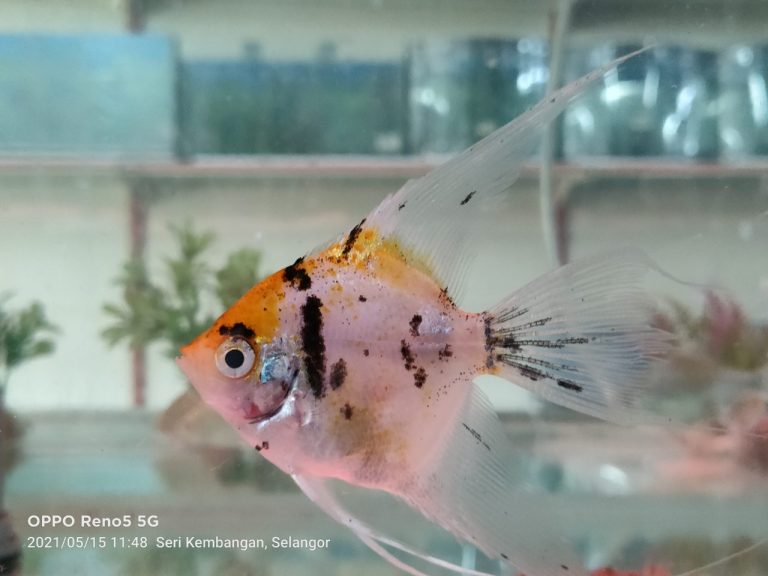
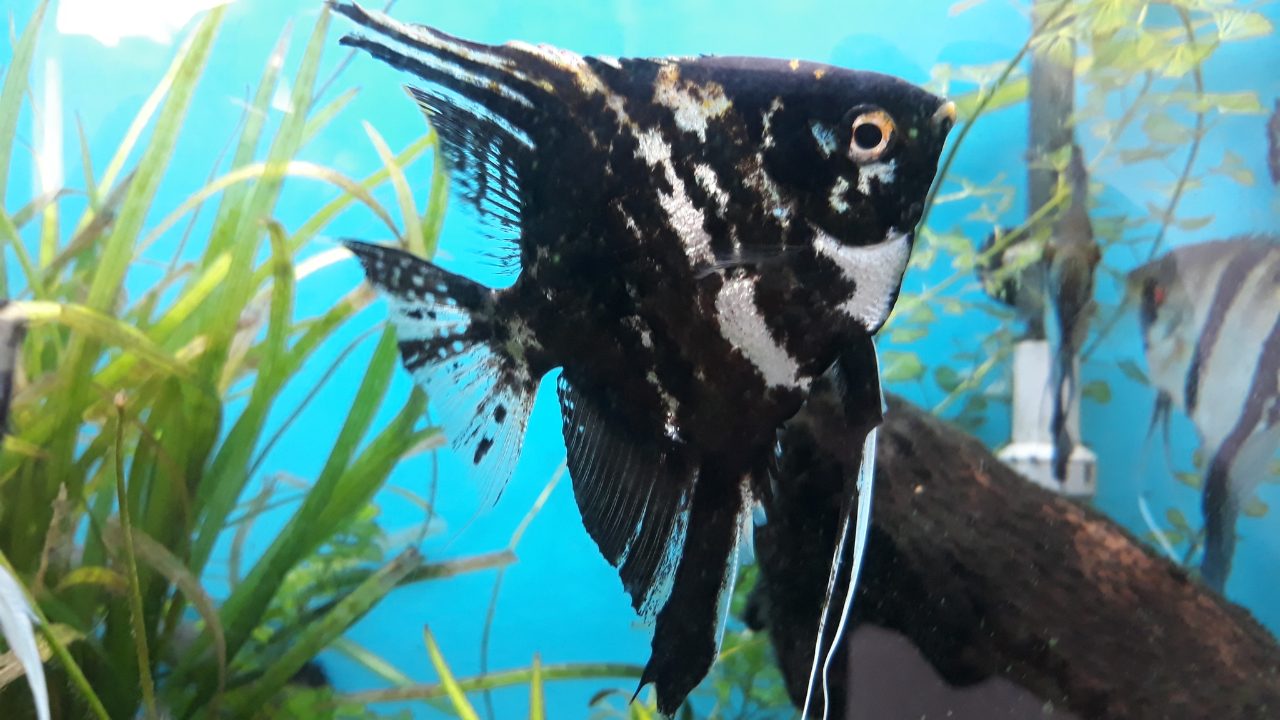
To answer if can angelfish live in a 29 gallon tank, we must first look at the biology of the fish itself. Unlike many tropical fish that are long and streamlined, angelfish are laterally compressed and very tall.
In the wild, they work through through submerged roots and tall grasses in the Amazon River basin. This evolution has made them dependent on a significant vertical water column to feel secure and swim naturally.
Expert Pro Tip: When measuring your tank, always measure from the top of the substrate to the water line. An angelfish needs at least 15 inches of actual swimming height to prevent fin curling or stunted growth as they mature.
The Importance of Tank Height
A standard 29-gallon tank typically measures 30 inches long by 12 inches wide and 18 inches high. That 18-inch height is the “magic number” for angelfish keepers.
In a shorter 20-gallon long tank, an adult angelfish might literally scrape the bottom or have its dorsal fin break the surface. The 29-gallon provides just enough clearance for them to display their full, majestic stature.
Can angelfish live in a 29 gallon tank? The Final Verdict
The short answer is yes, but with strict limitations on the number of fish. You cannot keep a “school” of angelfish in this volume of water.
In my experience, the best way to utilize this tank size is to keep either one solitary specimen or a confirmed mated pair. Keeping three or four individuals will almost certainly lead to conspecific aggression as they reach sexual maturity.
When angelfish fight in a smaller space, the “odd man out” has nowhere to hide. This leads to shredded fins, chronic stress, and eventually, a weakened immune system.
One Fish vs. Two Fish
A single angelfish is often very happy as the centerpiece of a community tank. They do not get “lonely” in the human sense, provided they have interesting surroundings and compatible tank mates.
If you choose a pair, make sure they are already bonded. If you put a random male and female together in a 29-gallon, the male may harass the female excessively if she is not ready to spawn.
| Stocking Scenario | Suitability | Expert Recommendation |
|---|---|---|
| 1 Adult Angelfish | Excellent | Perfect for a centerpiece community setup. |
| 1 Mated Pair | Great | Ideal for breeding; monitor for aggression. |
| 3-5 Angelfish | Poor | Too small; will lead to territorial fighting. |
| Angelfish + Small Tetras | Moderate | Angels may eat very small fish like Neons. |
Water Parameters for a Healthy Angelfish Tank
Maintaining pristine water quality is non-negotiable when you are working with a 29-gallon volume. Smaller tanks have less room for error than 55-gallon or 75-gallon setups.
Angelfish are sensitive to fluctuations in the nitrogen cycle. High levels of ammonia or nitrite can cause permanent gill damage or death very quickly.
You should aim for an Amazonian biotope feel, which typically involves softer water and a slightly acidic to neutral pH. However, captive-bred varieties are generally hardy and adaptable to various conditions.
Essential Water Stats
I have found that stability is much more important than hitting a “perfect” number. If your tap water has a consistent pH of 7.5, it is better to leave it there than to use chemicals to lower it.
One metric you should watch is carbonate hardness (KH). This acts as a buffer for your pH, preventing dangerous “pH swings” that can shock your fish.
Additionally, making sure high dissolved oxygen saturation is vital. You can achieve this through surface agitation from your filter or by adding an air stone hidden behind some driftwood.
Choosing the Right Filtration and Equipment
Because a 29-gallon tank has a relatively small footprint, waste can build up fast. I always recommend over-filtering your tank to handle the biological load of a large cichlid.
While a high-quality hang-on-back (HOB) filter can work, canister filtration is the gold standard. Canisters provide more room for biological media, which houses the beneficial bacteria needed to process waste.
Heating and Lighting
Angelfish are tropical fish that require warm water. I personally keep my tanks between 78°F and 82°F (25.5°C to 28°C).
A reliable heater is essential. I suggest using a 100-watt or 150-watt heater for a 29-gallon tank to help it can maintain the temperature even during cold winter nights.
Lighting should be moderate. If you are growing live plants, which I highly recommend, you will need a full-spectrum LED light.
Expert Pro Tip: Angelfish can be easily startled by bright lights turning on suddenly. Use a timer with a “ramp up” feature to simulate sunrise and sunset to keep your fish calm.
Designing the Interior: Plants and Decor
When considering if can angelfish live in a 29 gallon tank, you must think about the “furniture.” You want to provide enough cover for the fish to feel safe without taking up all their swimming space.
Tall plants like Jungle Val or Amazon Swords are perfect. They mimic the natural environment and provide vertical “sight breaks” if you have a pair of fish that are having a minor spat.
Substrate and Spawning Sites
If you are hoping to breed your fish, keep in mind that they are substrate-spawning cichlids. This means they like to lay their eggs on a flat, vertical surface.
I’ve had great success placing a piece of slate or a broad-leafed Anubias plant in the tank. They will spend hours cleaning the surface before the female deposits her eggs.
For substrate, a fine sand or smooth gravel works best. Avoid sharp rocks that could tear their delicate fins as they glide past.
Selecting Compatible Tank Mates
Stocking a 29-gallon tank with an angelfish requires careful planning. You don’t want fish that are so small they become a snack, nor do you want “fin nippers” that will harass the angel.
Good choices include larger tetras or corydoras catfish. For example, planning a community around your angelfish often involves selecting species that occupy the bottom of the tank.
Potential Neighbors
Avoid species like Tiger Barbs or Serpae Tetras, as they are notorious for nipping at long fins. Instead, look for peaceful schooling fish.
I have found that Rummy Nose Tetras or Harlequin Rasboras make excellent companions. They are fast enough to avoid an inquisitive angel but peaceful enough to not cause trouble.
If you are looking for bottom dwellers, a group of six Corydoras will keep the substrate clean. They stay out of the angelfish’s “upper-level” territory, reducing the chance of conflict.
Common Challenges and Health Issues
Even in a well-maintained tank, problems can arise. One of the most common issues in smaller setups is the development of Hexamitiasis, also known as Hole-in-the-Head disease.
This is often linked to poor water quality, lack of vitamins, or stress. In a 29-gallon tank, the waste concentration rises faster, making consistent maintenance vital to preventing this.
Signs of Stress
Watch for “clamped fins,” where the fish keeps its fins tight against its body. This is a primary indicator that something is wrong with the water or the social environment.
If you notice your angelfish gasping at the surface, check your ammonia levels immediately. This usually indicates a failure in the nitrogen cycle or a lack of oxygen.
Common Mistake: Many beginners forget to vacuum the substrate. In a 29-gallon, debris trapped in the gravel can rot and cause nitrate spikes that weaken an angelfish’s immune system over time.
Maintenance Schedule for a 29-Gallon Angelfish Tank
To ensure your fish stays healthy, you must stick to a routine. Because the volume is limited, I recommend a 25-30% water change every single week.
This removes nitrates and replenishes essential minerals. It is also the best time to check your equipment and make sure your filter is running at maximum efficiency.
| Task | Frequency | Purpose |
|---|---|---|
| Water Change (25%) | Weekly | Lower nitrates and remove organics. |
| Water Parameter Test | Weekly | Monitor Ammonia, Nitrite, and Nitrate. |
| Filter Media Rinse | Monthly | Maintain flow (use tank water only!). |
| Glass Cleaning | As Needed | Remove algae for better visibility. |
| Substrate Vacuum | Weekly | Remove uneaten food and fish waste. |
Questions and answers
Can I keep two male angelfish in a 29 gallon tank?
I strongly advise against this. Two males will almost certainly fight for dominance, and in a 29-gallon tank, the subordinate male will likely be bullied to death.
How big do angelfish get in a 29 gallon?
They can still reach their full size of 6 inches in body length and up to 10-12 inches in height (including fins). The tank size won’t “stunt” them if the water is kept clean, but they will eventually feel cramped.
Is a 29 gallon big enough for breeding?
Yes, a 29-gallon high is actually a classic size for a breeding pair. It allows them to focus on their fry without the distractions of a large community tank.
What should I feed my angelfish in a 29 gallon?
A varied diet is key. I use high-quality flakes, slow-sinking pellets, and occasional treats of frozen bloodworms or brine shrimp to keep them in peak condition.
Do I need a lid for my angelfish tank?
Yes. While not as prone to jumping as some species, angelfish can leap if startled or during a chase, and a lid also helps reduce evaporation.
Final Thoughts on Keeping Angelfish in a 29 Gallon
In conclusion, the answer to can angelfish live in a 29 gallon tank is a resounding yes, provided you respect their space. If you focus on a single fish or a mated pair, you create a peaceful environment where they can shine.
The 18-inch height of the 29-gallon is your greatest asset. Combine that with strong filtration, a steady maintenance routine, and appropriate tank mates, and you will have a stable Amazonian display in your home.
Successful fish keeping is about balance. If you provide the right conditions, your angelfish will reward you with years of graceful movement and remarkable personality.

- 2003First tank
- 20+Years keeping
- 40+Tanks kept
- 0Sponsored picks
Howard set up his first 10-gallon planted tank in 2003 and lost half of it within six weeks. Two decades and more than forty aquariums later, he writes the guides he wished he had then: clear numbers, the reasons behind them, and what actually goes wrong in home tanks.