Can Angelfish Live In A 20 Gallon Tank – Minimum Tank Size Explained
No, angelfish cannot live in a 20-gallon tank long-term. While a juvenile may fit temporarily, their adult size and vertical height require at least 30 gallons to prevent stunting and stress.
When you first see a juvenile Pterophyllum scalare in a pet store, it is easy to assume they will fit perfectly in a smaller setup. Their graceful movements and shimmering scales make them the “kings” of the freshwater world.
In my experience, many beginners make the mistake of choosing a tank based on the fish’s current size rather than its potential. I have spent over a decade maintaining various cichlid setups, and I have seen firsthand how restrictive environments impact their health.
If you are wondering can angelfish live in a 20 gallon tank, the short answer is that it is simply not sustainable. To help you succeed, this guide will break down the biological and environmental reasons why a larger home is necessary for these majestic creatures.
At a glance: Freshwater angelfish (Pterophyllum scalare)
- Temperature
- 76–84°F (24–29°C)
- Water pH
- 6.0–7.5
- Adult size
- 6 in long, 8 in tall (15 × 20 cm)
- Minimum tank
- 30 gal for a pair, 55 gal tall for a group
- Group size
- Pair or group of 5+
- Temperament
- Semi-aggressive, territorial when breeding
- Diet
- Omnivore: pellets, flakes, frozen bloodworm and brine shrimp
- Lifespan
- 10–12 years
Keeper’s tip: Choose a tall tank; height matters more than length for a fish that grows taller than it is long.
Can Angelfish Live in a 20 Gallon Tank? The Honest Truth
The primary reason why can angelfish live in a 20 gallon tank is a common question is due to the deceptive size of juveniles. Most shops sell them when they are only the size of a quarter.
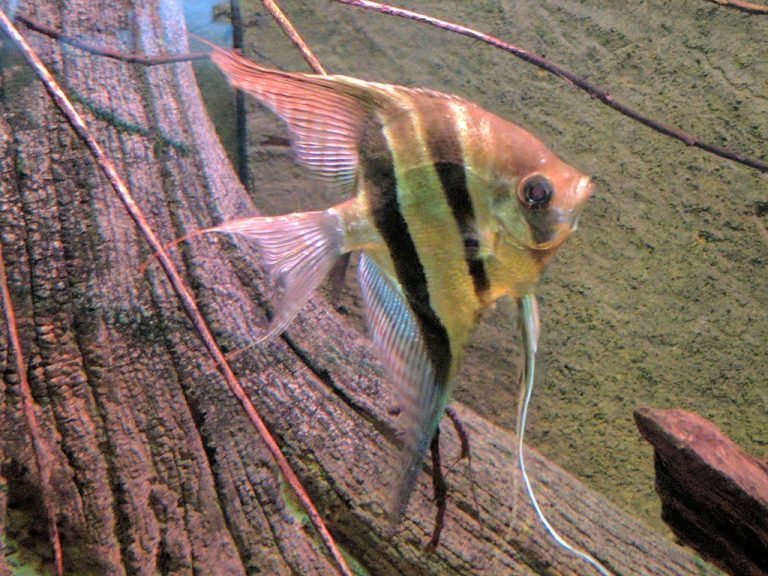
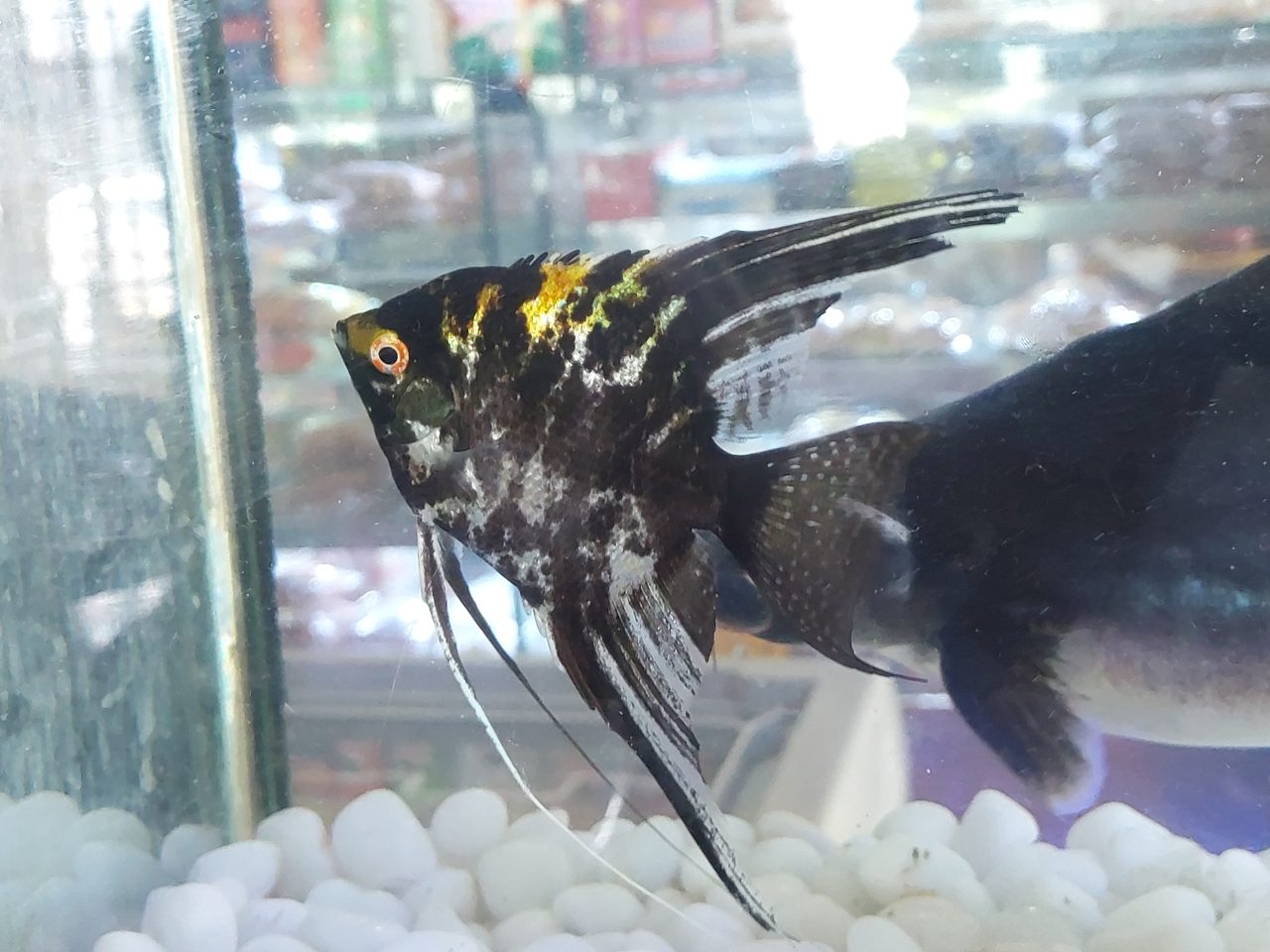
However, these fish grow rapidly and can reach a length of six inches and a height of nearly ten inches. A standard 20-gallon aquarium does not provide the vertical swimming height required for their trailing fins.
When kept in cramped quarters, these fish often suffer from a lack of exercise and mental stimulation. This physical restriction leads to a host of developmental issues that can shorten their lifespan significantly.
Expert Pro-Tip: If you already own a 20-gallon tank, consider a “20-gallon High” instead of a “Long” for very young juveniles. The extra height provides a temporary buffer, but you must plan for an upgrade within four to six months.
The Importance of Vertical Swimming Height
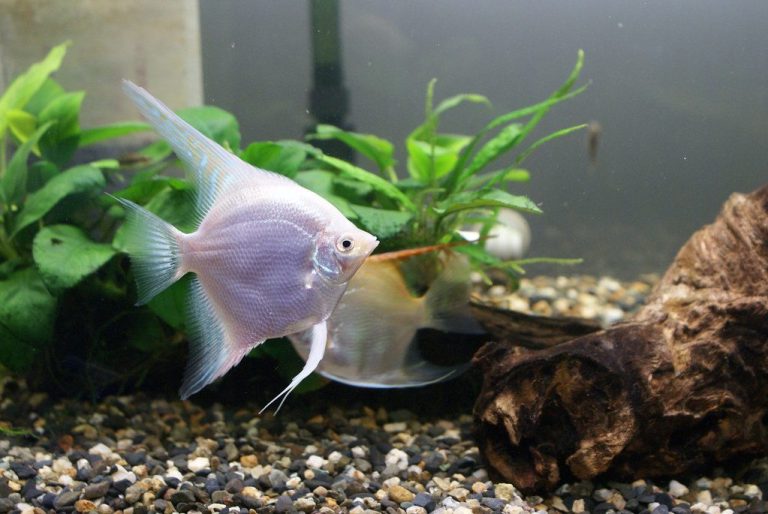
Angelfish are unique among common aquarium fish because of their tall, diamond-shaped bodies. Unlike sleek tetras that need horizontal space, angelfish require depth to handle comfortably.
In a shallow 20-gallon tank, an adult angelfish may find its dorsal and anal fins brushing against the substrate and the surface simultaneously. This constant contact can lead to fin rot and physical deformities.
Furthermore, restricted space prevents them from displaying their natural hovering behaviors. If they cannot move vertically, they become lethargic, which weakens their immune systems over time.
Bio-load Capacity and Nitrogenous Waste Accumulation
One of the most overlooked aspects of keeping large fish in small tanks is the bio-load capacity. Angelfish are messy eaters and produce a significant amount of waste.
In a 20-gallon system, nitrogenous waste accumulation happens much faster than in larger volumes. Ammonia and nitrite levels can spike within hours if a filter maintenance session is missed.
High nitrate levels are particularly dangerous for Pterophyllum scalare. Sustained exposure to poor water quality often leads to a weakened slime coat and increased susceptibility to parasites.
Common Mistake: Many keepers try to compensate for a small tank by over-filtering. While a strong filter helps, it creates high flow rates that stress angelfish, who prefer calmer, slow-moving waters.
The Dangers of Stunted Skeletal Development
A common myth in the hobby is that “fish grow to the size of their tank.” While it is true that a fish’s external growth may slow down in a small environment, their internal organs continue to grow.
This phenomenon leads to stunted skeletal development, a painful condition where the fish’s frame becomes warped. This often results in a curved spine and a compressed abdominal cavity.
Stunting is not just a cosmetic issue; it leads to premature organ failure. If you want your fish to live for 10 to 12 years, providing adequate space from day one is non-negotiable.
Managing Territorial Aggression in Tight Spaces
Angelfish are members of the cichlid family, which means they possess a natural streak of territorial aggression. This behavior becomes much more pronounced as they reach sexual maturity.
In a 20-gallon tank, there is simply no room for a subordinate fish to escape a dominant one. If you attempt to keep a pair in such a small space, the aggression can quickly become fatal.
Even when kept alone, an angelfish may become aggressive toward other tank mates. If you are researching a 20-gallon aquarium setup, it is better to choose smaller, peaceful species.
Essential Water Parameters for Angelfish
To keep your fish healthy, you must maintain stable water conditions. Angelfish are sensitive to fluctuations in temperature and chemistry.
They settle in in slightly acidic to neutral water with a moderate carbonate hardness. Keeping dissolved oxygen saturation is also critical, especially if the tank is heavily planted.
Below is a table outlining the ideal parameters for Pterophyllum scalare to make sure they flourish rather than just survive.
| Parameter | Ideal Range | Notes |
|---|---|---|
| Temperature | 75°F – 84°F (24°C – 29°C) | Warmer water aids digestion and immunity. |
| pH Level | 6.0 – 7.5 | Stability is more important than a specific number. |
| Carbonate Hardness (KH) | 3 – 8 dKH | Prevents dangerous pH swings. |
| Ammonia / Nitrite | 0 ppm | Essential for long-term health. |
| Nitrate | < 20 ppm | Keep low through regular water changes. |
Common Diseases Linked to Overcrowding
When a fish is stressed by its environment, its immune system is the first thing to fail. In a 20-gallon tank, the lack of space acts as a chronic stressor.
One common issue is Hexamita, also known as Hole-in-the-Head disease. This parasitic infection is often triggered by poor water quality and mineral deficiencies in small tanks.
Another frequent visitor in cramped setups is Ichthyophthirius multifiliis, or white spot disease. Because the water volume is low, the parasite can find a host much more easily, leading to rapid outbreaks.
Following proper angelfish care involves providing enough water to dilute pathogens and reduce the stress that allows these diseases to take hold.
Practical Decision Table: Choosing the Right Tank
If you are still undecided, use this comparison table to see how different tank sizes impact the life of an angelfish. This will help you visualize why the 20-gallon option falls short.
| Tank Size | Suitability | Pros/Cons |
|---|---|---|
| 20 Gallon Long | Poor | Too shallow; fish will feel cramped and stressed. |
| 20 Gallon High | Temporary Only | Good for juveniles, but fails as they grow. |
| 29/30 Gallon | Minimum for One | Provides necessary height for one adult. |
| 55 Gallon | Ideal for a Pair | Allows for natural behavior and community mates. |
Better Alternatives for a 20 Gallon Setup
If you already have a 20-gallon tank and realized an angelfish isn’t the best fit, don’t worry. There are many incredible community fish options that will do well in that space.
Dwarf cichlids, such as Apistogramma or Ram cichlids, offer similar personality and color without the massive size. They stay small and are much more comfortable in a 20-gallon environment.
You could also consider a colorful school of tetras or rasboras. These fish bring constant movement to the tank and are much easier to manage in terms of bio-load.
Still wondering?
Can I keep just one angelfish in a 20 gallon tank?
Even for a single fish, a 20-gallon tank is too small for an adult. The lack of vertical space prevents them from reaching their full potential and leads to poor health.
How fast do angelfish grow?
Angelfish grow surprisingly quickly. In the right conditions, a juvenile can reach its full body size within 12 to 18 months, making a small tank obsolete very fast.
What happens if I keep my angelfish in a small tank?
The fish will likely suffer from stunted growth, fin deformities, and chronic stress. This makes them much more likely to die young from preventable diseases or organ failure.
Are there “dwarf” angelfish for freshwater?
No, there are no true dwarf varieties of Pterophyllum scalare. Some may stay smaller due to genetics or poor care, but they all have the same biological requirement for space.
Wrapping up
While the question of can angelfish live in a 20 gallon tank often comes from a place of excitement, the welfare of the fish must come first. Providing a home that respects their biological needs is the hallmark of a successful aquarist.
In my years of keeping these “kings of the aquarium,” I have found that they are most rewarding when they have the room to display their natural grace. Seeing a full-grown angelfish glide through a tall, planted 55-gallon tank is an experience a 20-gallon setup simply cannot replicate.
Invest in a larger tank, or choose species better suited for the volume you have. Your fish will thank you with vivid colors, healthy growth, and many years of companionship.

- 2003First tank
- 20+Years keeping
- 40+Tanks kept
- 0Sponsored picks
Howard set up his first 10-gallon planted tank in 2003 and lost half of it within six weeks. Two decades and more than forty aquariums later, he writes the guides he wished he had then: clear numbers, the reasons behind them, and what actually goes wrong in home tanks.