What Is The Difference Between Freshwater And Saltwater Angelfish
The primary difference is their lineage; freshwater angelfish are South American Cichlids, while saltwater angelfish belong to the Pomacanthidae family. They require entirely different water chemistry, equipment, and biological care strategies to do well.
When you walk into a local fish store, you are often greeted by two very different animals sharing the same name. Understanding what is the difference between freshwater and saltwater angelfish is the first step toward deciding which of these majestic creatures belongs in your home.
In my experience of keeping both systems for over a decade, I have found that while they share a name, their care requirements are worlds apart. One is a staple of the Amazonian river basin, while the other represents the colorful complexity of coral reefs.
This guide will break down everything from their biological classifications to the specific equipment you will need.
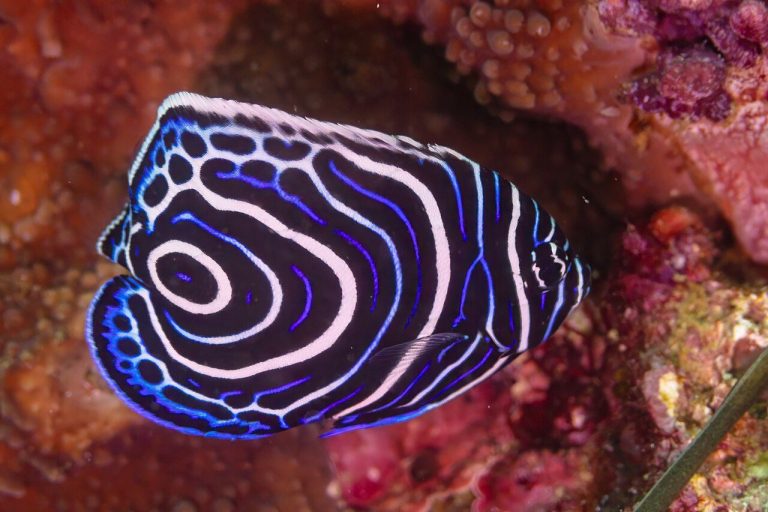
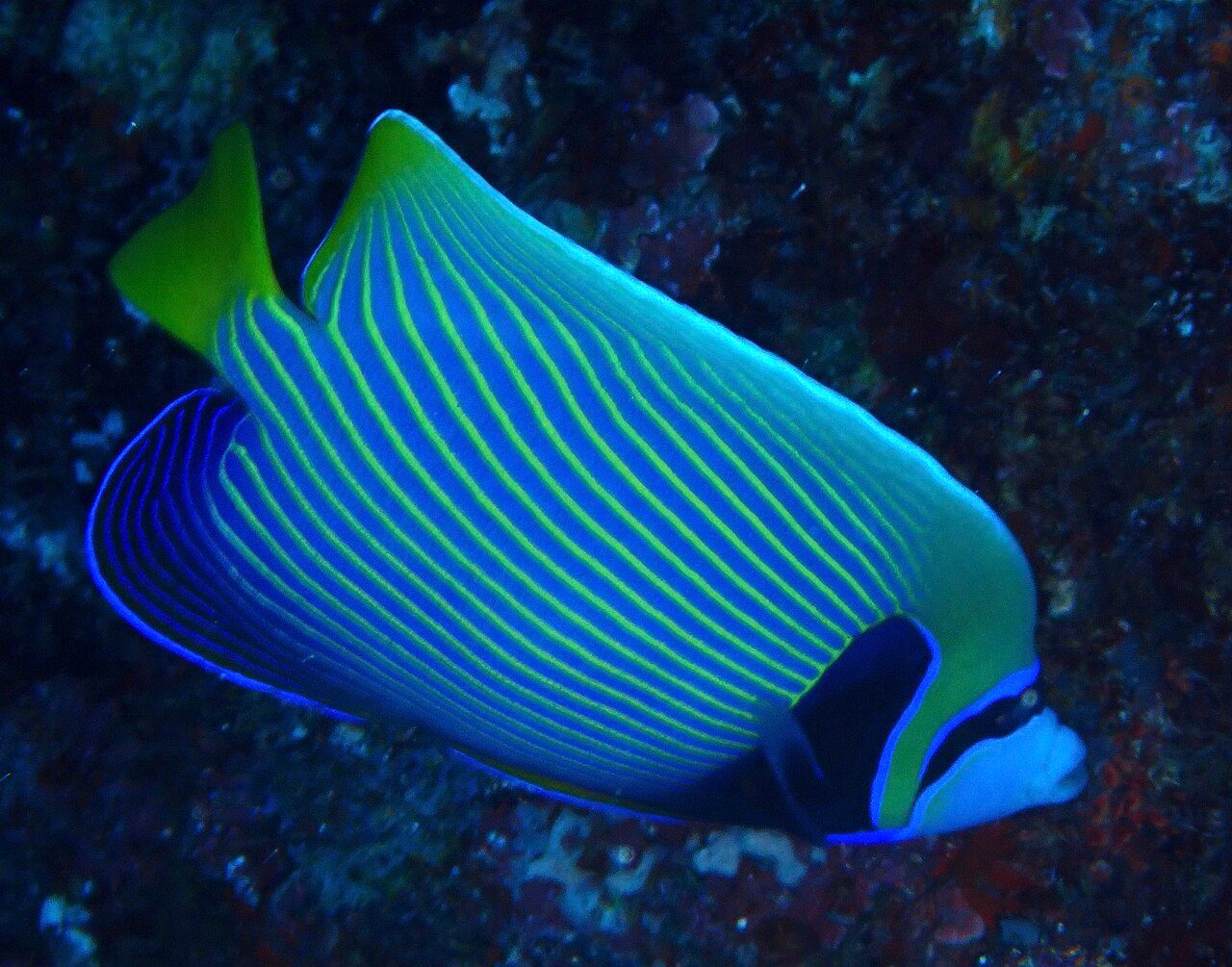
At a glance: Emperor angelfish (Pomacanthus imperator)
- Temperature
- 72–78°F (22–26°C)
- Water pH
- 8.1–8.4
- Adult size
- 15 in (38 cm)
- Minimum tank
- 220 gal
- Group size
- One per tank
- Temperament
- Semi-aggressive
- Diet
- Omnivore: sponge-based angel foods, mysis, spirulina
- Lifespan
- 20+ years
Keeper’s tip: Juveniles look completely different from adults and change colour over two to three years.
Biological Foundations: Cichlids vs. Marine Angels
The most fundamental answer to what is the difference between freshwater and saltwater angelfish lies in their DNA. These fish are not even remotely related in the tree of life, despite their shared common name.
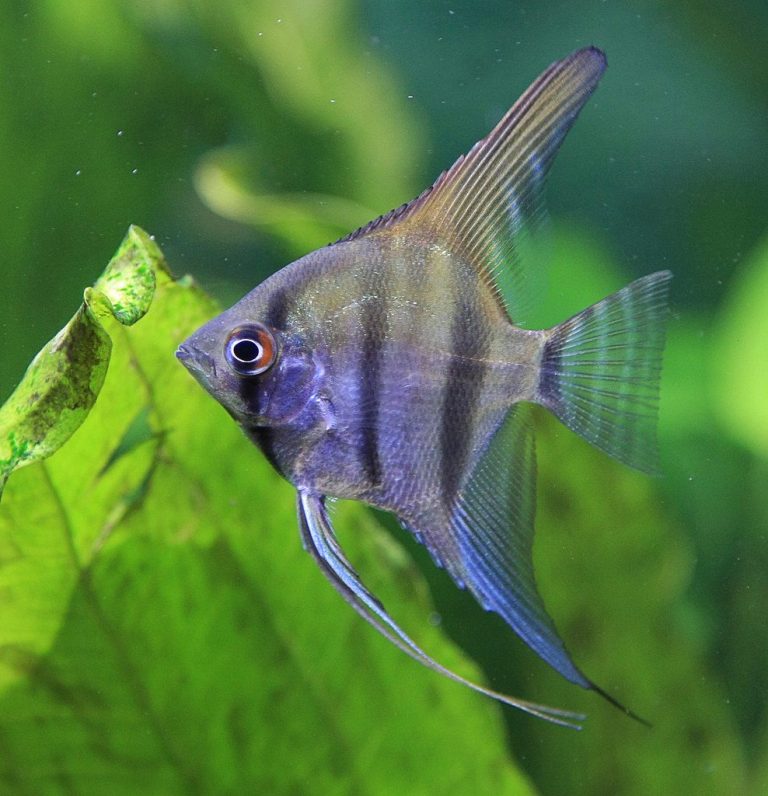
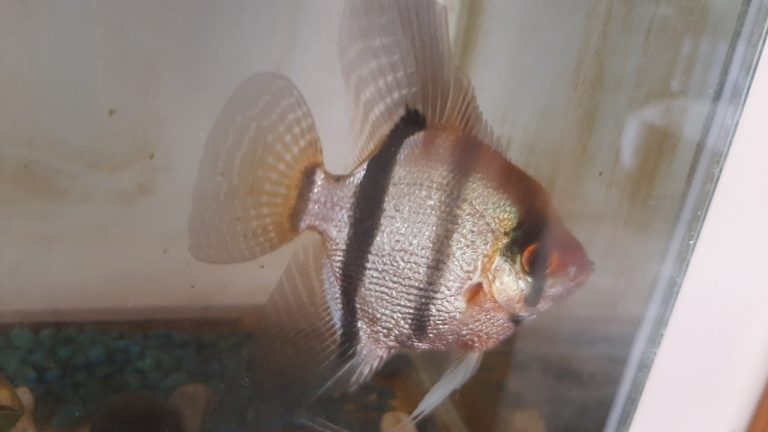
Freshwater angelfish belong to the family Cichlidae. Specifically, they fall under the genus Pterophyllum, with the most common hobby species being Pterophyllum scalare.
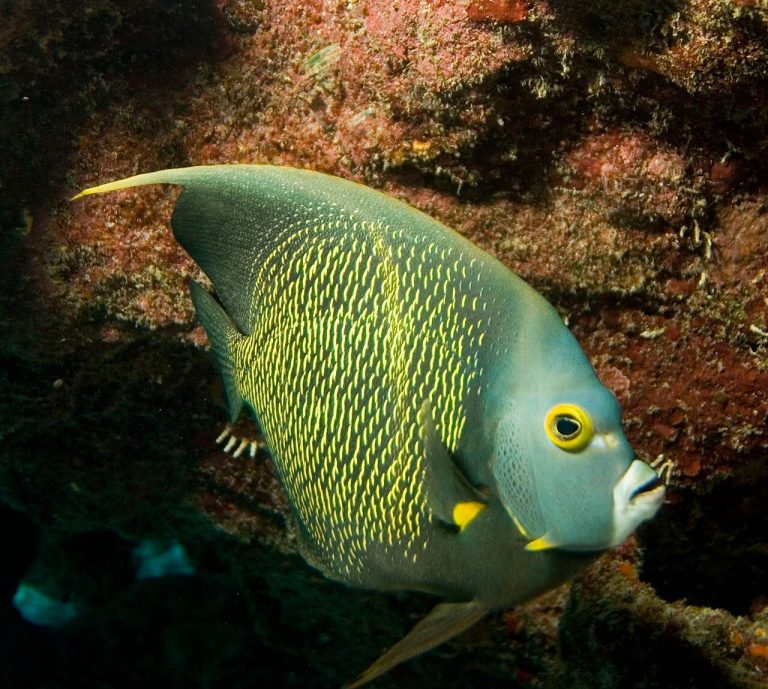
On the other hand, saltwater angelfish belong to the family Pomacanthidae. This family includes everything from the tiny Pygmy angels to the massive, glowing Emperor angelfish seen on nature documentaries.
Evolutionary Adaptations and Osmoregulation
Because they live in vastly different environments, their bodies handle water in opposite ways. This process is known as osmoregulation.
Freshwater angels live in water with very low mineral content. Their bodies are constantly taking in water, so they must excrete large amounts of diluted urine to stay balanced.
Marine angels live in a high-salt environment. Their bodies constantly lose water to the surrounding sea, so they must drink seawater and use specialized cells in their gills to pump out excess salt.
Physical Characteristics and Body Shapes
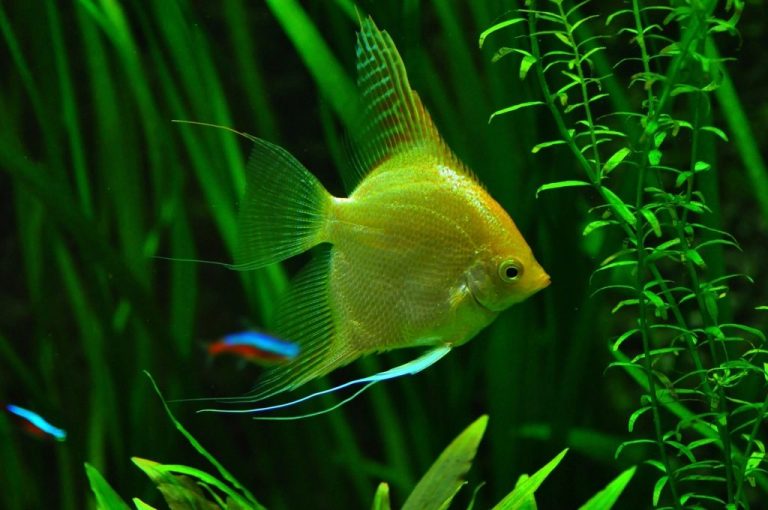
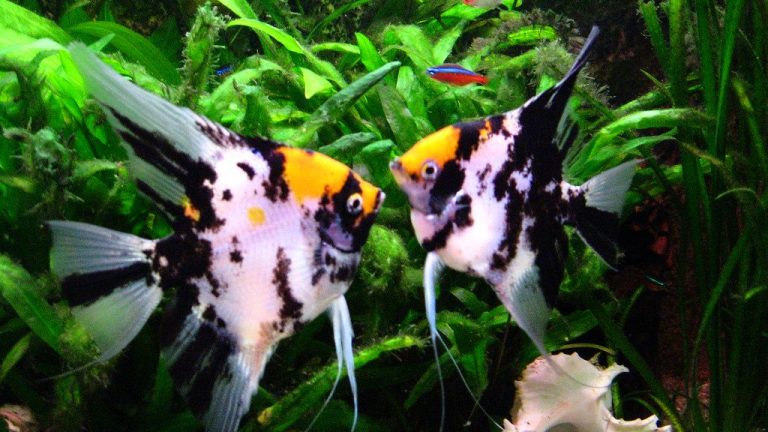
Freshwater angelfish are famous for their unique, arrow-like shape. They are laterally compressed (very thin) with long, flowing dorsal and anal fins that create a triangular silhouette.
Marine angelfish are generally more sturdy and oval-shaped. They possess a distinctive “preopercular spine” on the lower part of their gill covers, which is a hallmark of the Pomacanthidae family.
Pro Tip: When identifying marine angels, look for that sharp spine near the gills. It often gets caught in fine-mesh nets, so I always recommend using a plastic container or a very coarse net when moving them to prevent injury.
Water Chemistry and Environmental Needs
The most significant practical hurdle for any keeper is managing the water. The chemical makeup of a freshwater tank is much more forgiving than a marine setup.
For a freshwater setup, you are primarily managing pH and carbonate hardness. For a saltwater setup, you must also master specific gravity (salinity).
In my early days, I learned that stability is more important than “perfect” numbers. However, the range for these two groups is non-negotiable.
| Parameter | Freshwater Angelfish | Saltwater Angelfish |
|---|---|---|
| Water Type | Soft, acidic to neutral | High salinity (Marine) |
| Salinity (SG) | 1.000 (0 ppt) | 1.020 – 1.025 (30-35 ppt) |
| pH Range | 6.0 – 7.4 | 8.1 – 8.4 |
| Temperature | 76°F – 84°F | 72°F – 78°F |
Filtration and Equipment Differences
Freshwater tanks usually rely on hang-on-back or canister filters. These systems focus on biological filtration to break down ammonia into nitrate.
Marine tanks require much more sophisticated equipment. To keep marine angels healthy, you often need a protein skimmer to remove organic waste before it even breaks down.
Furthermore, marine angels benefit from “live rock.” This rock acts as a massive biological filter and provides a natural grazing surface for the fish.
Dietary Requirements and Feeding Habits
Feeding is another area where the two species diverge significantly. While both are generally omnivorous, their specific nutritional “blueprints” are different.
Freshwater angelfish are opportunistic feeders. In the wild, they eat small insects, larvae, and some plant matter. In a home tank, they flourish on high-quality flakes and frozen bloodworms.
Marine angelfish have much more specialized diets. Many species are “spongivores,” meaning a large portion of their natural diet consists of sea sponges.
Specialized Marine Diets
If you keep saltwater angels, you cannot just use standard fish flakes. You must provide frozen preparations that contain sponge matter and marine algae.
Without these specific nutrients, marine angels often lose their bright colors. I have noticed that a lack of vitamin A and C in marine angels can even lead to Head and Lateral Line Erosion (HLLE).
Feeding Freshwater Varieties
Freshwater angels are much less picky. They are aggressive eaters and will often recognize their owners, swimming to the glass in anticipation of a meal.
You can learn more about raising healthy angels by focusing on a high-protein diet during their juvenile growth spurts. This ensures they develop those long, majestic fins.
Breeding and Life Cycles
When discussing what is the difference between freshwater and saltwater angelfish, breeding is perhaps the most interesting contrast. One is relatively easy for hobbyists, while the other is a massive challenge.
Freshwater angelfish are substrate spawners. They pick a flat surface, like a broad leaf or a piece of slate, and lay hundreds of eggs.
The parents are remarkably protective. They will fan the eggs with their fins and chase away any intruders, showing the classic parental care of the Cichlidae family.
The Complexity of Marine Spawning
Marine angelfish are pelagic spawners. This means they release their eggs and sperm directly into the water column, where the eggs drift with the ocean currents.
Raising marine angel larvae is incredibly difficult in a home aquarium. The larvae are microscopic and require specific types of live plankton that are hard to culture.
Protogynous Hermaphroditism
An interesting biological fact about many marine angels is that they exhibit protogynous hermaphroditism. This means they are all born female.
In a social group, the largest and most dominant individual will transition into a male. If the male dies, the next largest female will change sex to take his place. This does not happen in freshwater species.
Health, Diseases, and Longevity
Every fish keeper eventually deals with illness. However, the pathogens that affect these two groups are distinct to their environments.
In freshwater tanks, the most common parasite is Ichthyophthirius multifiliis, commonly known as “Ich.” It appears as small white salt-like spots on the skin.
In saltwater tanks, keepers face Cryptocaryon irritans, or “Marine Ich.” While it looks similar, it is much more aggressive and harder to treat due to the sensitivity of reef environments.
Pro Tip: Never treat a marine tank with copper if you have corals or invertebrates. Always use a separate quarantine tank for sick marine angels to protect your entire ecosystem.
Lifespan Expectations
Looked after properly, both types of fish can live for a long time. However, marine angels generally have the edge in longevity.
Freshwater angels typically live between 8 and 12 years. Some large marine angelfish species have been known to live over 20 years in well-maintained public and private aquariums.
Understanding their natural environments helps in mimicking the conditions needed to reach these maximum lifespans.
Compatibility and Tank Mates
Choosing tank mates is a delicate balancing act for both species. Freshwater angels are “semi-aggressive,” especially when they form a breeding pair.
They do well with larger tetras, corydoras, and some dwarf cichlids. However, they will eat anything small enough to fit in their mouths, like neon tetras.
Marine Community Dynamics
Marine angelfish are notoriously territorial. Because they rely on grazing surfaces, they view other fish with similar shapes or diets as direct competition.
Large marine angels are often not “reef safe.” They may nip at expensive corals or clam mantles, which can be a heart-breaking experience for a reef keeper.
If you are looking for marine species that are easier to house, the “Dwarf” or Centropyge angels are a better bet for smaller tanks.
Cost and Barrier to Entry
If you are deciding which one to buy, the budget is a major factor. Freshwater angelfish are significantly more affordable.
A standard Marble or Silver angelfish might cost $5 to $15 at a local shop. A high-end marine angel, like a Regal or Clarion angel, can cost anywhere from $150 to over $2,000.
Setup Costs
A freshwater setup requires a tank, a heater, a basic filter, and some dechlorinated tap water. You can be up and running for a few hundred dollars.
A saltwater setup requires a hydrometer or refractometer, high-quality sea salt, live rock, and often a protein skimmer. The initial investment is usually three to four times higher than a freshwater tank.
A few common questions
Can freshwater angelfish live in saltwater?
No. Their bodies are biologically designed for low-salinity environments. Placing them in saltwater would cause immediate, fatal dehydration due to osmotic shock.
Which angelfish is better for beginners?
The freshwater angelfish is much better for beginners. They are hardier, cheaper, and do not require the complex water testing that marine species demand.
Do marine angelfish change color as they grow?
Yes, many species undergo a dramatic transformation. For example, the Juvenile Emperor Angelfish has a blue and white circular pattern, while the adult has horizontal yellow and blue stripes.
Are all saltwater angelfish aggressive?
Most are territorial, but the level of aggression varies. Dwarf angels are generally more peaceful, while large “large-body” angels like the Queen or French Angel can be quite dominant.
Can I keep freshwater and saltwater angelfish in the same tank?
Absolutely not. They require entirely different water chemistry (salinity, pH, and mineral content) and would die if kept in the wrong environment.
In short
Determining what is the difference between freshwater and saltwater angelfish reveals that these fish are as different as a wolf and a sea lion. While they share a name and a general sense of elegance, their biological needs and care levels are distinct.
Freshwater angelfish offer a graceful, accessible entry point into the hobby. They are perfect for those who love planted tanks and the remarkable behavior of cichlid parenting.
Marine angelfish are the “crown jewels” of the ocean. They provide unparalleled color and complexity but require a dedicated keeper willing to master the art of saltwater chemistry.
Whichever path you choose, keep in mind that success comes from patience and research. If you respect the unique evolutionary history of these fish, you can ensure they live a long, healthy life in your home aquarium.

- 2003First tank
- 20+Years keeping
- 40+Tanks kept
- 0Sponsored picks
Howard set up his first 10-gallon planted tank in 2003 and lost half of it within six weeks. Two decades and more than forty aquariums later, he writes the guides he wished he had then: clear numbers, the reasons behind them, and what actually goes wrong in home tanks.