What Size Tank Does An Angelfish Need – Size and Growth Facts
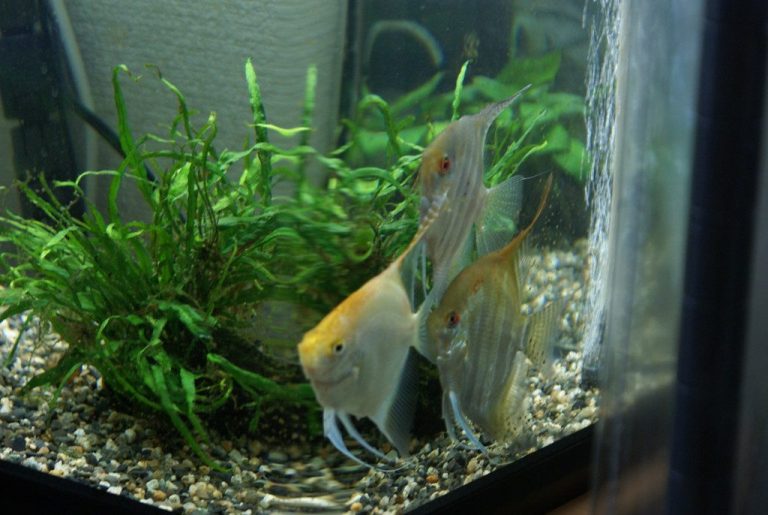
An adult angelfish requires a minimum of 30 gallons for a single fish, while a pair needs at least 55 gallons. Because of their tall fins, the tank must be at least 18 to 24 inches high.
Choosing the right home for your fish is the most critical decision you will make as an aquarist. After spending over a decade maintaining various South American biotopes, I have learned that angelfish are often the victims of “small tank syndrome.”
These majestic creatures, scientifically known as Pterophyllum scalare, are not your average community fish. They possess a unique vertical profile that demands specific spatial considerations that many beginners overlook.
In this guide, we will look closely at the specific dimensions and volumes required to keep these “Kings of the Aquarium” healthy. We will also explore how to manage their environment to help they reach their full majestic potential.
At a glance: Freshwater angelfish (Pterophyllum scalare)
- Temperature
- 76–84°F (24–29°C)
- Water pH
- 6.0–7.5
- Adult size
- 6 in long, 8 in tall (15 × 20 cm)
- Minimum tank
- 30 gal for a pair, 55 gal tall for a group
- Group size
- Pair or group of 5+
- Temperament
- Semi-aggressive, territorial when breeding
- Diet
- Omnivore: pellets, flakes, frozen bloodworm and brine shrimp
- Lifespan
- 10–12 years
Keeper’s tip: Choose a tall tank; height matters more than length for a fish that grows taller than it is long.
what size tank does an angelfish need for long-term health?
The short answer is that bigger is always better when it comes to these cichlids. While a juvenile might look comfortable in a small setup, they grow remarkably fast.
In my experience, a single adult angelfish should never be kept in anything smaller than a 29-gallon or 30-gallon tank. However, if you plan to keep a mated pair or a small group, you must scale up significantly.
For a pair, a 55-gallon tank is the industry standard for success. This volume provides enough room for swimming while also diluting the nitrogenous waste that these large-bodied fish produce daily.
Pro Tip: If you are starting with a group of juveniles, do not be fooled by their small size. They will triple in height within the first year, so always buy the tank for their adult size rather than their current size.
If you intend to keep a community of fish, a 75-gallon tank is even better. This allows you to add peaceful community fish without overcrowding the angelfish’s territory.
Below is a quick reference table to help you decide on the appropriate volume based on the number of fish you intend to keep.
| Number of Angelfish | Minimum Tank Size | Recommended Tank Size |
|---|---|---|
| 1 Adult | 29 – 30 Gallons | 40 Gallons (Tall) |
| 1 Mated Pair | 40 Gallons (Tall) | 55 Gallons |
| Small Group (4-6) | 55 Gallons | 75 – 90 Gallons |
| Large Group (6+) | 75 Gallons | 125+ Gallons |
Why Vertical Height is Non-Negotiable
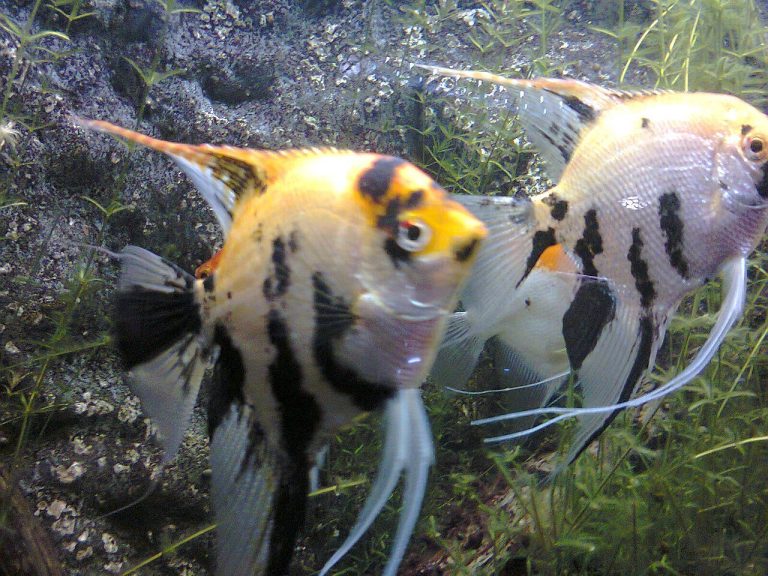
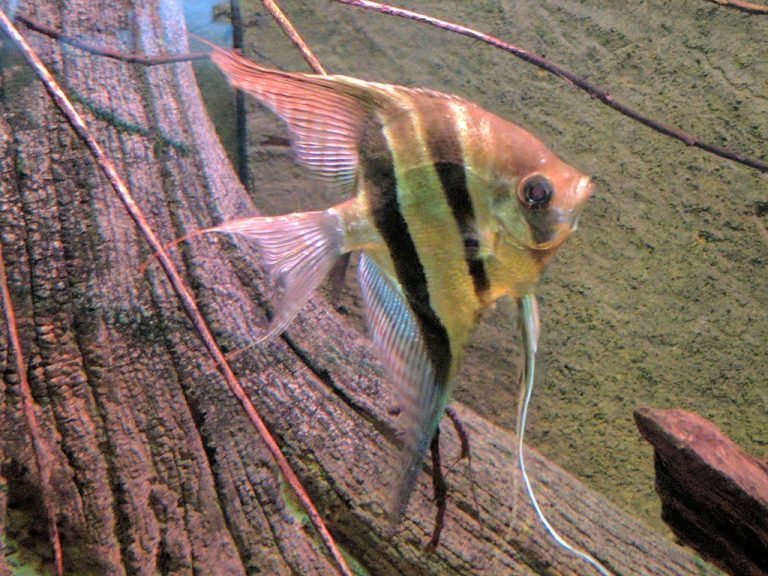
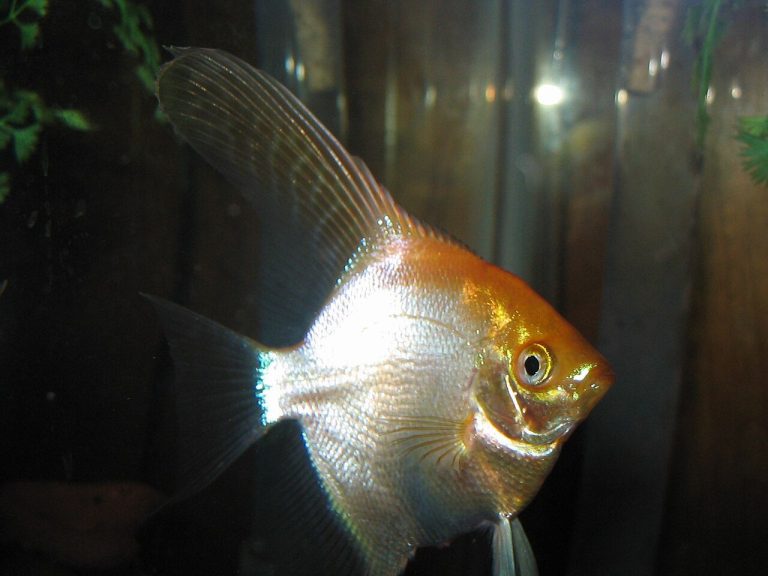
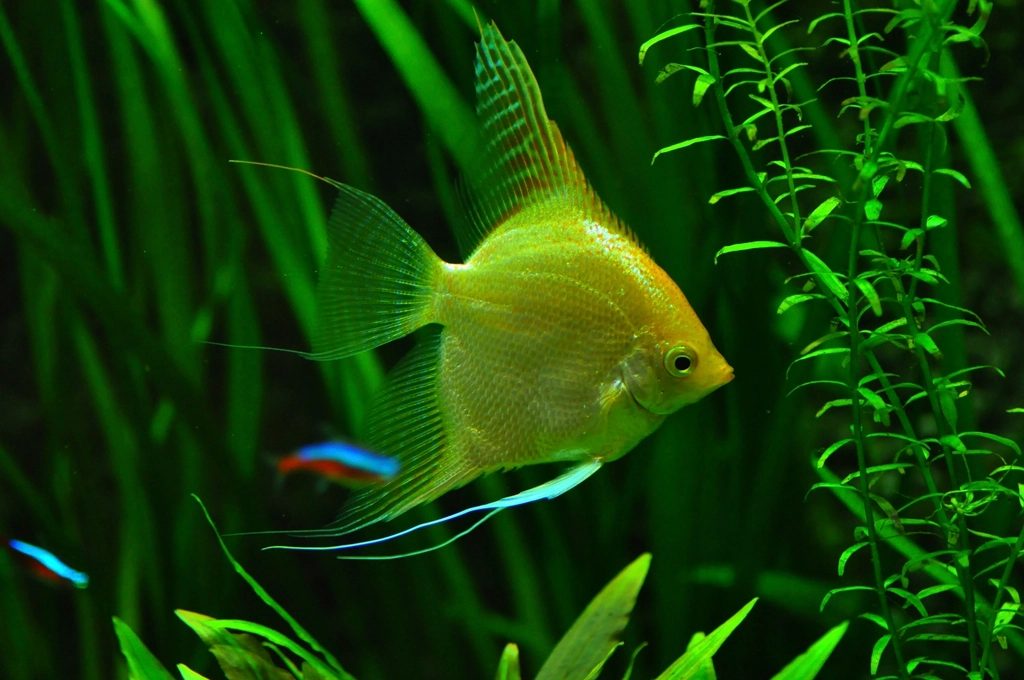
Most fish require horizontal swimming space, but angelfish are built differently. Their long, trailing dorsal and anal fins mean they occupy a significant vertical water column.
An adult Pterophyllum scalare can grow up to 6 inches in length, but they can reach 8 to 10 inches in height. If the tank is too shallow, their fins will drag on the substrate or be forced to fold, leading to permanent deformities.
I have seen many angelfish kept in “long” style tanks where they look cramped and stressed. A standard 20-gallon long tank is only 12 inches high, which is far too shallow for a mature specimen.
The Problem with Shallow Tanks
When an angelfish feels cramped vertically, its behavior changes. You might notice them swimming at an angle or hiding constantly because they do not feel secure in the open water.
Lack of height also restricts their natural movement. In the wild, they glide through tall grasses and roots, a behavior they cannot replicate in a low-profile tank.
Always prioritize a “Tall” or “High” variant of an aquarium. For example, a 20-gallon high is a better temporary grow-out tank than a 20-gallon long, though neither is suitable for an adult.
Comparing Pterophyllum scalare vs. Pterophyllum altum
It is also worth noting that species choice affects height requirements. While the common Pterophyllum scalare is tall, the Pterophyllum altum is even more extreme.
Altum angelfish can reach heights of over 12 inches. If you are adventurous enough to keep Altums, you should start with a tank that is at least 30 inches tall to accommodate their massive finnage.
Water Quality and Biological Filtration
Knowing what size tank does an angelfish need is only half the battle. You must also make sure the water within that volume is pristine and well-oxygenated.
Angelfish are sensitive to shifts in water chemistry. They require strong biological filtration to process ammonia and nitrites, which can quickly become toxic in smaller volumes.
I recommend using a canister filter for any tank 55 gallons or larger. Canisters provide a large surface area for beneficial bacteria to grow, helping maintain a stable nitrogen cycle.
Common Mistake: Many hobbyists rely on small hang-on-back filters that came with their “kit” tank. These often lack the capacity to handle the waste of a full-grown angelfish, leading to “cloudy water” and stressed fish.
In addition to filtration, you must monitor dissolved oxygen levels. Tall tanks have less surface area relative to their volume, which can lead to lower oxygen exchange at the top.
Adding an air stone or keeping the filter output creates surface agitation is a simple way to keep oxygen levels high. This is especially important during the warm summer months when water holds less oxygen.
Ideal Water Parameters for Angelfish
To do well, your angelfish need water that mimics their natural Amazonian blackwater habitats. This means soft, slightly acidic water with stable temperatures.
While domestic-bred angelfish are quite adaptable, they will show better colors and higher activity levels when kept in their preferred range. Maintaining a low carbonate hardness (KH) is often helpful for those looking to breed their fish.
Here is the “sweet spot” for angelfish water parameters that I have used for years with great success.
| Parameter | Ideal Range |
|---|---|
| Temperature | 76°F – 84°F (24°C – 29°C) |
| pH Level | 6.5 – 7.5 |
| Water Hardness (GH) | 3 – 8 dGH |
| Ammonia / Nitrite | 0 ppm |
| Nitrate | < 20 ppm |
Consistency is more important than hitting a “perfect” number. Rapid swings in pH or temperature are far more damaging than keeping them at a slightly higher pH than “ideal.”
Aquarium Layout: Decor and Plants
The size of the tank also determines how you can decorate it. Angelfish love a planted environment, particularly one that includes broad-leafed plants like Echinodorus grisebachii (Amazon Sword).
Amazon Swords are the perfect companion for angelfish because they provide a natural vertical structure. In my experience, angelfish will often use these large leaves as a site for laying their eggs.
When designing the layout, leave a clear swimming space in the middle of the tank. Use tall pieces of driftwood or rocks to create “sight breaks” if you have more than one angelfish.
The Importance of Sight Breaks
Even in a large tank, angelfish can be territorial. Sight breaks allow a bullied fish to hide from the view of a dominant tank mate, reducing stress and aggression.
Tall pieces of spider wood or manzanita branches work beautifully for this. They mimic the flooded forests of South America and provide a sense of security for the fish.
Avoid using sharp plastic plants or rough decor. The delicate fins of an angelfish can easily snag and tear, which may lead to secondary infections like fin rot.
Choosing Compatible Tank Mates
When asking what size tank does an angelfish need, you must also consider who else is living there. Adding tank mates effectively reduces the “available” space for your angelfish.
Angelfish are members of the cichlid family, which means they can be predatory. Any fish small enough to fit in their mouth—like neon tetras—might eventually become a snack.
Instead, look for medium-sized tetras. For instance, a 20-gallon aquarium setup might work for smaller species, but in a 55-gallon angelfish tank, you have more options.
Corydoras catfish are excellent bottom-dwellers that stay out of the angelfish’s way. Larger tetras, such as Rummy Nose or Bleeding Heart tetras, are also great choices as they are too large to be eaten.
Avoiding Aggressive Competition
Avoid keeping angelfish with notorious “fin nippers” like Tiger Barbs. These fish will be relentlessly attracted to the long, flowing fins of your angelfish, causing constant stress and injury.
If you notice your angelfish hiding in the corners or showing clamped fins, check for aggressive tank mates. Stress is the primary precursor to diseases like Hexamita, also known as Hole-in-the-Head disease.
Providing a large enough tank helps mitigate these social issues. In a cramped 20-gallon tank, there is nowhere for a submissive fish to run, but in a 75-gallon tank, they can find their own corner.
Maintenance Schedule for Large Tanks
A larger tank is actually easier to maintain than a small one because the water volume is more stable. However, you still need a dedicated routine to keep your angelfish in peak condition.
I perform a 25% to 30% water change every week. This removes accumulated nitrates and replenishes essential minerals that the fish and plants use up.
During water changes, use a gravel vacuum to remove waste from the substrate. Pay close attention to the areas around the base of your plants where debris tends to settle.
Common Mistake: Skipping water changes because the “water looks clear.” Clear water does not mean clean water; nitrates and other invisible toxins can still be at dangerous levels.
Clean your filter media once a month in a bucket of tank water—never tap water. Tap water contains chlorine that will kill the beneficial bacteria living in your filter, crashing your biological cycle.
Quick answers
Can I keep an angelfish in a 10-gallon tank?
No, a 10-gallon tank is far too small for an angelfish. Even a juvenile will quickly outgrow this space, and the lack of height will cause physical deformities and stunted growth.
Do angelfish prefer long or tall tanks?
Angelfish much prefer tall tanks. Their body shape is adapted for working through vertical spaces, and they need the depth to fully extend their fins without touching the bottom or the surface.
How many angelfish can I put in a 55-gallon tank?
A 55-gallon tank is ideal for a mated pair or a small group of 4 juveniles. If you keep a group, be prepared to rehome some as they mature and form pairs, as the pairs will become territorial.
What happens if the tank is too small?
In a small tank, angelfish experience high stress, which weakens their immune system. This makes them susceptible to parasites and bacterial infections, and it can also lead to permanent spinal curvature.
Can angelfish live alone?
Yes, angelfish can live perfectly happy lives as solitary residents. In fact, keeping a single angelfish is often easier for beginners as it eliminates the risk of territorial aggression.
A closing note
Understanding what size tank does an angelfish need is the foundation of becoming a successful aquarist. While these fish are hardy, they demand a specific environment to display their regal nature.
If you provide at least 30 gallons for a single fish and prioritizing a tank height of 18 inches or more, you set the stage for a healthy, long-lived pet. Remember that a larger volume provides a buffer against mistakes and allows for a more diverse community.
Invest in quality filtration, maintain your water parameters, and choose your tank mates wisely. If you follow these guidelines, your angelfish will reward you with years of graceful beauty and interesting behavior.
Whether you are starting with your first 29-gallon high or setting up a massive 125-gallon Amazonian display, the effort you put into the right tank size will pay off in the health and happiness of your fish.
- 2003First tank
- 20+Years keeping
- 40+Tanks kept
- 0Sponsored picks
Howard set up his first 10-gallon planted tank in 2003 and lost half of it within six weeks. Two decades and more than forty aquariums later, he writes the guides he wished he had then: clear numbers, the reasons behind them, and what actually goes wrong in home tanks.