How Fast Do Angelfish Grow – Size and Growth Facts
Angelfish grow rapidly, reaching 2 to 4 inches within the first six months. Most reach their full adult size of 6 inches long and 8 to 10 inches tall by 12 to 18 months, depending on diet and water quality.
Watching a tiny, dime-sized juvenile transform into a majestic centerpiece is one of the most satisfying experiences in the hobby. When I first started keeping Pterophyllum scalare over a decade ago, I was shocked by how quickly they outgrew their initial quarantine tank.
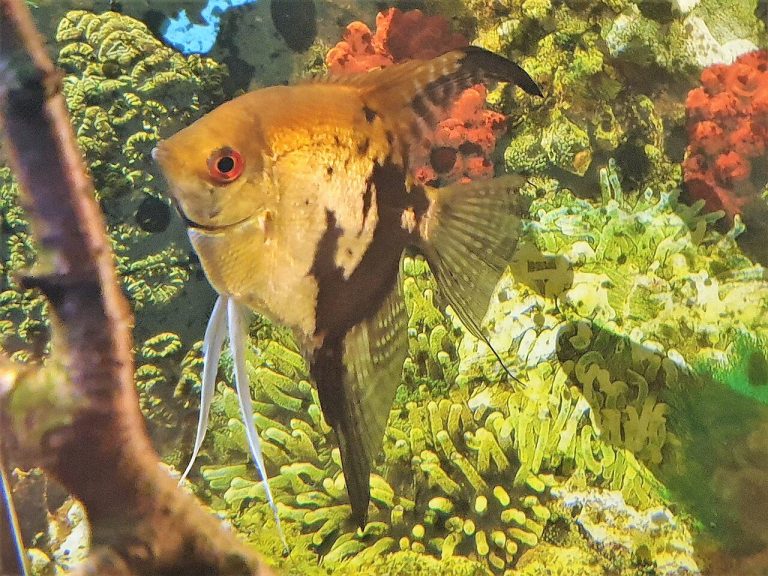
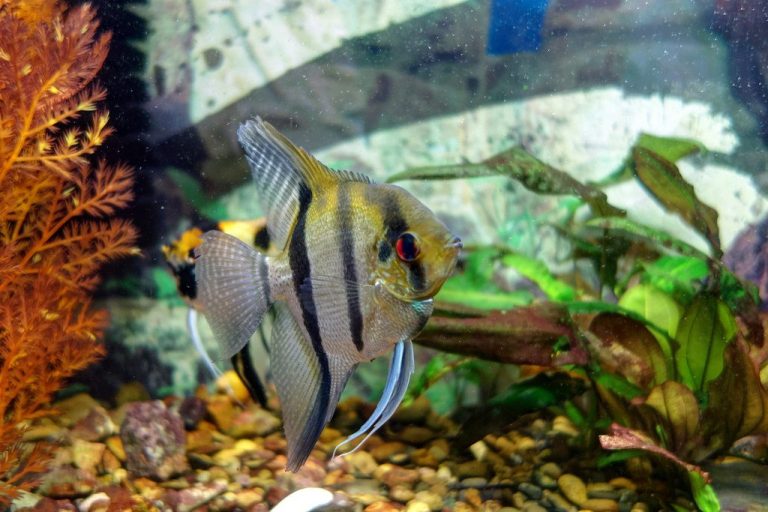
Understanding how fast do angelfish grow is vital for planning your aquarium layout and making sure you don’t end up with a “stunted” fish. These members of the Cichlidae family are vertical growers, meaning their height is often more impressive than their length.
In this guide, we will look closely at the biological and environmental factors that dictate their pace of development. We will also explore how you can optimize your care routine to make sure your fish reach their full genetic potential.
At a glance: Freshwater angelfish (Pterophyllum scalare)
- Temperature
- 76–84°F (24–29°C)
- Water pH
- 6.0–7.5
- Adult size
- 6 in long, 8 in tall (15 × 20 cm)
- Minimum tank
- 30 gal for a pair, 55 gal tall for a group
- Group size
- Pair or group of 5+
- Temperament
- Semi-aggressive, territorial when breeding
- Diet
- Omnivore: pellets, flakes, frozen bloodworm and brine shrimp
- Lifespan
- 10–12 years
Keeper’s tip: Choose a tall tank; height matters more than length for a fish that grows taller than it is long.
The Growth Timeline of Pterophyllum Scalare
The journey from a microscopic egg to a full-grown adult is a interesting process that happens in distinct stages. While genetics play a role, the environment you provide acts as the primary accelerator or brake for their development.
The Fry Stage (0 to 2 Months)
During the first few weeks, growth is measured in millimeters, but the metabolic rate is incredibly high. Once the fry absorb their yolk sacs, they require constant feeding to fuel their rapid cell division.
I have found that feeding newly hatched Artemia nauplii (baby brine shrimp) is the “secret sauce” during this phase. The high protein and lipid content provide the building blocks necessary for early bone and tissue formation.
By the end of the second month, your angelfish should be roughly the size of a fingernail. At this point, they begin to develop the iconic triangular body shape and the beginnings of their long, flowing fins.
The Juvenile Growth Spurt (2 to 6 Months)
This is the “teenage” phase where you will see the most dramatic changes in size. If you are wondering how fast do angelfish grow during their peak, the answer is often up to half an inch per month.
During these four months, a healthy angelfish will grow from the size of a penny to the size of a silver dollar. Their appetite will become voracious, and they will begin to establish a social hierarchy within the tank.
Pro Tip: During the 2 to 6-month window, I highly recommend performing two 25% water changes per week rather than one large 50% change. Frequent fresh water stimulates the Somatotropic axis, the hormonal system responsible for growth, by keeping stress levels at an absolute minimum.
Reaching Maturity (6 to 18 Months)
After the six-month mark, the vertical growth slows down, and the fish begins to “bulk up.” The body thickens, and the pectoral fin extension becomes more pronounced and elegant.
Most angelfish are considered sexually mature by 10 to 12 months of age. While they may continue to grow slightly until the 18-month mark, the changes after the first year are usually subtle refinements in fin length and forehead thickness.
Factors Influencing How Fast Do Angelfish Grow
Not every angelfish grows at the same speed, even if they come from the same spawn. Several environmental variables interact to determine the final size and the speed at which the fish reaches it.
Water Quality and Nitrate Concentration
High nitrate concentration is the single biggest growth inhibitor in home aquariums. In the wild, these fish live in massive bodies of water where waste is diluted instantly; in a glass box, waste accumulates rapidly.
Nitrates don’t just affect health; they physically signal the fish’s body to slow down development. To see the fastest growth, you must keep your nitrates below 20 ppm, and ideally below 10 ppm.
Thermal Metabolic Rate and Temperature
Angelfish are ectotherms, meaning their internal body temperature is regulated by the water around them. A higher temperature increases their thermal metabolic rate, causing them to process food faster and grow more quickly.
However, there is a “sweet spot.” Keeping the water too hot (above 84°F) can shorten their lifespan by overworking their organs, while water that is too cool (below 76°F) will lead to sluggish growth and a weakened immune system.
Osmoregulation and General Hardness
Osmoregulation is the process by which a fish maintains the balance of water and salt in its body. Angelfish are naturally soft-water fish originating from the Amazon basin.
If the General Hardness (GH) of your water is too high, the fish’s body has to work harder to pump out excess minerals. This “osmotic stress” uses up energy that would otherwise be directed toward growth and fin development.
Tank Size and Environmental Space
There is a common myth that fish only grow to the size of their tank. While they may stop growing externally due to stress, their internal organs often continue to develop, leading to a painful and premature death.
The Importance of Vertical Space
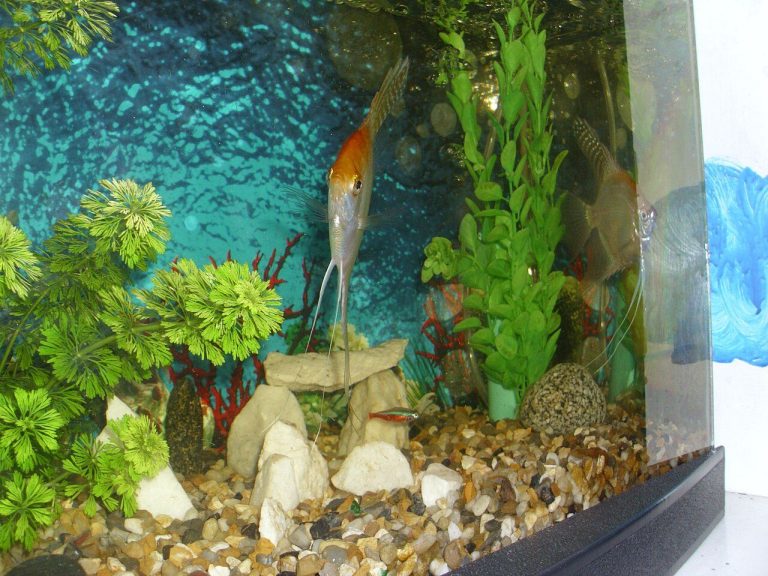
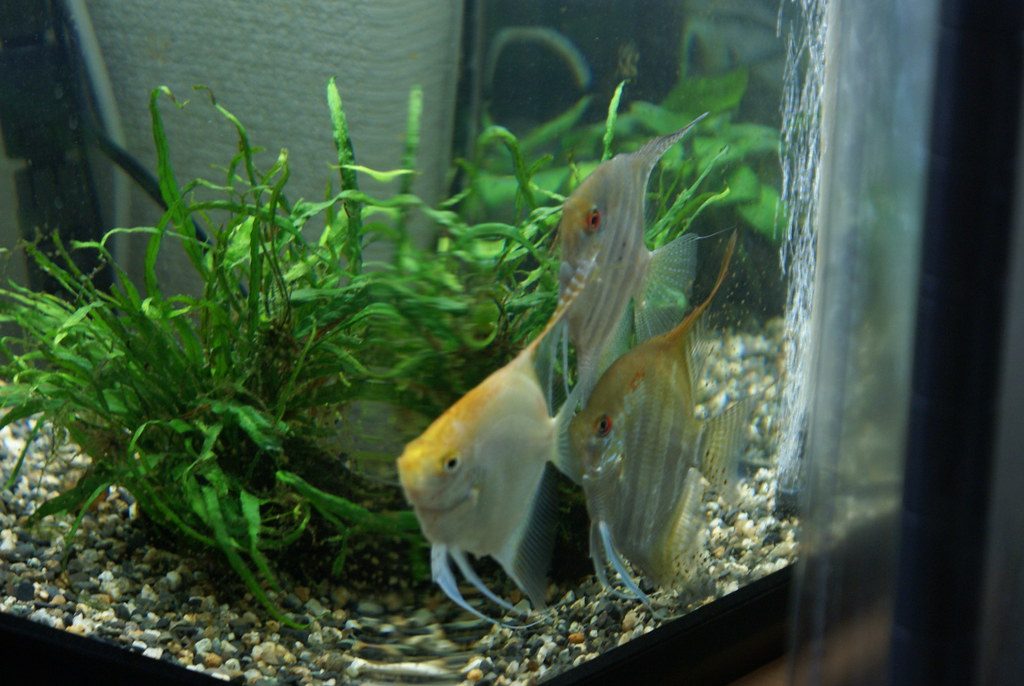
Because angelfish are taller than they are long, the height of the aquarium is more important than the length. A standard 20-gallon tank is often too shallow for a sub-adult angelfish to fully extend its fins.
When raising healthy kings, I always suggest a minimum tank height of 18 to 24 inches. This allows the dorsal and anal fins to reach their maximum span without touching the substrate or the surface.
Dissolved Organic Compounds (DOCs)
In smaller tanks, dissolved organic compounds accumulate much faster. Some experts believe that cichlids release growth-inhibiting hormones into the water to prevent competitors from outgrowing them in cramped spaces.
Regular water changes are the only way to remove these chemical signals. If you want to see how fast do angelfish grow when uninhibited, provide them with at least 10 to 15 gallons of water per individual fish.
Pro Tip: If you notice your angelfish has a “clamped” look or the fins seem stunted, check your tank height. I’ve seen angelfish “explode” in size within weeks of being moved from a 20-gallon long to a 55-gallon tall aquarium.
Optimizing Nutrition for Maximum Growth
You cannot have fast growth without high-quality fuel. A diet consisting solely of generic flakes will result in slow growth and dull coloration.
To maximize the somatotropic axis response, you should offer a variety of protein-rich foods. In my experience, a rotation of the following works best:
- Live or Frozen Bloodworms: Excellent for protein, though should be fed as a supplement.
- Beef Heart Paste: A classic “discus-style” growth food that works wonders for angelfish.
- High-Quality Pellets: Help the first ingredient is a whole fish meal or shrimp meal.
- Freeze-Dried Tubifex: Great for adding mass to the body.
When choosing the right variety of food, keep in mind that young juveniles should be fed 3 to 4 small meals a day. Adults can transition to 1 or 2 larger feedings.
Ideal Water Parameters for Growth
To provide a clear reference for your setup, I have compiled the ideal water parameters based on my years of maintaining breeding pairs and grow-out tanks.
| Parameter | Ideal Range for Growth | Impact on Growth |
|---|---|---|
| Temperature | 78°F – 82°F (25.5°C – 28°C) | Higher temps increase metabolism and growth speed. |
| pH Level | 6.5 – 7.2 | Stability is more important than the exact number. |
| Nitrate (NO3) | < 20 ppm | High levels significantly stunt development. |
| General Hardness (GH) | 3 – 8 dGH | Softer water reduces osmoregulation stress. |
| Water Change Frequency | 30% – 50% Weekly | Removes growth-inhibiting hormones and waste. |
Maintaining these parameters ensures that your angelfish stays in a freshwater environment that mimics their natural habitat as closely as possible.
Common Challenges: Why Is My Angelfish Not Growing?
If you feel like your fish has hit a plateau, it is time to troubleshoot. Stunting is often reversible if caught early, but prolonged exposure to poor conditions can cause permanent skeletal issues.
Genetic Factors and Inbreeding
Sometimes, no matter how much you feed or how clean the water is, a fish simply won’t grow. This is often due to “runt” genetics or poor breeding practices.
Mass-produced angelfish from large commercial farms sometimes suffer from genetic bottlenecks. If growth is your priority, I always suggest buying from a local breeder who can show you the size of the parent fish.
Internal Parasites
If your angelfish is eating voraciously but remains thin or small, it likely has internal parasites (like Hexamita or roundworms). These parasites steal the nutrients before the fish can absorb them.
Look for white, stringy feces or a “pinched” belly. Treating with a praziquantel-based medication can often jumpstart growth in a fish that has been struggling for months.
Angelfish are hierarchical. If one fish is being bullied, its cortisol levels will skyrocket. High cortisol levels actively suppress the immune system and the growth hormones.
If you have a group, make sure there are plenty of tall plants or driftwood to break the line of sight. This allows the smaller fish to eat and rest without constant harassment from the dominant “alpha” pair.
Frequently asked questions
How big do angelfish get in a 29-gallon tank?
In a 29-gallon tank, an angelfish can reach its full 6-inch body length, but the 18-inch height of the tank is the bare minimum for its fins. It is best to keep only a single pair in this size tank to avoid stunted growth from waste buildup.
Does tank size really affect how fast do angelfish grow?
Yes, but not because of the physical dimensions alone. Smaller tanks accumulate nitrates and growth-inhibiting hormones much faster. A larger volume of water provides a more stable environment that encourages faster development.
Can I speed up angelfish growth with feeder fish?
I do not recommend using feeder fish. They often carry diseases and parasites that can stunt your angelfish’s growth or kill them. Stick to high-quality frozen foods and specialized pellets for the safest and fastest results.
How can I tell if my angelfish is stunted?
A classic sign of a stunted angelfish is an eye that looks disproportionately large for its body. If the eye diameter is more than 1/4th the height of the body, the fish has likely experienced a growth delay in the past.
What age do angelfish stop growing?
Most angelfish reach their maximum skeletal size by 12 to 14 months. However, they may continue to gain “girth” and fin length until they are nearly two years old. After that, growth effectively stops, and the fish enters its prime adult years.
My final take
The question of how fast do angelfish grow is ultimately answered by your dedication as an aquarist. While they have the genetic potential to reach massive sizes in just over a year, they rely entirely on you to provide the clean water and high-quality nutrition they need.
If you keep low nitrate levels, keeping the temperature in the low 80s, and offering a diverse diet rich in protein, you can keep your angelfish becomes a striking centerpiece. Vertical space is just as important as water volume for these tall, elegant cichlids.
Whether you are starting with a group of dime-sized juveniles or a single sub-adult, enjoy the process. There is nothing quite like the pride of seeing a fish you raised reach its full, majestic potential. Keep your water clean, your fish fed, and your tank tall, and you will be rewarded with the true “Kings of the Aquarium.”

- 2003First tank
- 20+Years keeping
- 40+Tanks kept
- 0Sponsored picks
Howard set up his first 10-gallon planted tank in 2003 and lost half of it within six weeks. Two decades and more than forty aquariums later, he writes the guides he wished he had then: clear numbers, the reasons behind them, and what actually goes wrong in home tanks.