Buenos Aires Tetra Tank Size (Fast Swimmer) – The Ultimate Guide
The minimum Buenos Aires tetra tank size (fast swimmer) is 30 gallons, focusing on a long footprint. This provides the essential horizontal swimming space these active, 3-inch characins require for schooling and high-energy movement.
Choosing the right aquarium for your fish is the most fundamental step in making sure their long-term health and happiness. When it comes to the Buenos Aires tetra tank size (fast swimmer), many beginners underestimate just how much room these energetic fish actually need.
In my ten years of maintaining various South American setups, I have found that these tetras are not your average “sit and stay” community fish. They are members of the Characidae family, known for their strong build and relentless energy.
While they are incredibly hardy, providing them with a cramped environment is a recipe for stress and aggression. In this guide, I will break down exactly why space matters and how to set up an environment that caters to their high-velocity lifestyle.
At a glance: Buenos Aires tetra (Psalidodon anisitsi)
- Temperature
- 64–82°F (18–28°C)
- Water pH
- 5.8–8.5
- Adult size
- 2.75 in (7 cm)
- Minimum tank
- 30 gal
- Group size
- Groups of 6+
- Temperament
- Boisterous, eats soft plants
- Diet
- Omnivore with a plant appetite: flakes, pellets, blanched greens
- Lifespan
- 5 years
Keeper’s tip: They will strip soft-leaved plants, so use tough species like java fern and anubias.
Understanding the Activity Level of Buenos Aires Tetras
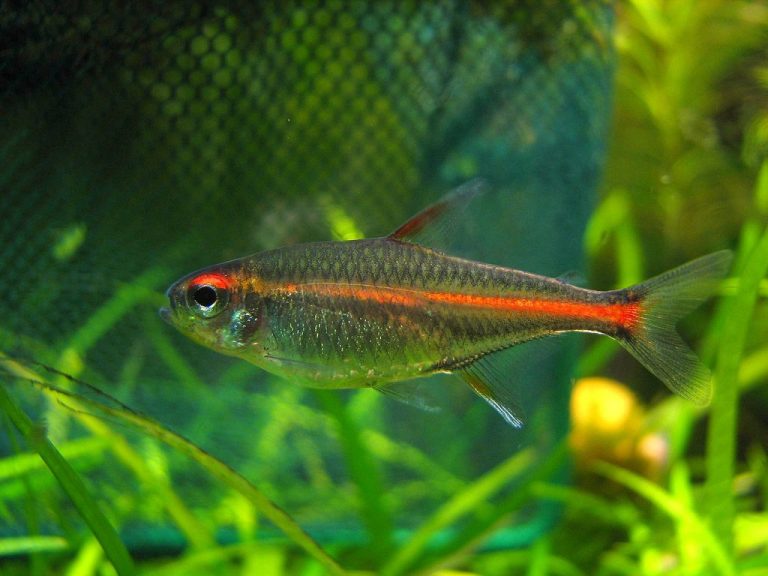
The Hyphessobrycon anisitsi, commonly known as the Buenos Aires Tetra, is a powerhouse in the aquarium. Unlike the slow, methodical movement of some gouramis, these fish are constantly on the go.
They are biologically hardwired for speed, possessing a streamlined body shape that allows for rapid bursts across the tank. This “fast swimmer” designation isn’t just a label; it is a physiological reality that dictates their care requirements.
In my experience, a school of these tetras in full flight is a sight to behold, but they need enough linear aquarium length to reach those speeds without hitting the glass. If the tank is too short, you will notice them constantly pacing or flashing against the ends of the aquarium.
Pro Tip: When observing your tetras, look for “glass surfing” or repetitive swimming patterns. This is often a sign that the buenos aires tetra tank size (fast swimmer) is too small or the aquarium layout is too cluttered for their swimming style.
Determining the Ideal Buenos Aires Tetra Tank Size (Fast Swimmer)
When we discuss the buenos aires tetra tank size (fast swimmer), we must look beyond just the total gallonage. The footprint of the tank—the length and width—is far more important than the height.
A 20-gallon “high” tank might hold the same volume as a 20-gallon “long,” but it provides significantly less horizontal swimming space. For a school of six to eight individuals, a 30-gallon long aquarium is the absolute starting point I recommend.
If you plan on keeping a larger school or a community of different species, you should consider a 55-gallon tank or larger. This allows them to school naturally without crowding the other inhabitants.
| Tank Capacity | Dimensions (L x W x H) | Recommended School Size |
|---|---|---|
| 20 Gallon Long | 30″ x 12″ x 12″ | 6 (Minimum Space) |
| 30 Gallon | 36″ x 12″ x 16″ | 8-10 (Ideal Starting Point) |
| 55 Gallon | 48″ x 13″ x 21″ | 15-20 (Healthy School) |
| 75 Gallon | 48″ x 18″ x 21″ | 25+ (Best for Community) |
Why the “Long” Format Wins
In a taller tank, the water pressure and lack of horizontal distance limit the fish’s ability to school effectively. Buenos Aires Tetras prefer to swim in the middle to upper layers of the water column.
A long tank helps make sure they have a clear runway to dart back and forth. This movement is essential for their muscle development and cardiovascular health.
When they are restricted in a small tank, they can become nippy and aggressive. Providing a larger buenos aires tetra tank size (fast swimmer) reduces this “cabin fever” and promotes a much more peaceful community environment.
The Importance of Horizontal Swimming Space
The concept of horizontal swimming space is critical for any active characin. These fish do not move vertically very often; they spend 90% of their time patrolling the length of the tank.
Imagine trying to run a sprint in a small walk-in closet versus a long hallway. The hallway allows you to reach your top speed and maintain it.
This is why a tank that is 4 feet long (like a 55-gallon) is exponentially better than a tank that is 2 feet long (like a 20-gallon high). The extra length allows the school to stay tight and move as a single unit, which is their natural defense mechanism.
Mental Health and Stress Reduction
Fish that cannot exhibit their natural swimming behaviors often suffer from suppressed immune systems. I have noticed that tetras kept in undersized tanks are more prone to Ich and other opportunistic infections.
When a Buenos Aires Tetra can’t burn off its energy, it often turns that energy toward its tank mates. This leads to fin nipping, especially against slower-moving fish with long fins.
If you choose a larger buenos aires tetra tank size (fast swimmer), you are essentially providing them with an outlet for their high-strung nature. A happy tetra is an active tetra that respects its neighbors.
Water Parameters and Filtration for Active Schools
Because these fish are so active, they have a higher metabolic rate than more sedentary species. This means they produce more waste and require higher levels of dissolved oxygen saturation.
To keep the water pristine, you need a solid filtration system. I highly recommend a filter that provides at least 5 to 7 times the tank volume in hourly turnover.
Additionally, these fish appreciate a bit of current. Using powerhead circulation can simulate the flowing waters of their natural habitat in South America.
| Parameter | Ideal Range |
|---|---|
| Temperature | 64°F – 82°F (72°F is right) |
| pH Level | 6.0 – 8.0 |
| General Hardness (dGH) | 5 – 20 dGH |
| Ammonia / Nitrite | 0 ppm |
| Nitrate | < 20 ppm |
Oxygenation and Surface Agitation
Fast swimmers need plenty of oxygen to fuel their muscles. Help your filter outlet creates enough surface agitation to facilitate gas exchange.
If you notice your tetras hanging out near the surface and “gasping,” it is a sign that the oxygen levels are too low. This is common in tanks that are overstocked or under-filtered.
In my setups, I often add an air stone or a sponge filter in the corner. This provides a safety net and helps make sure the water stays highly oxygenated even during the warm summer months.
Understanding the basics of their care will help you maintain this balance. These fish are incredibly resilient, but they shine when their water is clean and rich in oxygen.
Aquascaping for the Buenos Aires Tetra
One of the biggest challenges with this species is their appetite for live plants. While most tetras are plant-friendly, Buenos Aires Tetras are notorious “shredders.”
In a small buenos aires tetra tank size (fast swimmer), they will decimate soft-leaved plants like Amazon Swords or Vallisneria in days. Therefore, your aquascaping choices must be strategic.
You want to create a layout that provides plenty of open swimming space in the center while offering “breaks” in the line of sight along the edges. This helps subordinate fish escape the attention of more dominant school members.
Selecting Hardier Plants
To keep a planted look without the heartbreak of destroyed greens, stick to tough, epiphytic plants. Anubias barteri and Microsorum pteropus (Java Fern) are excellent choices.
These plants have thick, fibrous leaves that are generally unappealing to the tetras. They also don’t need to be buried in the substrate, allowing you to attach them to driftwood or rocks.
This keeps the center of the tank clear for swimming. If you keep the decor to the sides and back, you maximize the usable buenos aires tetra tank size (fast swimmer).
Pro Tip: If you really want to keep softer plants, try feeding your tetras blanched spinach or specialized herbivore pellets. I’ve found that keeping them “veggie-full” significantly reduces their desire to snack on your aquascape.
Common Mistakes to Avoid with Tank Sizing
The most common mistake I see is keeping these fish in a 10-gallon tank. While they might fit as juveniles, they quickly outgrow the space and become aggressive.
Another mistake is over-decorating. If your tank is filled with large castles, thick forests of fake plants, and massive rocks, you are effectively reducing the swimming volume.
For a high-energy species, less is often more. Think of their tank like a track field; you want clear lanes for them to run.
The Problem with Tall Tanks
As mentioned earlier, “Hex” tanks or “Column” tanks are poor choices for this species. They look beautiful in a room corner, but they offer almost zero linear swimming room.
If you already have a tall tank, consider swapping it for a “Long” or “Breeder” style aquarium. You will notice an immediate change in the fish’s behavior—they will become more active and less skittish.
A proper buenos aires tetra tank size (fast swimmer) should be at least three times the length of the school’s total combined length when swimming in a line. This gives them the freedom to behave naturally.
Temperature and its Impact on Activity
It is a common misconception that all tetras need tropical temperatures. Buenos Aires Tetras are actually quite comfortable in cooler water, often found in a temperate or cold water setup.
In fact, keeping them at the lower end of their temperature range (around 68-72°F) can actually help manage their energy levels. Higher temperatures speed up their metabolism, making them even more hyperactive.
If you find your school is being too aggressive in a community tank, try slowly lowering the temperature by a few degrees. This often results in a calmer, more manageable group of fish.
Maintaining Stability
Regardless of the temperature you choose, stability is key. Use a reliable heater and thermometer to make sure the water doesn’t fluctuate more than a degree or two per day.
Sudden shifts in temperature can stress these fish, leading to a weakened immune system. In a larger buenos aires tetra tank size (fast swimmer), the water volume acts as a thermal buffer, making it easier to maintain a steady environment.
Frequently asked questions
Can I keep a single Buenos Aires Tetra in a small tank?
No, you should never keep them alone. They are schooling fish and require the company of their own kind to feel secure. A single tetra will be stressed, shy, and likely prone to illness.
What is the absolute minimum tank size for a school?
While some sources say 20 gallons, I strongly advocate for 30 gallons as the minimum. This makes sure they have enough room to grow to their full 3-inch size and swim freely.
Do they need a lid on the tank?
Yes. Because they are fast swimmers and can be jumpy when startled, a tight-fitting lid is essential. I have lost more than one “sprinter” to a small gap in the hood.
Can they live with fancy goldfish?
While they share similar temperature requirements, I generally advise against it. The tetras are much faster and may nip at the slow-moving goldfish’s fins.
How do I know if my tank is too small?
If you see constant fighting, fin nipping, or if the fish are staying in one corner and not exploring, your tank is likely too small or too crowded.
My final take
Providing the correct buenos aires tetra tank size (fast swimmer) is the single best thing you can do for these vivid fish. If you prioritise horizontal length and open swimming space, you allow them to show off their natural, high-energy behaviors.
A 30-gallon long tank is your baseline, but bigger is always better for this species. When they have the room to zoom, they are some of the most satisfying and hardy fish you can keep in the hobby.
Focus on high oxygenation, tough plants like Java Fern, and a consistent maintenance routine. If you follow these guidelines, your Buenos Aires Tetras will flourish for years, bringing a dynamic spark of life to your aquarium.

- 2003First tank
- 20+Years keeping
- 40+Tanks kept
- 0Sponsored picks
Howard set up his first 10-gallon planted tank in 2003 and lost half of it within six weeks. Two decades and more than forty aquariums later, he writes the guides he wished he had then: clear numbers, the reasons behind them, and what actually goes wrong in home tanks.