Why Does Water Change Affect Angelfish Growth – Causes and Fixes
Water changes affect angelfish growth by removing growth-inhibiting hormones and nitrates while replenishing essential minerals. Fresh water reduces metabolic stress and improves osmoregulation, allowing fish to channel more energy into physical development.
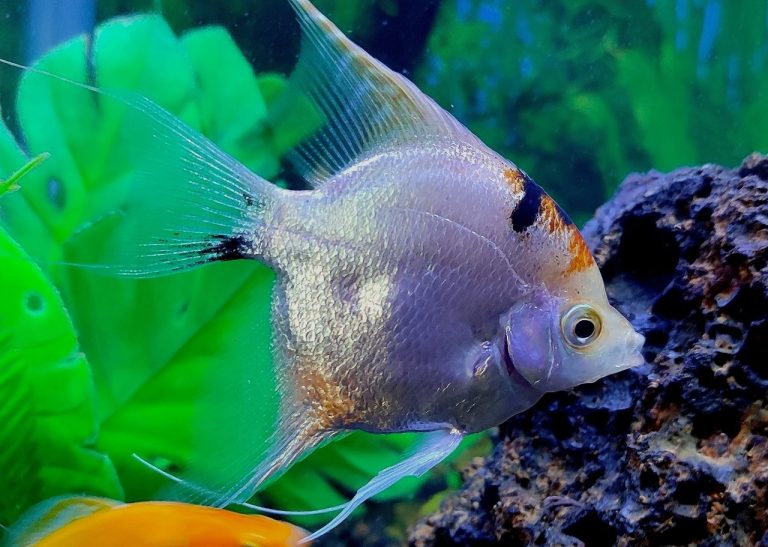
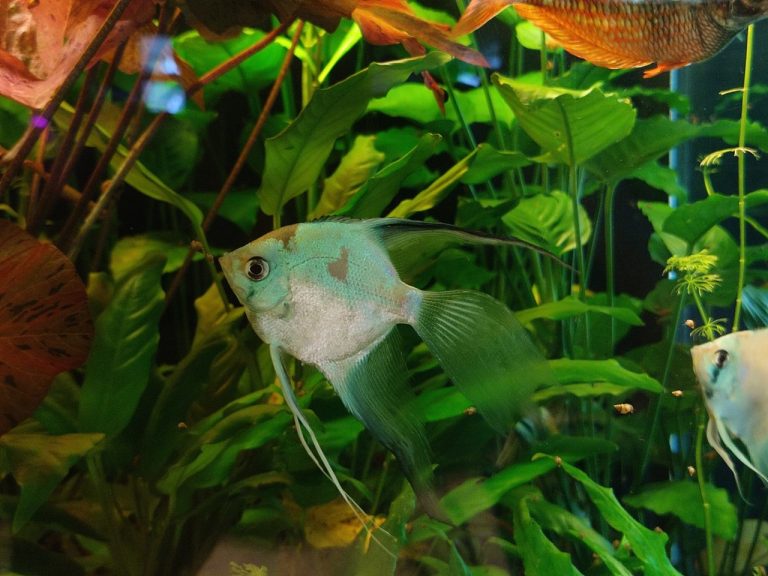
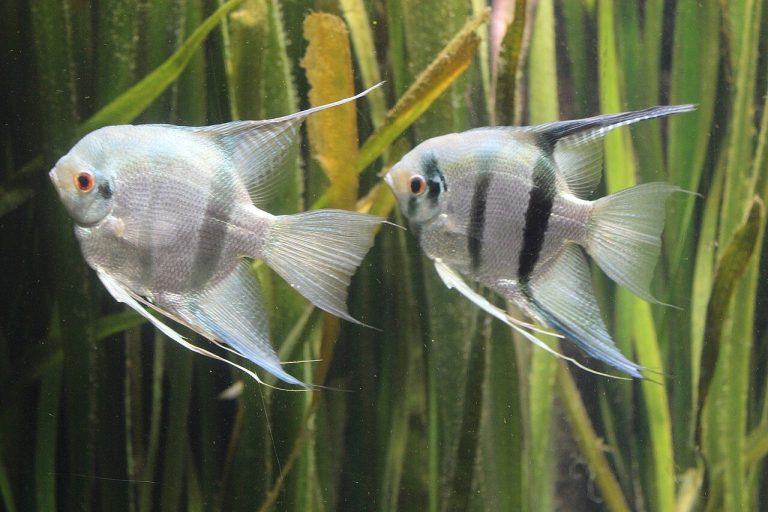
Every aquarist dreams of seeing their Pterophyllum scalare reach their full, majestic potential with long, flowing fins and a commanding presence.
In my fifteen years of keeping these “Kings of the Aquarium,” I have noticed a distinct difference between fish kept in stagnant water and those receiving fresh infusions.
Many hobbyists focus solely on high-quality proteins and expensive flakes to bulk up their fish.
While nutrition is vital, the environment is the silent engine that drives the speed of their development.
Understanding why does water change affect angelfish growth is the first step toward moving from a casual keeper to a master of the craft.
In this guide, we will look closely at the biological and chemical reasons behind this phenomenon.
We will explore how hormones, minerals, and waste products interact to either stunt or stimulate your fish.
At a glance: Freshwater angelfish (Pterophyllum scalare)
- Temperature
- 76–84°F (24–29°C)
- Water pH
- 6.0–7.5
- Adult size
- 6 in long, 8 in tall (15 × 20 cm)
- Minimum tank
- 30 gal for a pair, 55 gal tall for a group
- Group size
- Pair or group of 5+
- Temperament
- Semi-aggressive, territorial when breeding
- Diet
- Omnivore: pellets, flakes, frozen bloodworm and brine shrimp
- Lifespan
- 10–12 years
Keeper’s tip: Choose a tall tank; height matters more than length for a fish that grows taller than it is long.
The Biological Impact of Growth Inhibiting Hormones
One of the most interesting reasons why does water change affect angelfish growth involves a biological mechanism known as Growth Inhibiting Hormones (GIH).
In the wild, these hormones help regulate the population size relative to the available space and resources.
In a closed glass box, these chemicals can build up rapidly, signaling to the fish’s body that the environment is “full.”
When these levels are high, the production of Somatotropin—the primary growth hormone in fish—is suppressed.
This is a survival tactic designed to prevent a fish from outgrowing its food supply or oxygen levels.
By performing regular water changes, you effectively “dilute” these chemical signals.
This tricks the fish’s endocrine system into believing it has ample room to expand.
Pro Tip: If you are raising a large spawn of fry, the concentration of these hormones is significantly higher. I have found that doing daily 20% water changes for juveniles results in much larger adults compared to doing a single 50% change once a week.
Without these water changes, your angelfish may experience “stunting,” where their organs continue to grow while their bodies remain small.
This leads to a shortened lifespan and a variety of skeletal deformities that are often irreversible.
The removal of metabolic waste through fresh water is the only way to make sure these hormonal pathways remain open.
Why does water change affect angelfish growth through mineral replenishment?
Another critical factor often overlooked by beginners is the role of bioavailable minerals.
As angelfish grow, they constantly pull minerals like calcium, phosphorus, and magnesium from the water column.
These minerals are essential for bone development, scale formation, and proper nerve function.
Over time, your aquarium water becomes “depleted” of these vital elements as the fish and plants consume them.
If you do not replace this water, the Carbonate hardness (KH) and General Hardness (GH) can fluctuate or drop significantly.
This lack of minerals forces the fish’s body to work harder to maintain its internal balance.
When a fish is struggling to find the building blocks for its skeleton, growth naturally grinds to a halt.
| Mineral Element | Role in Angelfish Growth | Source of Depletion |
|---|---|---|
| Calcium | Skeletal structure and fin strength | Biological uptake by growing fry |
| Magnesium | Enzyme activation and metabolic rate | Absorption through gills and skin |
| Potassium | Nervous system and muscle function | Plant growth and fish metabolism |
By introducing fresh water, you provide a “buffet” of new minerals that the fish can easily absorb.
This is why many breeders use tap water (suitably conditioned) rather than pure RO water, as it often contains these essential trace elements.
Ensuring your fish have proper water parameters is about more than just pH; it is about providing the raw materials for life.
The Role of Nitrates and Dissolved Organic Compounds
We often talk about the nitrogen cycle, but we rarely discuss how Nitrate concentration affects physical size.
While nitrates are far less toxic than ammonia or nitrite, they are still a form of pollution.
High levels of nitrates (above 20-40 ppm) act as a chronic stressor for angelfish.
When a fish is stressed, its cortisol levels rise, which directly interferes with its ability to synthesize protein.
Essentially, even if you feed your angelfish the best beef heart or bloodworms, they cannot use that protein to build muscle if the water is dirty.
Furthermore, Dissolved Organic Compounds (DOCs) build up as food and waste break down.
These compounds can yellow the water and provide a breeding ground for harmful bacteria.
Water changes are the primary method for exporting these DOCs from the system.
In my experience, keeping nitrates below 10 ppm is the “sweet spot” for seeing a noticeable growth spurt in juvenile Pterophyllum scalare.
Osmoregulation: The Energy Expense of Growth
To understand why does water change affect angelfish growth, we must look at how fish handle water internally.
Fish are constantly pumping water and ions in and out of their bodies through a process called Osmoregulation.
In an aquarium where water changes are neglected, the Total Dissolved Solids (TDS) begin to rise as waste and minerals concentrate.
As the TDS increases, the osmotic pressure on the fish changes.
The fish’s kidneys and gills have to work significantly harder to maintain the correct internal salt balance.
This process is incredibly energy-intensive.
Every calorie your angelfish spends on osmoregulation is a calorie it cannot spend on reaching its full adult size.
Fresh water usually has a lower or more balanced TDS profile compared to “old” tank water.
By lowering the TDS through a water change, you reduce the workload on the fish’s organs.
This frees up metabolic energy that is immediately redirected toward growth and immune system strength.
Common Mistake: Many keepers wait until their water looks “dirty” before changing it. By the time you see a yellow tint, the TDS and DOC levels are already high enough to have slowed your fish’s growth for weeks.
Temperature Stability and Metabolic Rate
While the water change itself is the hero, the temperature of that water plays a supporting role.
Angelfish are tropical fish that do well in warmer temperatures, which naturally boosts their metabolism.
However, if water changes are done with water that is too cold, it can shock the fish and cause their digestive system to slow down.
Conversely, a water change that matches the tank temperature (or is slightly warmer) can stimulate activity.
I have often seen angelfish become more aggressive eaters immediately following a temperature-matched water change.
This increased appetite leads to higher caloric intake, which, when combined with clean water, results in rapid size gains.
It is important to keep in mind that Pterophyllum scalare are sensitive to sudden swings.
Always use a reliable thermometer to help your replacement water is within 1-2 degrees of your tank’s current temperature.
Creating a Growth-Focused Water Change Schedule
If your goal is to maximize the size of your angelfish, a standard monthly water change will not suffice.
You need a proactive approach that keeps the environment in a state of “constant renewal.”
The following checklist can help you establish a routine that prioritizes growth.
Growth Maintenance Checklist
- Frequency: Aim for at least two 25% water changes per week for juveniles.
- Substrate Cleaning: Use a gravel vacuum to remove metabolic waste trapped in the sand or gravel.
- Water Conditioner: Always use a high-quality dechlorinator to protect the fish’s slime coat and gills.
- Testing: Use a liquid test kit to ensure nitrates remain below 20 ppm at all times.
- Observation: Look for “clamped fins” or lethargy, which are early signs of high DOC levels.
If you follow this structure, you make sure that the growth-inhibiting factors are never allowed to reach a critical mass.
This consistent “flushing” of the system creates a low-stress environment where your fish can stay healthy.
FAQ: Common Questions on Water Changes and Growth
How often should I change water for the fastest growth?
For juvenile angelfish, I recommend 25% to 30% water changes every 2 to 3 days. For adults, a weekly 50% change is usually sufficient to maintain their health and fin quality.
Can I change too much water at once?
While large water changes (75% or more) are great for removing waste, they can be risky if your tap water parameters are very different from your tank water. It is usually safer to do smaller, more frequent changes to maintain stability.
Does the type of filter matter for growth?
Yes, a filter with high mechanical and biological capacity helps, but it cannot remove nitrates or hormones. No filter is a replacement for a manual water change.
Why did my angelfish stop growing even with water changes?
Growth can also be limited by tank size, genetics, or internal parasites. If your water is pristine but growth has stalled, consider deworming your fish or moving them to a larger aquarium.
Does “Old Tank Syndrome” affect growth?
Absolutely. “Old Tank Syndrome” occurs when a lack of water changes causes the pH to crash and TDS to skyrocket. In these conditions, growth will stop entirely, and the fish will eventually become susceptible to disease.
The Long-Term Benefits of Clean Water
The reason why does water change affect angelfish growth extends far beyond just hitting a specific measurement on a ruler.
Fish that grow in clean, mineral-rich water develop stronger immune systems and more vivid color patterns.
Their fin rays grow straighter and more sturdy, preventing the “crinkled” look often seen in poorly maintained tanks.
Furthermore, providing an environment that encourages growth also encourages natural behaviors.
Happy, growing angelfish are much more likely to form pairs and engage in the remarkable breeding displays they are known for.
When you invest time into your water change routine, you are essentially investing in the long-term vitality of your aquarium.
My final take
In the end, the answer to why does water change affect angelfish growth is a combination of hormonal regulation, mineral availability, and metabolic efficiency.
By removing Growth Inhibiting Hormones and metabolic waste, you remove the “brakes” from your fish’s development.
By replenishing bioavailable minerals and maintaining stable Carbonate hardness, you provide the “fuel” they need to build their bodies.
Successful aquarium keeping is about managing the invisible chemistry of the water as much as it is about the visible beauty of the fish.
If you commit to a disciplined water change schedule, you will be rewarded with angelfish that are the “Kings” of your home.
Fresh water is the cheapest and most effective “growth supplement” you will ever find in the hobby.

- 2003First tank
- 20+Years keeping
- 40+Tanks kept
- 0Sponsored picks
Howard set up his first 10-gallon planted tank in 2003 and lost half of it within six weeks. Two decades and more than forty aquariums later, he writes the guides he wished he had then: clear numbers, the reasons behind them, and what actually goes wrong in home tanks.