How To Fix Stunted Angelfish Growth – Step-by-Step Guide
To fix stunted angelfish growth, implement aggressive 50% weekly water changes to remove growth-inhibiting hormones, upgrade to a 55-gallon tank, and provide high-protein live foods to stimulate somatotropin production and skeletal development.
Seeing your majestic Pterophyllum scalare remain small while their peers settle in is a frustrating experience for any aquarist. In my ten years of keeping these “Kings of the Aquarium,” I have learned that stunting is rarely a permanent death sentence for the fish’s potential.
While some internal damage may be permanent, many angelfish possess a remarkable ability to “catch up” if the environmental triggers are corrected. This guide will walk you through the biological mechanisms of stunting and the exact steps needed to restart the growth of your fish.
At a glance: Freshwater angelfish (Pterophyllum scalare)
- Temperature
- 76–84°F (24–29°C)
- Water pH
- 6.0–7.5
- Adult size
- 6 in long, 8 in tall (15 × 20 cm)
- Minimum tank
- 30 gal for a pair, 55 gal tall for a group
- Group size
- Pair or group of 5+
- Temperament
- Semi-aggressive, territorial when breeding
- Diet
- Omnivore: pellets, flakes, frozen bloodworm and brine shrimp
- Lifespan
- 10–12 years
Keeper’s tip: Choose a tall tank; height matters more than length for a fish that grows taller than it is long.
Understanding the Science Behind Stunted Growth
Stunting is not just about a fish being small; it is a physiological response to a suboptimal environment. When an angelfish is kept in cramped conditions, its body prioritizes survival over the expansion of its skeletal structure.
One of the most misunderstood factors in this process is the role of growth-inhibiting hormones. In the wild, these hormones prevent overpopulation in small pools, but in an aquarium, they can build up to toxic levels that halt development entirely.
The Role of Dissolved Organic Compounds
Dissolved organic compounds (DOCs) are the invisible byproducts of fish waste, uneaten food, and decaying plant matter. When these accumulate, they signal to the angelfish’s endocrine system that the environment cannot support further growth.
High levels of nitrogenous waste, specifically nitrates, create a chronic stress response. This stress diverts energy away from Somatotropin (growth hormone) production and toward basic metabolic maintenance.
Physical vs. Biological Stunting
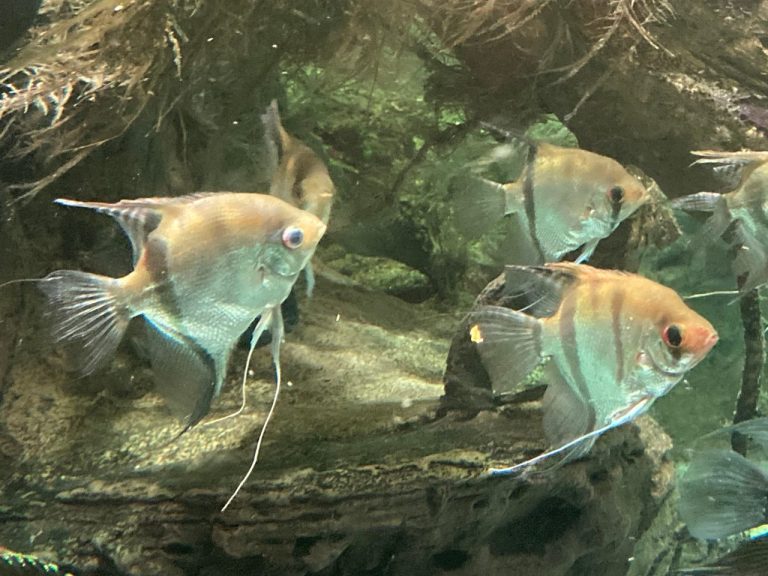
It is important to distinguish between a fish that is naturally small and one that is pathologically stunted. A stunted angelfish often exhibits “large-eye syndrome,” where the eyes appear disproportionately large compared to the body.
This happens because the eyes and certain internal organs continue to grow even when the muscular and skeletal systems have stopped. If you notice this physical trait, it is a clear sign that you need to learn how to fix stunted angelfish growth immediately.
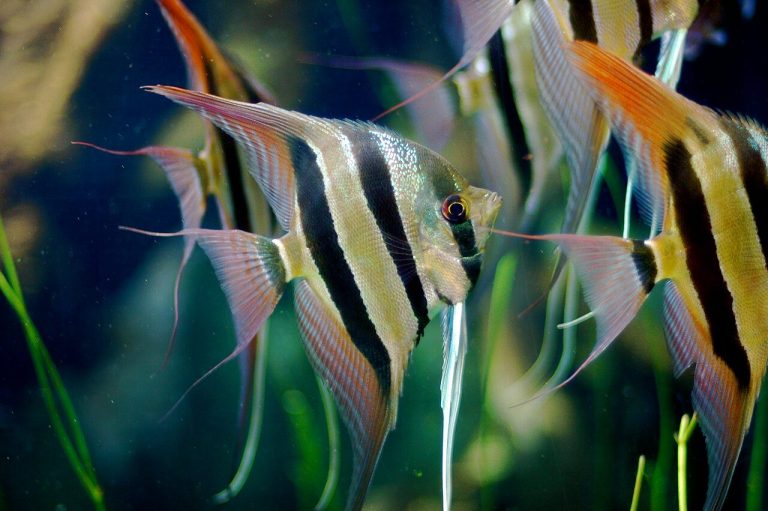
| Feature | Healthy Angelfish | Stunted Angelfish |
|---|---|---|
| Body to Eye Ratio | Small eyes relative to body height | Large, bulging eyes relative to body |
| Fin Development | Long, straight, and flowing | Short, curled, or “stubby” appearance |
| Activity Level | Curious, aggressive eater | Lethargic or overly shy |
How to Fix Stunted Angelfish Growth Through Water Quality
The most effective way to reverse growth inhibition is to radically change the water chemistry. Clean water is the single most powerful “growth supplement” you can provide to a cichlid.
In my experience, many hobbyists believe their water is clean because it is clear. However, the hormones and micro-toxins that cause stunting are completely invisible to the naked eye.
Implementing a Strict Water Change Schedule
To flush out growth-inhibiting hormones, you must perform larger and more frequent water changes than usual. I recommend a “reset period” of 50% water changes twice a week for at least one month.
This massive influx of fresh water reduces the concentration of DOCs and replenishes essential minerals. These minerals are vital for osmoregulation, the process by which fish maintain the balance of salts and water in their bodies.
Pro Tip: When performing large water changes, always match the temperature within 1-2 degrees. Rapid temperature swings can cause stress that further suppresses the immune system and halts growth.
Managing Carbonate Hardness and pH
Angelfish flourish in slightly acidic to neutral water, but they still require a certain level of carbonate hardness (KH). KH acts as a buffer to prevent pH crashes, which are devastating to a growing fish’s metabolism.
If your water is too “soft” or lacks minerals, the fish may suffer from poor skeletal ossification. This means their bones do not harden or grow correctly, leading to permanent deformities.
Optimizing Nutrition and Protein Bioavailability
Feeding is the second pillar of growth recovery. You cannot simply feed more; you must feed better quality food that the fish can actually digest and utilize.
Protein bioavailability refers to how much of the protein in the food can actually be absorbed by the angelfish. Low-quality flakes are often filled with “ash” and “binders” that pass through the fish as waste without contributing to muscle mass.
The Best Foods for Growth Recovery
To restart the growth of a stunted angelfish, you should transition to a diet rich in live and frozen foods. These foods contain natural enzymes that aid in digestion and stimulate the production of growth hormones.
In my early years, I saw a dramatic difference when I switched from standard pellets to a rotation of beef heart, bloodworms, and brine shrimp. The high amino acid content in these foods provides the building blocks for rapid tissue repair.
Feeding Frequency and Waste Management
Growing angelfish have high metabolic rates and should be fed small amounts 3-4 times per day. This is much better than one large feeding, which can lead to indigestion and water quality spikes.
However, you must be diligent about removing uneaten food. If you increase feeding but neglect cleaning, the resulting nitrate spike will negate any benefits the high-protein diet provides.
Tank Size and Environmental Stressors
You cannot expect an angelfish to reach its full potential in a small environment. While they may survive in smaller tanks, they will never do well or grow to their maximum size.
Providing proper tank dimensions is essential because angelfish are tall, vertically oriented fish. They need depth to feel secure and to allow for the full extension of their dorsal and anal fins.
The 55-Gallon Standard
For a pair of angelfish, a 29-gallon tank is the absolute minimum, but a 55-gallon tank is the “sweet spot” for growth. The larger volume of water provides a more stable environment where chemical fluctuations happen much more slowly.
In a larger tank, the fish has more swimming space, which encourages muscle development. Exercise is a natural stimulant for growth, just as it is in humans.
Angelfish are cichlids, and they have a strict social hierarchy. If a stunted fish is being bullied by a dominant tank mate, it will stay small as a defensive mechanism.
The stress of being chased releases cortisol into the fish’s bloodstream. Cortisol is a known growth inhibitor that can completely stall the development of even the healthiest Pterophyllum scalare.
Common Mistake: Many keepers try to fix stunting by adding more fish to “dither” the aggression. This usually backfires by increasing the bioload and worsening the water quality that caused the stunting in the first place.
Identifying and Treating Underlying Health Issues
Sometimes, the reason for stunted growth isn’t just the environment; it’s a hidden parasite or infection. Internal parasites are particularly notorious for “stealing” nutrients before the fish can absorb them.
Hexamita is a common flagellate parasite in angelfish that resides in the intestinal tract. It can cause a fish to eat ravenously while still losing weight or failing to grow.
Recognizing Internal Parasites
If your angelfish has white, stringy feces or a sunken belly despite regular feeding, parasites are likely the culprit. Treating the fish with a dedicated internal parasite medication can often result in a sudden “growth spurt” once the infection is cleared.
If you follow comprehensive care protocols, you can ensure that your fish’s energy is going toward growth rather than fighting off chronic infections.
The Importance of Temperature
Angelfish are tropical fish that require warm water to maintain a functional metabolism. If the water is too cold (below 76°F), their digestive enzymes become sluggish.
I recommend keeping the temperature between 80°F and 82°F during a growth recovery phase. This higher temperature speeds up the metabolic rate, encouraging the fish to eat more and process nutrients faster.
A Step-By-Step Growth Recovery Plan
If you are serious about learning how to fix stunted angelfish growth, you need a structured approach. You cannot change everything overnight, or you risk shocking the fish.
The following checklist provides a roadmap for the first 30 days of a growth recovery program. Consistency is the key to seeing results in the fish’s body shape and fin length.
| Phase | Action Item | Goal |
|---|---|---|
| Week 1 | Increase water changes to 30% every other day | Flush hormones and reduce nitrates |
| Week 2 | Introduce live brine shrimp and frozen bloodworms | Boost protein intake and stimulate appetite |
| Week 3 | Check for parasites and adjust temperature to 82°F | Optimize metabolic rate and internal health |
| Week 4 | Monitor body-to-eye ratio and fin extension | Assess progress and maintain the new routine |
Monitoring Your Progress
You won’t see a stunted angelfish double in size overnight. However, within 4 to 6 weeks, you should notice subtle changes in their appearance and behavior.
First, the fish will become more active and assertive during feeding times. Next, you will see a “thickening” of the body, particularly across the forehead and the base of the tail.
Understanding standard growth rates will help you manage your expectations. A recovering fish may not reach the 6-inch body length of a prime specimen, but it can certainly gain several inches of height and significant mass.
FAQ: Frequently Asked Questions About Angelfish Growth
Can a stunted angelfish ever reach full size?
It depends on the severity and duration of the stunting. If the fish was stunted for several years, it might never reach “trophy” size, but it can still show significant improvement in health and vigor.
Do growth-inhibiting hormones affect other fish?
Yes, these hormones are often species-specific but can affect closely related cichlids. Regular water changes are the only way to make sure these chemical signals do not build up in the aquarium.
Is a 10-gallon tank enough to restart growth?
Absolutely not. A 10-gallon tank is one of the primary causes of stunting in angelfish. You must move the fish to a larger volume of water to see any recovery.
Why are my angelfish’s fins curling?
Curled fins are often a sign of mineral deficiencies or poor water quality during a critical growth phase. While the fins may never straighten perfectly, clean water can prevent further curling.
Does aquarium salt help with growth?
While salt can help with osmoregulation during illness, it is not a growth stimulant. Focus instead on high-quality nutrition and frequent water changes.
Final Thoughts on Restarting Angelfish Growth
Learning how to fix stunted angelfish growth is a journey of patience and dedication. It requires moving beyond “survival” care and into the world of “well-kept” care.
If you deal with the invisible chemical barriers in the water and providing superior nutrition, you give your fish the best possible chance to overcome its past. Even if your angelfish remains slightly smaller than average, a healthy, vivid fish is always a success.
The goal is not just a larger fish, but a happier one. When you see those fins unfurl and the colors brighten, you’ll know that your efforts to provide a better environment have paid off.

- 2003First tank
- 20+Years keeping
- 40+Tanks kept
- 0Sponsored picks
Howard set up his first 10-gallon planted tank in 2003 and lost half of it within six weeks. Two decades and more than forty aquariums later, he writes the guides he wished he had then: clear numbers, the reasons behind them, and what actually goes wrong in home tanks.