How Many Angelfish Can I Keep Together? The Ultimate Stocking Guide
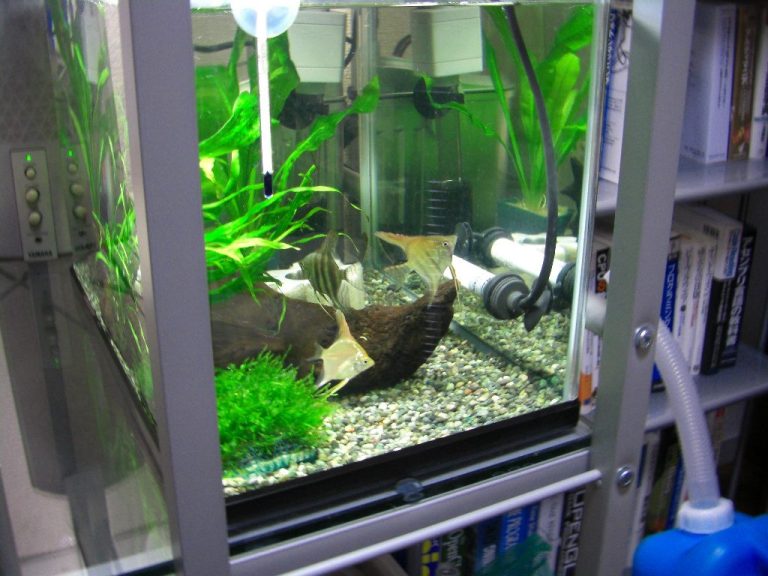
You can keep a single angelfish in a 30-gallon tank, a mated pair in 40-55 gallons, or a school of 5-6 in a 75-gallon tank. Success depends on providing enough vertical swimming space and managing their natural cichlid social hierarchy.
Finding the right balance for your aquarium can be a challenge, especially when dealing with the “King of the Aquarium.”
When beginners ask how many angelfish can i keep together, they often expect a simple number, but the reality is deeply tied to the fish’s unique personality and biology.
In my decade of keeping these majestic creatures, I have learned that their social needs change as they mature from tiny juveniles to plate-sized adults.
Understanding the behavior of Pterophyllum scalare is the first step toward creating a peaceful, stable underwater environment.
At a glance: Freshwater angelfish (Pterophyllum scalare)
- Temperature
- 76–84°F (24–29°C)
- Water pH
- 6.0–7.5
- Adult size
- 6 in long, 8 in tall (15 × 20 cm)
- Minimum tank
- 30 gal for a pair, 55 gal tall for a group
- Group size
- Pair or group of 5+
- Temperament
- Semi-aggressive, territorial when breeding
- Diet
- Omnivore: pellets, flakes, frozen bloodworm and brine shrimp
- Lifespan
- 10–12 years
Keeper’s tip: Choose a tall tank; height matters more than length for a fish that grows taller than it is long.
Many new hobbyists are surprised to learn that angelfish are actually members of the cichlid family.
While they look graceful and delicate, they possess the same territorial instincts as their more aggressive cousins.
In the wild, they often live in loose groups, but in the confines of an aquarium, a strict pecking order will always develop.
When you keep a group of angelfish, they will immediately begin testing each other to determine who is the dominant individual.
This behavior is known as conspecific aggression, which refers to aggression directed at members of their own species.
Establishing this hierarchy involves lip-locking, fin nipping, and chasing until every fish knows its place in the group.
Solitary vs. Group Living
Keeping a single angelfish is a perfectly valid option, especially in smaller setups where you want a “centerpiece” fish.
A lone angelfish often becomes quite personable with its owner and won’t suffer from loneliness as long as the tank is engaging.
However, if you want to see their full range of natural behaviors, keeping them in a group is much more satisfying.
Pro Tip: If you plan to keep a group, I always recommend starting with at least five or six individuals. In smaller groups of three, the dominant fish often focuses all its aggression on one “weakest” fish, leading to high stress or even death.
The Critical Importance of Tank Dimensions
When deciding how many angelfish can i keep together, the shape of your tank is actually more important than the total volume.
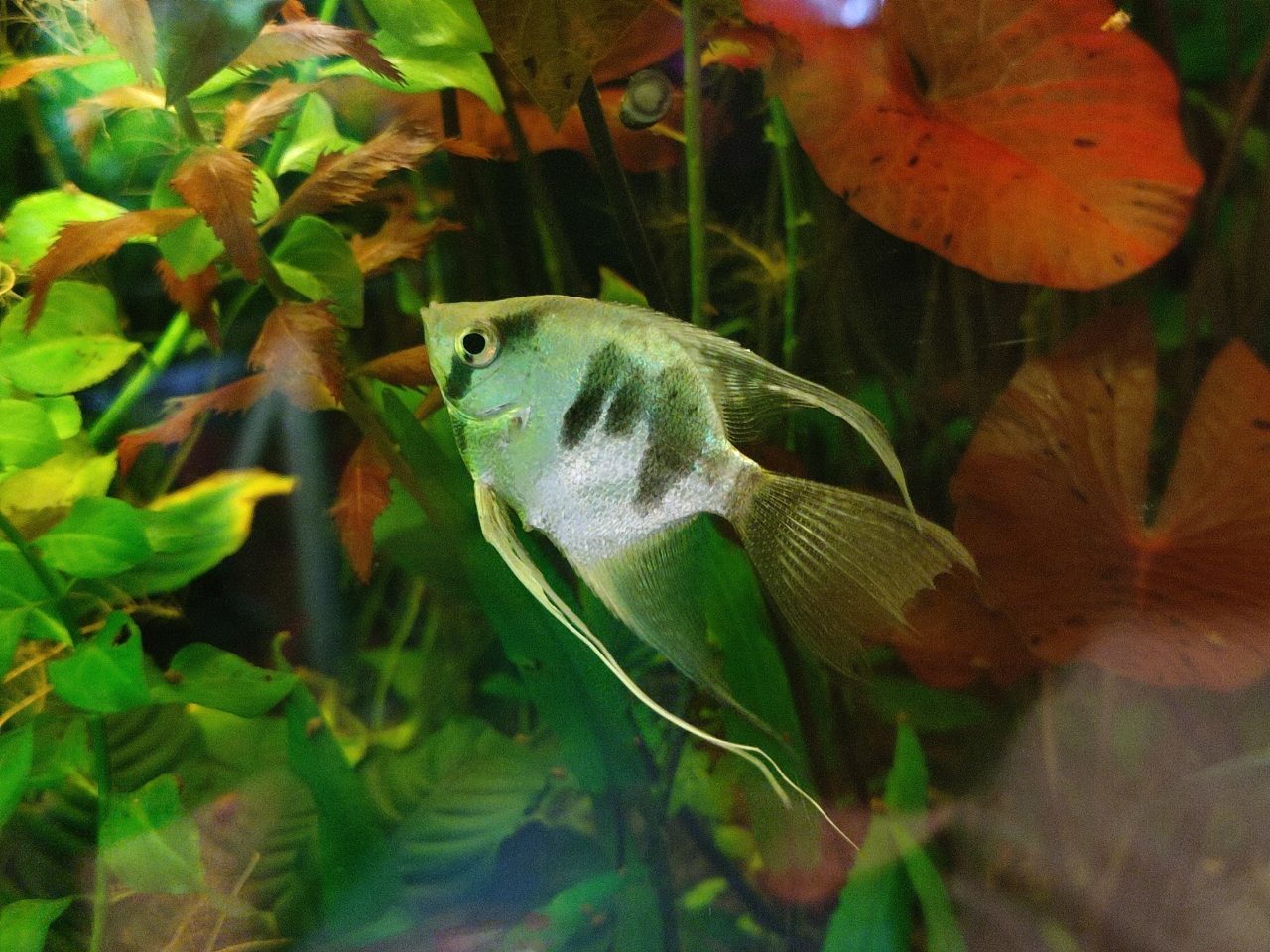
Angelfish are unique because they are laterally compressed and grow quite tall.
They require significant vertical swimming space to accommodate their long, flowing fins.
Why Height Matters
A standard 20-gallon long tank might have the same volume as a 20-gallon high, but it is a poor choice for adult angelfish.
As they grow, their dorsal and anal fins can span over 8 to 10 inches from tip to tip.
In shallow tanks, these fish feel cramped, which can lead to stunted growth or permanent fin deformities.
Calculating Stocking Density
Your stocking density should always account for the adult size of the fish, not the size they are at the pet store.
Most Pterophyllum scalare sold are the size of a quarter, but they will eventually reach the size of a small dinner plate.
Overcrowding leads to rapid nitrogenous waste accumulation, which can crash your cycle and stress your fish.
| Tank Size (Gallons) | Recommended Number of Angelfish | Best Configuration |
|---|---|---|
| 29 – 30 Gallons | 1 Adult | Single Centerpiece |
| 40 – 55 Gallons | 2 Adults | A Confirmed Mated Pair |
| 75 Gallons | 4 – 6 Adults | Small School / Community |
| 100+ Gallons | 8 – 10+ Adults | Large Species Display |
Managing Conspecific Aggression in Groups
If you decide to keep a group, you must be prepared to manage their temperament.
Even in a large tank, certain individuals may be more aggressive than others.
I have found that the best way to mitigate this is through clever aquarium “aquascaping.”
Breaking Line of Sight
Using tall plants like Amazon Swords or Vallisneria helps break up the line of sight across the tank.
If a subordinate fish can hide behind a leaf and disappear from the dominant fish’s view, the chasing usually stops.
Large pieces of driftwood can also act as natural territory markers.
The Problem with Mated Pairs
One of the biggest challenges in keeping multiple angelfish is when two of them decide to pair off and breed.
Once a pair forms, they will claim a corner of the tank and viciously defend it against all other tank mates.
In a 55-gallon tank, a breeding pair can effectively take over two-thirds of the space, forcing the other fish into a cramped corner.
Recognizing Stress Signals
You should always watch for signs that the pecking order has become too intense.
If you see a fish constantly hiding near the surface or behind the heater, it is likely being bullied.
Frayed fins and a lack of appetite are also red flags that the social dynamic has turned toxic.
Water Quality and Biological Filtration Capacity
Keeping multiple large fish requires a sturdy filtration system.
Angelfish are sensitive to nitrate levels and dissolved organic compounds.
Your biological filtration capacity must be high enough to process the ammonia produced by several heavy-bodied cichlids.
Managing Nitrogenous Waste
As you increase the number of fish, the rate of nitrogenous waste accumulation increases exponentially.
I recommend using a filter rated for at least twice the size of your actual tank.
Weekly water changes of 25-50% are non-negotiable when keeping a school of adult angelfish.
The Role of Live Plants
Live plants are excellent for absorbing excess nitrates and providing a more natural habitat.
They also help oxygenate the water, which is important since larger fish consume more oxygen.
Just be sure to choose sturdy plants, as angelfish may occasionally pick at soft-leaved varieties.
Pro Tip: When stocking multiple angelfish, I prefer using two smaller filters rather than one large one. This provides redundant backup and allows you to clean one filter at a time without crashing your beneficial bacteria colony.
Health Considerations for Crowded Tanks
When you push the limits of how many angelfish can i keep together, you increase the risk of disease.
Stress is the primary trigger for most aquarium illnesses.
In crowded environments, pathogens can spread much faster from one fish to another.
Dealing with Hexamita
One common issue in stressed or overcrowded angelfish tanks is Hexamita, also known as Hole-in-the-Head disease.
This parasite often does well when the fish’s immune system is suppressed by poor water quality or social stress.
Making sure each fish has enough space and a varied diet is the best way to prevent this condition.
The Altum Exception
While most hobbyists keep the common Pterophyllum scalare, some advanced keepers seek out Pterophyllum altum.
Altums are much larger and far more sensitive to water parameters than standard angels.
If you are keeping Altums, you should double the recommended space requirements to ensure their health.
You can learn more about the different different angelfish types to see which fits your experience level.
Selecting the Right Tank Mates
How many angelfish you can keep also depends on what else is in the tank.
If the tank is crowded with other species, you will have to reduce the number of angelfish accordingly.
It is vital to choose community tank mates that won’t nip at the angelfish’s long fins.
Avoid Fin Nippers
Fish like Tiger Barbs or Serpae Tetras are notorious for nipping at the flowing fins of slow-moving fish.
This causes constant stress and can lead to secondary bacterial infections like fin rot.
Stick to peaceful bottom dwellers or larger, deep-bodied tetras.
The “Can it Fit in Their Mouth?” Rule
Angelfish are opportunistic predators.
In the wild, their diet includes small neon tetras.
If you keep very small fish with adult angelfish, don’t be surprised if your “schooling” fish slowly disappear overnight.
Steps for Successfully Adding New Angelfish
If you already have an established angelfish and want to add more, you must be careful.
The resident fish will likely view the newcomers as invaders in its territory.
There are a few tricks I use to make this transition smoother for everyone.
The Rearrangement Trick
Before adding new fish, try rearranging the decorations and driftwood in the tank.
This “resets” the territories, making the resident fish feel like it is in a new environment.
This temporary confusion gives the new fish a chance to find their own space before the bullying starts.
Quarantining New Arrivals
Never add new angelfish directly to your main display tank.
A 2-4 week quarantine period is essential to make sure the new fish aren’t carrying parasites or bacterial infections.
This also gives you time to observe their feeding habits and make sure they are strong enough to handle the cichlid social hierarchy of the main tank.
For more detailed advice on maintaining a healthy environment, check out our guide on raising healthy angelfish.
Common questions
Can I keep two male angelfish together?
Keeping two males together is risky, especially in tanks smaller than 55 gallons. They will likely fight for dominance. In a larger, heavily planted tank, they may be able to coexist by establishing separate territories.
Is a 20-gallon tank big enough for two angelfish?
No, a 20-gallon tank is generally too small for even one adult angelfish due to the lack of height. It can work for a short time while they are juveniles, but they will eventually need an upgrade to at least 29 or 30 gallons.
Why is my angelfish suddenly attacking the others?
This usually happens because a mated pair has formed and they are preparing to spawn. It can also happen if the fish has outgrown the tank and feels its territory is being encroached upon.
How do I know if my angelfish are fighting or playing?
Angelfish don’t really “play.” Lip-locking and circling are signs of aggression or courtship. If you see physical damage like torn fins or missing scales, the aggression is serious and needs intervention.
Can angelfish live with goldfish?
No, they are incompatible. Angelfish are tropical fish that require warm water, while goldfish prefer cooler temperatures. Additionally, their waste production would make maintaining water quality nearly impossible.
A last word
Determining how many angelfish can i keep together is about more than just a gallon count; it’s about understanding their social needs and physical growth.
If you prioritise vertical space and monitoring their complex social behaviors, you can create a striking display that remains peaceful for years.
Every fish has its own personality, and what works for one keeper might require adjustments for another.
Start with a large enough tank, provide plenty of cover, and always keep an eye on the water quality to help your “Kings” stay healthy and majestic.
With the right setup, a group of angelfish is easily one of the most satisfying sights in the entire aquarium hobby.

- 2003First tank
- 20+Years keeping
- 40+Tanks kept
- 0Sponsored picks
Howard set up his first 10-gallon planted tank in 2003 and lost half of it within six weeks. Two decades and more than forty aquariums later, he writes the guides he wished he had then: clear numbers, the reasons behind them, and what actually goes wrong in home tanks.