Unhealthy Sulcata Tortoise Shell – Care Guide
An unhealthy sulcata tortoise shell typically exhibits pyramiding, soft spots, or deep pitting. These conditions are usually caused by improper humidity, poor diet, or lack of UVB light, requiring immediate environmental corrections and potential veterinary intervention.
Over the last decade, I have spent countless hours monitoring the delicate balance of aquatic ecosystems. While my primary focus at Successful Aquarium is often on fish and shrimp, I have found that the principles of “ecosystem management” apply just as strictly to reptiles.
A tortoise is not just a pet; it is a biological system that reflects its environment. When you notice an unhealthy sulcata tortoise shell, it is often a visual manifestation of an underlying husbandry failure that has been brewing for months.
In my experience, the shell is the “check engine light” of the tortoise world. If you catch the signs early, you can reverse many issues and ensure your giant friend lives for many decades to come.
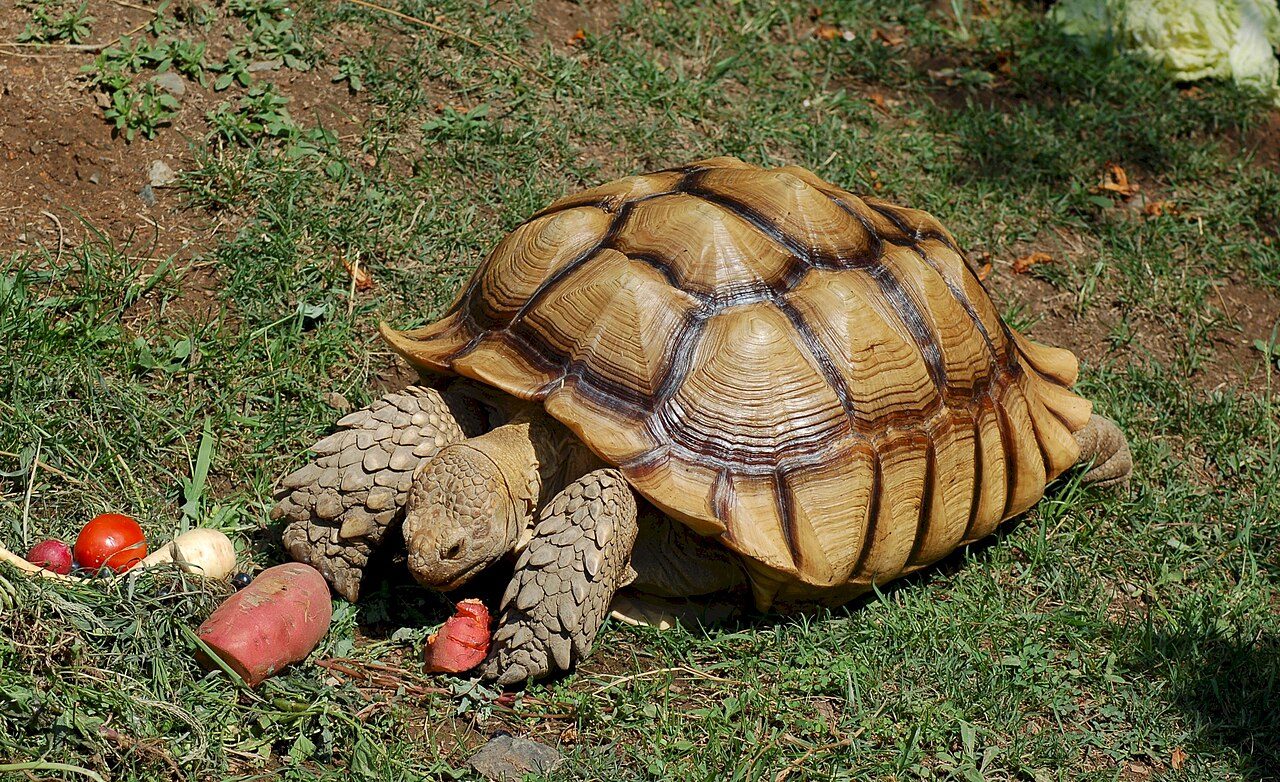
At a glance: Sulcata tortoise (Centrochelys sulcata)
- Temperature
- Basking 95–100°F (35–38°C)
- Adult size
- 24–30 in shell (60–76 cm)
- Enclosure
- Outdoor pen for adults
- Group size
- Alone
- Temperament
- Docile, strong diggers
- Diet
- Herbivore: grasses, hay, weeds, low-sugar greens
- Lifespan
- 70+ years
Keeper’s tip: Adults outgrow any indoor enclosure; plan for a secure outdoor pen early.
Identifying an Unhealthy Sulcata Tortoise Shell
Recognizing the early warning signs of shell degradation is the first step toward recovery. A healthy shell should be smooth, firm, and relatively flat across the scutes, though some natural variation exists.
When an unhealthy sulcata tortoise shell begins to develop, the changes are often subtle at first. You might notice a slight “tenting” of the scutes or a change in the texture of the keratin layer.
I’ve noticed that many keepers mistake “pyramiding” for a natural growth pattern. However, in the wild, these tortoises often have much smoother shells than those raised in captivity without proper humidity.
Pro Tip: Always perform a “firmness check” during your weekly weigh-ins. A hatchling’s shell will have a tiny bit of give, but any adult tortoise with a “spongy” feel to the touch is likely suffering from a severe calcium or UVB deficiency.
Common Visual Indicators of Trouble
If you are worried about your tortoise, look for specific abnormalities. These can range from color changes to structural deformities that impact the tortoise’s mobility.
| Symptom | Possible Cause | Urgency Level |
|---|---|---|
| Pyramiding (Raised Scutes) | Low humidity, high protein diet | Moderate (Long-term) |
| Soft or Spongy Shell | Metabolic Bone Disease (MBD) | High (Emergency) |
| Pitting or Peeling | Shell Rot (Bacterial/Fungal) | High (Requires Treatment) |
| White, Chalky Deposits | Hard water stains or Urate buildup | Low (Cosmetic) |
The Science of Pyramiding
Pyramiding is perhaps the most frequent sign of an unhealthy sulcata tortoise shell. This occurs when the individual scutes grow vertically rather than horizontally, creating a series of peaks.
For years, the hobby believed this was solely due to too much protein in the diet. While diet plays a role, modern research suggests that environmental humidity is the primary factor during the first few years of growth.
In my years of raising hatchlings, I have seen that tortoises kept in “closed chambers” with high humidity (80%+) rarely develop these peaks. Without moisture, the new growth at the base of the scutes dries out and hardens prematurely, forcing the next layer to push upward.
Metabolic Bone Disease (MBD)
Metabolic Bone Disease is a systemic failure of calcium metabolism. It is a heartbreaking condition because it is almost entirely preventable through proper lighting and nutrition.
When a tortoise lacks Vitamin D3 (from UVB light) or dietary calcium, its body begins to “steal” minerals from its own skeleton. This results in an unhealthy sulcata tortoise shell that may become deformed or even soft enough to indent with a finger.
I often compare this to Osmoregulation dysfunction in fish. Just as a fish’s internal mineral balance fails when the water chemistry is wrong, a tortoise’s internal structure collapses when its environmental “chemistry” is ignored.
Shell Rot and Fungal Infections
Shell rot is an umbrella term for bacterial or fungal infections that eat away at the keratin and bone. It often appears as dark, soft, or foul-smelling spots on the plastron (the bottom of the shell).
This is frequently caused by keeping the tortoise on damp, dirty substrate. Saprolegnia fungal infection is a common issue in the aquarium world for stressed fish, and similarly, opportunistic fungi will attack a tortoise if its immune system is compromised.
If you suspect shell rot, the tortoise needs a dry, clean environment and topical antimicrobial treatments. In severe cases, Aeromonas hydrophila septicemia can occur if the infection enters the bloodstream, which is often fatal without aggressive veterinary care.
Environmental Stability and Shell Health
Maintaining a tortoise is remarkably similar to managing a Biofilter nitrification cycle. You are managing waste, moisture, and temperature to create a stable “living” space.
If your enclosure is too dry, the shell pyramids. If it is too wet and cold, the tortoise develops respiratory issues and shell rot. Finding the “sweet spot” is the hallmark of a successful keeper.
To prevent an unhealthy sulcata tortoise shell, you must provide a thermal gradient. This allows the tortoise to self-regulate its body temperature, which is essential for digesting the high-fiber nutritional requirements they need to grow strong bone.
Pro Tip: Don’t rely on “guesswork” for humidity. Buy a digital hygrometer and place it at tortoise-level. What feels humid to you at eye level might be bone-dry on the floor where the tortoise actually lives.
The Role of Hydration
Hydration is not just about drinking; it is about moisture absorption through the skin and cloaca. Dehydration is a leading cause of kidney issues and poor shell growth in Sulcatas.
I highly recommend regular soaking sessions at least three times a week for younger tortoises. This ensures they stay hydrated and helps them pass urates, preventing the “stones” that can cause internal distress.
Comparing Shell Issues to Aquatic Toxicity
It might seem strange to compare a desert tortoise to a fish, but the physiological responses to poor environments are strikingly similar. The shell is an organ, much like a fish’s skin or gills.
When a fish suffers from Ammonia toxicity, the visible damage to the gills is a sign of a toxic environment. Similarly, a pitted or peeling shell is a sign that the tortoise’s “air and earth” are toxic or imbalanced.
Nitrite poisoning in aquariums prevents blood from carrying oxygen properly. In tortoises, a lack of UVB prevents the blood from carrying calcium properly. Both lead to a slow decline in health that can be avoided with proper monitoring of “parameters.”
Water Hardness and Mineralization
Even Water hardness (GH/KH) imbalance has a tortoise equivalent. If your tortoise only has access to extremely hard water or lacks a variety of minerals in its diet, it can lead to internal calcification or shell deformities.
Providing a cuttlebone in the enclosure is a simple way to let the tortoise self-regulate its calcium intake. I’ve noticed that tortoises are very good at knowing when they need an extra boost of minerals.
Correcting an Unhealthy Sulcata Tortoise Shell
If you have realized your pet has an unhealthy sulcata tortoise shell, do not panic. While you cannot “fix” existing pyramiding (it is permanent), you can keep all new growth is smooth and healthy.
The first step is a total audit of your setup. Check your UVB bulbs; most lose their effectiveness after 6-12 months, even if they are still producing visible light.
Next, address the diet. A Sulcata should primarily eat grasses and hay. Avoid “wet” vegetables like fruit or iceberg lettuce, which lack the fiber needed for proper gut motility and shell development.
Troubleshooting Your Tortoise Setup
If you notice signs of decline, use this checklist to identify the source of the problem. Most unhealthy sulcata tortoise shell cases are solved by fixing one of these three pillars.
- UVB Quality: Is the bulb a T5 HO linear tube? Coil bulbs are often insufficient for high-demand species like Sulcatas.
- Humidity Levels: Is the humidity consistently above 50% for adults and 80% for hatchlings?
- Calcium Intake: Are you dusting food with Calcium + D3 twice a week?
Sudden pH fluctuation stress in a fish tank can kill overnight, but tortoise issues are usually a “slow burn.” This gives you time to react, but you must be decisive in your changes.
FAQ: Understanding Shell Health
Can a soft shell be cured? Yes, if caught early. It requires intense UVB therapy and calcium supplementation, often under the guidance of an exotic vet. If the shell has already begun to collapse, the tortoise may have permanent internal damage.
Is pyramiding painful for the tortoise? Pyramiding itself is not necessarily painful, but the conditions that cause it (dehydration and malnutrition) are very stressful. Severe pyramiding can also interfere with a female’s ability to lay eggs or a male’s ability to mate.
What causes white spots on the shell? Most often, these are mineral deposits from hard water or dried urates. However, if the white spots are “fuzzy” or soft, it is likely a fungal infection similar to Columnaris disease in fish, requiring topical treatment.
How fast does a shell grow? Growth rates vary wildly based on diet and temperature. A healthy Sulcata can grow several inches a year in its youth. Rapid, “bloated” growth is often a sign of too much protein and can lead to an unhealthy sulcata tortoise shell.
Before you go
Managing an unhealthy sulcata tortoise shell is a challenge that requires patience and a commitment to environmental excellence. Much like maintaining a pristine aquarium, the secret lies in the details—the humidity, the light spectrum, and the mineral balance.
In my experience, the most successful keepers are those who view their tortoise’s enclosure as a living laboratory. If you watch the shell’s texture and shape, you are essentially reading a progress report on your husbandry.
If you provide the right “water chemistry” (humidity) and “nutrition,” your Sulcata will reward you with decades of companionship. A healthy shell is a reflection of a healthy life. Take the time to get the environment right today, and your tortoise will stand the test of time.

- 2003First tank
- 20+Years keeping
- 40+Tanks kept
- 0Sponsored picks
Howard set up his first 10-gallon planted tank in 2003 and lost half of it within six weeks. Two decades and more than forty aquariums later, he writes the guides he wished he had then: clear numbers, the reasons behind them, and what actually goes wrong in home tanks.