Sulcata Tortoise Hatchlings – Care Guide
Raising sulcata tortoise hatchlings requires a high-humidity environment, precise temperature gradients, and a calcium-rich diet. Keeping consistent hydration and UVB exposure is critical for preventing shell pyramiding and promoting healthy skeletal development.
Bringing home sulcata tortoise hatchlings is a thrilling experience that marks the beginning of a multi-decade journey. These tiny, dinosaur-like creatures are full of personality and charm, often surprising new keepers with their activity levels.
In my experience, the first year of a tortoise’s life is the most critical for establishing a foundation of health. Much like maintaining a delicate reef tank, raising a healthy hatchling requires a “hands-on” approach to environmental stability.
I have spent over a decade refining my approach to reptile and aquatic care, and I’ve noticed that the biggest hurdle for beginners is often overcoming outdated advice. This guide will provide you with the most modern, evidence-based methods for ensuring your hatchlings grow into solid, healthy adults.
Pro Tip: Always source your hatchlings from a reputable breeder rather than a big-box pet store. Captive-bred tortoises are generally hardier and less stressed than those that have been shipped through multiple distributors.
At a glance: Sulcata tortoise (Centrochelys sulcata)
- Temperature
- Basking 95–100°F (35–38°C)
- Adult size
- 24–30 in shell (60–76 cm)
- Enclosure
- Outdoor pen for adults
- Group size
- Alone
- Temperament
- Docile, strong diggers
- Diet
- Herbivore: grasses, hay, weeds, low-sugar greens
- Lifespan
- 70+ years
Keeper’s tip: Adults outgrow any indoor enclosure; plan for a secure outdoor pen early.
Understanding the Biology of Centrochelys sulcata
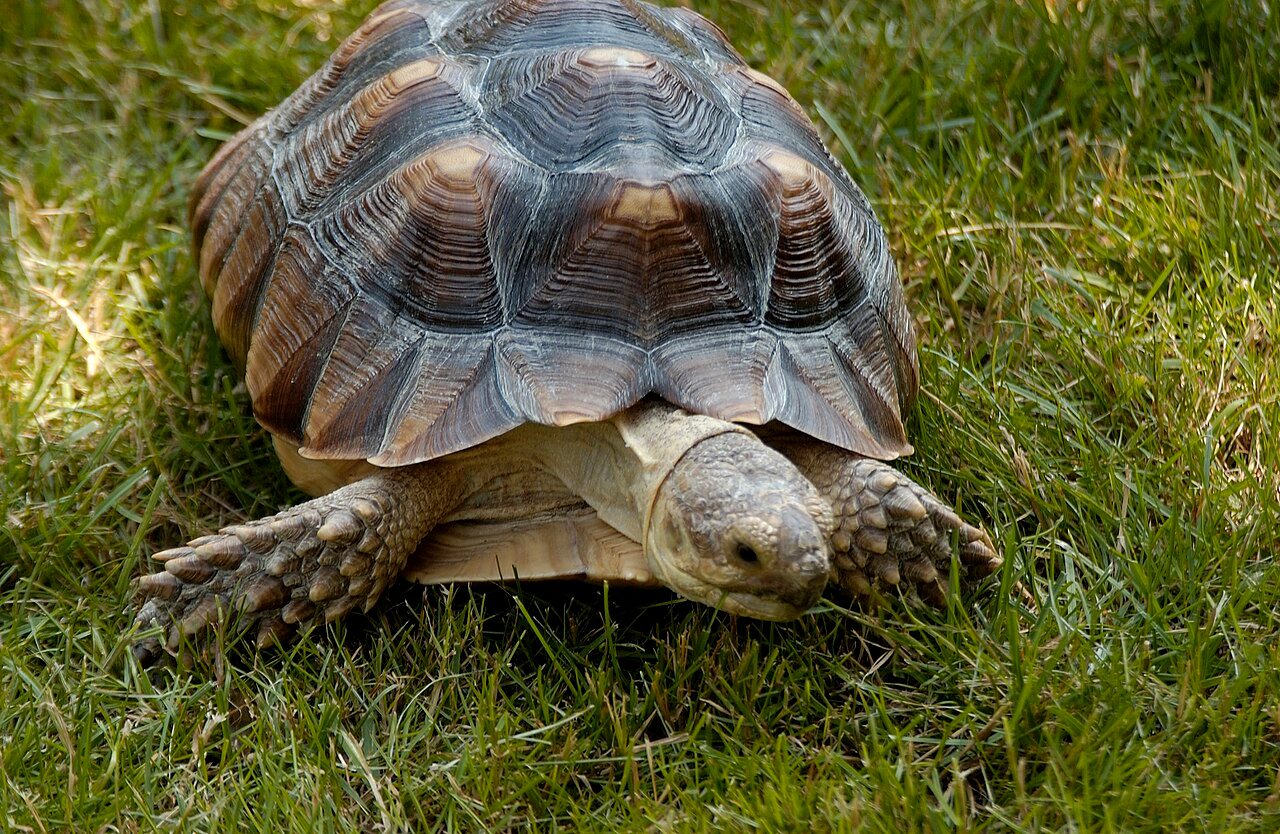
Before diving into the setup, it is vital to understand the animal you are keeping. The African Spurred Tortoise, scientifically known as Centrochelys sulcata, is the third-largest tortoise species in the world.
When they first emerge from the egg, they are barely two inches long. However, these small wonders possess a gular scute—a projection of the lower shell—which they use for sparring and maneuvering in their environment.
The shell itself consists of two main parts: the carapace (the top) and the plastron (the bottom). During the hatchling stage, these structures are relatively soft and require specific nutrients to harden properly.
Creating the Perfect Environment for Sulcata Tortoise Hatchlings
The most common mistake I see is keeping hatchlings in an open-top “tortoise table” in a dry room. While this works for adults, sulcata tortoise hatchlings need a “closed chamber” setup to maintain high humidity levels.
A closed chamber is essentially a sealed enclosure that traps heat and moisture. This mimics the humid microclimate of a burrow, which is where wild hatchlings spend most of their time to avoid dehydration.
A 40-gallon glass terrarium with a sealed lid or a specialized PVC enclosure is an excellent starting point. You must help the proper enclosure setup provides enough floor space for the tortoise to explore and exercise.
| Parameter | Target Range | Reasoning |
|---|---|---|
| Ambient Temperature | 82°F – 85°F | Supports digestion and immune function. |
| Basking Spot | 95°F – 100°F | Necessary for active thermoregulation. |
| Humidity | 80% or Higher | Prevents pyramiding and dehydration. |
| Nighttime Low | 80°F | Avoids respiratory infections in humid air. |
Substrate Choices for Safety and Moisture
I have found that a mix of organic potting soil and coco coir works best. This mixture holds moisture exceptionally well without becoming muddy or harboring mold.
Avoid using sand, as it can cause impaction if swallowed during feeding. Likewise, rabbit pellets or alfalfa hay are poor substrates because they mold quickly and do not provide the necessary humidity.
Maintain a substrate depth of at least 3-4 inches. This allows your sulcata tortoise hatchlings to burrow, which is a natural behavior that helps them feel secure and stay hydrated.
Master Lighting and Thermoregulation
Tortoises are ectothermic, meaning they rely on their environment to regulate their body temperature. This process, known as thermoregulation, is vital for their survival.
You must provide a thermal gradient, with a warm basking side and a cooler side. This allows the tortoise to move back and forth to reach its “goldilocks” temperature for digestion.
Lighting is equally important. Without high-quality UV rays, a hatchling cannot synthesize Vitamin D3, which is required to absorb calcium from their food.
The Role of UVB 10.0 Lighting
For sulcata tortoise hatchlings, a linear UVB 10.0 T5 HO bulb is the gold standard. These bulbs provide a broad spread of UV light that covers a larger portion of the enclosure than coil bulbs.
I’ve noticed that hatchlings kept under coil bulbs often develop eye issues or fail to grow at a normal rate. Replace your linear bulbs every 6 to 12 months, as the UV output diminishes even if the light still looks bright to the human eye.
Ensure the light is mounted at the manufacturer’s recommended height. Usually, this is about 10-12 inches from the shell of the tortoise to provide the most effective “UVI” (UV Index).
Common Mistake: Do not use “colored” night bulbs (red or blue). Tortoises can see this light, and it disrupts their natural circadian rhythm, leading to stress and a weakened immune system.
Hydration: The Key to Preventing Pyramiding
In the tortoise world, pyramiding refers to the abnormal upward growth of the shell scutes. For years, people thought this was caused by too much protein, but we now know it is primarily caused by low humidity.
A hatchling’s shell is surprisingly porous. In a dry environment, they lose moisture through their shell and skin, leading to the “stacking” effect of the scutes.
To combat this, you must maintain a regular soaking routine at least once a day. Use lukewarm water that is no deeper than the tortoise’s chin.
Monitoring Urates and Waste
During these soaks, you may notice a white, pasty substance in the water. These are called urates, and they are a normal byproduct of protein metabolism.
If the urates are soft and creamy, your tortoise is well-hydrated. However, if they are gritty or hard like small stones, it is a sign that you need to increase humidity and soaking frequency immediately.
Hydration also encourages regular bowel movements. A well-hydrated hatchling is an active hatchling that is much more likely to eat and grow.
Feeding for Long-Term Skeletal Health
The diet of sulcata tortoise hatchlings should be very high in fiber and very low in sugar. In their native African habitat, they graze on tough, sun-bleached grasses and weeds.
Your goal is to provide a wide variety of leafy greens, grasses, and weeds. Avoid fruits and high-sugar vegetables, as these can cause blooms of harmful bacteria in the tortoise’s gut.
Focus on a high calcium-to-phosphorus ratio. Calcium is the building block of the shell, while too much phosphorus can actually inhibit calcium absorption.
Recommended Foods and Supplements
A diet based on Timothy hay, orchard grass, and weeds like dandelion and clover is ideal. For younger hatchlings, you may need to finely chop these grasses to make them easier to eat.
I’ve found that Mazuri Tortoise Diet (the original formula) is a fantastic supplement to use a few times a week. It ensures they receive a balanced profile of vitamins and minerals that might be missing from grocery store greens.
| Food Category | Examples | Frequency |
|---|---|---|
| Grasses & Weeds | Dandelion, Clover, Bermuda Grass, Orchard Grass | Daily (70-80% of diet) |
| Leafy Greens | Endive, Escarole, Mustard Greens, Turnip Greens | Daily (20-30% of diet) |
| Supplements | Calcium powder (without D3), Mazuri pellets | 3-4 times per week |
Understanding the specific nutritional requirements of your pet will help you avoid common pitfalls like Metabolic Bone Disease (MBD). MBD is a painful and often fatal condition where the bones become soft and deformed due to lack of calcium or UV light.
Common Health Signs in Hatchlings
Monitoring the behavior of your sulcata tortoise hatchlings is the best way to catch problems early. A healthy hatchling should be alert and curious, with clear eyes and a clean nose.
If you notice a “runny nose” or bubbles coming from the nostrils, this is often a sign of a respiratory infection. This usually happens when the enclosure is too cold or if there are stagnant air pockets.
Lethargy is another red flag. While tortoises do spend a lot of time resting, they should become active once they have spent some time under their basking light.
Identifying Healthy Growth
Growth in hatchlings is not always a perfectly smooth line. You might see “growth lines” between the scutes—these are light-colored areas where new shell material is forming.
This is a great sign. It means your tortoise is absorbing nutrients and expanding. Just make sure the new growth is coming in flat and smooth rather than raised and “bumpy.”
Keep a small kitchen scale to weigh your tortoise once a week. Steady weight gain is the most reliable indicator that your husbandry is on the right track.
Transitioning to the Outdoors
As your sulcata tortoise hatchlings grow, they will eventually outgrow any indoor enclosure. By the time they reach 6 to 8 inches in length, they are usually hardy enough to spend significant time outdoors.
The sun provides the best possible UV lighting, and the large space allows for the exercise they need to build muscle. However, you must ensure the outdoor area is predator-proof.
Birds, raccoons, and even neighborhood dogs can easily kill a young tortoise. A secure, screened-in “tortoise run” with a solid bottom (to prevent digging) is essential for safety.
A few common questions
How fast do sulcata tortoises grow?
In the first few years, they can grow quite rapidly, often doubling or tripling in size. However, their growth rate depends heavily on diet, temperature, and overall health.
Can I keep two hatchlings together?
It is generally better to keep them individually. Tortoises are not social animals, and even as hatchlings, one may “bully” the other for the best basking spots or food, leading to stunted growth for the submissive one.
Why is my hatchling’s shell soft?
Hatchlings are born with slightly flexible shells, but they should gradually harden over the first few months. If the shell feels “spongy” or very soft, it is likely a sign of calcium deficiency or lack of UVB light.
Do they need a water bowl if I soak them?
Yes, always provide a shallow water dish that they can easily climb in and out of. This allows them to drink or soak whenever they feel the need.
In short
Successfully raising sulcata tortoise hatchlings is one of the most satisfying experiences a keeper can have. While they require careful attention to humidity and temperature in their early years, they eventually grow into hardy, impressive animals.
Consistency is your best friend. If you keep a high-humidity environment, providing the right UV lighting, and offering a fiber-rich diet, you are setting your tortoise up for a long and healthy life.
I have found that the more you observe your pet, the more you will learn about their unique needs. Stay diligent, keep learning, and enjoy the process of watching your tiny hatchling transform into a gentle giant.

- 2003First tank
- 20+Years keeping
- 40+Tanks kept
- 0Sponsored picks
Howard set up his first 10-gallon planted tank in 2003 and lost half of it within six weeks. Two decades and more than forty aquariums later, he writes the guides he wished he had then: clear numbers, the reasons behind them, and what actually goes wrong in home tanks.