African Sulcata Tortoise Habitat – Building A Thriving Ecosystem
Creating an ideal african sulcata tortoise habitat involves providing ample space, a precise thermoregulation gradient, high-output UVB lighting, appropriate substrate for burrowing and moisture retention, and consistent access to fresh water and a proper diet to ensure their long-term health and prevent common ailments.
At a glance: Sulcata tortoise (Centrochelys sulcata)
- Temperature
- Basking 95–100°F (35–38°C)
- Adult size
- 24–30 in shell (60–76 cm)
- Enclosure
- Outdoor pen for adults
- Group size
- Alone
- Temperament
- Docile, strong diggers
- Diet
- Herbivore: grasses, hay, weeds, low-sugar greens
- Lifespan
- 70+ years
Keeper’s tip: Adults outgrow any indoor enclosure; plan for a secure outdoor pen early.
Welcome to “Successful Aquarium,” where our mission is to empower you with the knowledge to create flourishing environments for your aquatic and terrestrial companions. While our name often brings fish and shrimp to mind, the principles of successful animal husbandry—understanding natural habitats, providing precise environmental controls, and keeping holistic well-being—extend far beyond the aquatic world. Today, we’re diving into the unusual world of the African Sulcata Tortoise, exploring how to construct an ideal african sulcata tortoise habitat.
These magnificent reptiles, scientifically known as Centrochelys sulcata, are the third-largest tortoise species in the world, originating from the arid savannas and semi-desert regions of North Central Africa. Their immense size and specific environmental needs mean that setting up their enclosure correctly from day one is the top priority. In my many years of animal keeping, I’ve learned that anticipating future growth and understanding an animal’s natural behaviors are key to preventing problems down the line. A well-designed habitat isn’t just about survival; it’s about helping your sulcata do well.
Understanding the Sulcata: Giants of the Savanna
Before we lay out the blueprints for their home, it’s essential to appreciate the natural history of the sulcata tortoise. These tortoises are built for harsh, dry climates, spending the hottest parts of the day seeking refuge in deep burrows they excavate themselves. This burrowing behavior is not just for cooling; it also provides a microclimate with higher humidity than the surface, which is vital for their health. Mimicking these conditions in captivity is the foundation of a successful african sulcata tortoise habitat.
They are herbivores, grazing on grasses, weeds, and various plant matter. Their strong digestive systems are designed for high-fiber, low-protein diets. Understanding these fundamental aspects of their biology will guide every decision you make about their enclosure, from substrate choice to dietary considerations.
The Foundation: Enclosure Size and Type
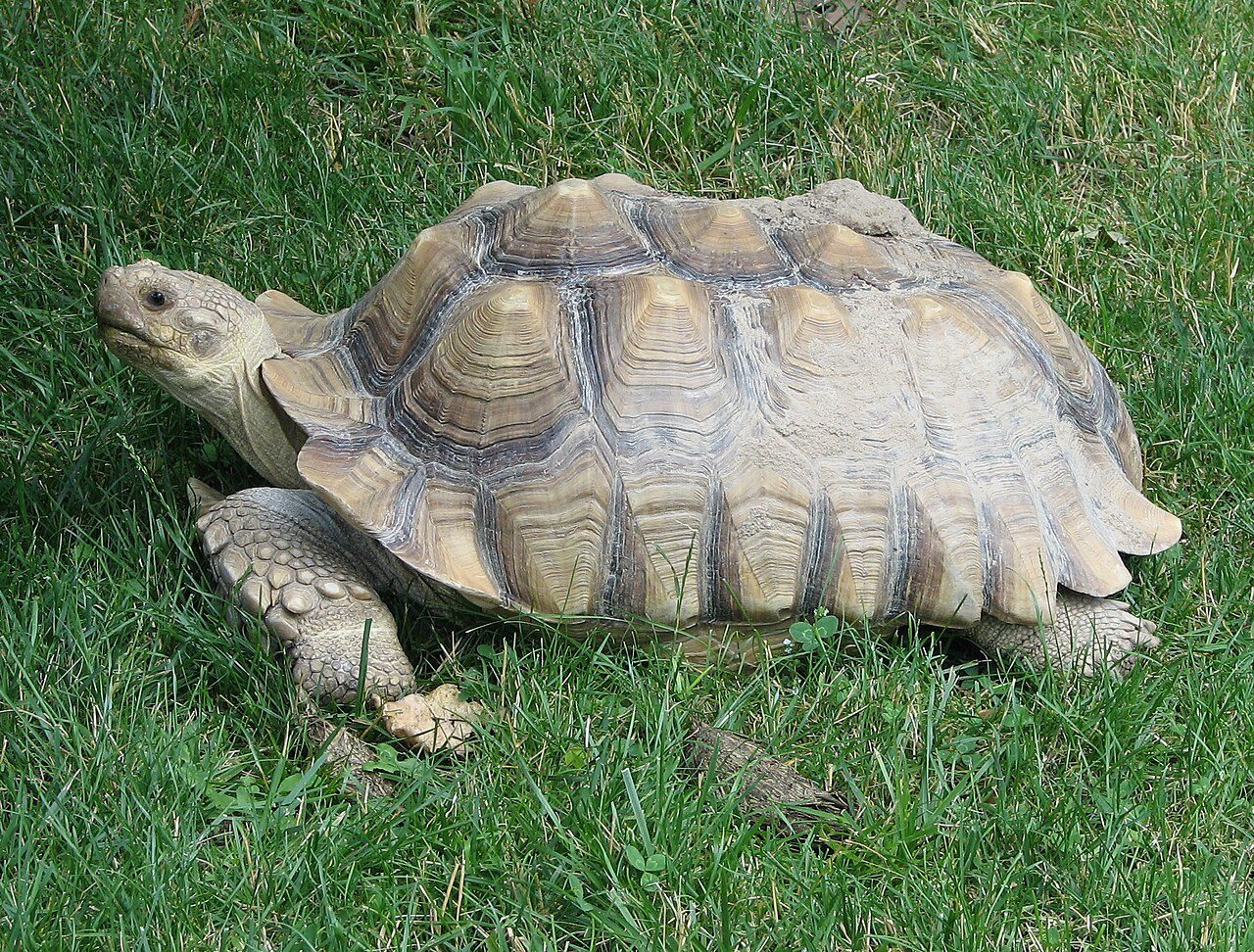
The most critical aspect of any african sulcata tortoise habitat is space. Sulcatas grow rapidly and can reach impressive sizes—often exceeding 100 pounds and 30 inches in shell length. What might seem like a large enclosure for a hatchling will quickly become inadequate. Planning for their adult size is essential, even if you start small.
For hatchlings and juveniles (up to 10-12 inches), an indoor tortoise table or custom-built enclosure measuring at least 4×8 feet is a good starting point. However, this is temporary. For adult sulcatas, especially those housed indoors, the enclosure needs to be massive. We’re talking about dedicated rooms or custom-built structures that are at least 10×10 feet, and ideally much larger—12×12 feet or more.
For outdoor enclosures, which are often the best solution for adult sulcatas in appropriate climates, you’ll need a securely fenced area of at least 100 square feet per tortoise, with strong walls (at least 2 feet deep into the ground to prevent burrowing out, and 2-3 feet high above ground). The bigger, the better, allowing them ample space to graze, explore, and dig.
Pro Tip: Build for Tomorrow, Not Just Today.
When planning your sulcata’s habitat, always envision their adult size. Investing in a larger, more permanent outdoor enclosure or a dedicated indoor space from the start will save you significant time, money, and stress down the road. Trying to constantly upgrade smaller enclosures is a common frustration I’ve seen many keepers face.
Heating and Lighting: Simulating the African Sun
Sulcata tortoises are `heliothermic`, meaning they rely on external heat sources to regulate their body temperature. A proper `thermoregulation gradient` is non-negotiable in their habitat. This means providing a basking spot where they can warm up and cooler areas where they can retreat to cool down.
Basking and Ambient Temperatures
The basking spot should reach 95-100°F (35-38°C). This can be achieved using a mercury vapor bulb (MVB) or a combination of a ceramic heat emitter (CHE) and a separate basking floodlight. The ambient temperature in the rest of the enclosure should range from 80-90°F (27-32°C) during the day, dropping no lower than 70°F (21°C) at night. Consistent temperature monitoring with reliable thermometers is important.
UVB Lighting
One of the most vital components of any african sulcata tortoise habitat is appropriate UVB lighting. Sulcatas require high levels of `UVB 10.0 radiation` to synthesize Vitamin D3, which is essential for calcium absorption and preventing `Metabolic Bone Disease` (MBD). Without adequate UVB, even a diet rich in calcium will be ineffective, leading to serious health issues like shell deformities (`pyramiding`) and weakened bones.
I always recommend a high-output linear fluorescent UVB bulb (like a T5 HO 10.0 or 12.0) spanning a good portion of the enclosure, in addition to the basking lamp. Ensure the UVB bulb is replaced every 6-12 months, as its UVB output diminishes over time even if it still emits visible light.
Substrate: More Than Just Ground Cover
The right substrate is critical for a healthy `african sulcata tortoise habitat`. It serves multiple purposes: aiding in `thermoregulation`, providing digging opportunities, and contributing to `microclimate humidity`.
For indoor enclosures, a mixture of organic topsoil (without pesticides or fertilizers), coco coir, and cypress mulch works wonderfully. This combination offers good `substrate hygroscopy`, meaning it retains moisture well, which is vital for preventing dehydration and aiding in humidity control within their burrows. The substrate should be at least 6-12 inches deep to allow for natural burrowing behavior.
Avoid substrates like sand alone, alfalfa pellets, or cedar/pine shavings. Sand can be dusty, leading to respiratory issues, and if ingested, can cause impaction. A common mistake I’ve seen is using wood shavings, which offer no burrowing stability and can be irritating.
Common Mistake: Inadequate Substrate Depth.
Many new keepers underestimate the importance of deep substrate. Sulcatas are natural burrowers. Providing at least 6-12 inches of a safe, moisture-retaining substrate allows them to create microclimates, regulate their temperature, and feel secure. Without it, they can become stressed, dehydrated, and more susceptible to `pyramiding`.
Humidity and Microclimates: Preventing Pyramiding
Despite their arid natural habitat, sulcata tortoises require access to areas of higher humidity, especially when young. This is where the importance of `microclimate humidity` within their burrows comes into play. In the wild, their deep burrows maintain cooler temperatures and higher humidity than the scorching surface. Replicating this is essential to prevent `pyramiding`, a severe and irreversible shell deformity caused by chronic dehydration and improper nutrition.
For young tortoises, regular misting of the enclosure, especially in burrow areas or humid hides, is beneficial. A humid hide, which is simply an enclosed space filled with damp sphagnum moss or coco coir, provides a key retreat. For larger tortoises in outdoor enclosures, a shaded, well-mulched area that can be periodically dampened will serve a similar purpose. Soaking your tortoise in shallow, warm water 2-3 times a week, especially when young, also aids significantly in hydration and `urate excretion`.
Food and Water: Sustaining a Healthy Tortoise
A proper diet is fundamental to the health of your sulcata. Their natural diet consists primarily of high-fiber grasses and weeds. In captivity, this translates to a diet rich in various grasses (orchard grass, timothy hay, Bermuda grass) and safe weeds (dandelion, plantain, clover). Commercial tortoise diets can supplement this but should never be the primary food source.
Crucially, maintain a proper `calcium-to-phosphorus ratio` in their diet, ideally 2:1. Dusting food with a calcium supplement (without D3 if using proper UVB, or with D3 if UVB is insufficient) a few times a week is often recommended. Avoid high-protein foods like dog food, cat food, or excessive fruits, as these can lead to shell deformities, kidney problems, and rapid, unhealthy growth.
Fresh water must always be available in a shallow, easily accessible dish that your tortoise can climb into and out of safely. The water should be changed daily to prevent bacterial growth. Regular soaks, as mentioned earlier, are also vital for hydration and facilitating `urate excretion`, which is the process of expelling waste nitrogen from their bodies.
Enrichment and Furnishings
Beyond the essentials, enrichment helps keep your sulcata stimulated and engaged. Large, flat rocks (stable and non-tipping), branches, and logs provide climbing opportunities and varied terrain. Hides, whether natural burrows or sturdy commercial hide boxes, are essential for security and `thermoregulation`. Placing food in different locations or offering browse encourages natural foraging behaviors.
For outdoor enclosures, planting safe, edible weeds and grasses encourages natural grazing. Make sure all plants are tortoise-safe and free of pesticides.
African Sulcata Tortoise Habitat: Essential Environmental Parameters
Achieving a successful african sulcata tortoise habitat means diligently maintaining specific environmental parameters. Here’s a quick reference table to guide you:
| Parameter | Recommended Range (Day) | Recommended Range (Night) | Notes |
|---|---|---|---|
| Basking Spot Temperature | 95-100°F (35-38°C) | N/A (lights off) | Provided by basking lamp or MVB. Essential for digestion. |
| Ambient Air Temperature | 80-90°F (27-32°C) | 70-75°F (21-24°C) | Do not let it drop below 70°F (21°C). Use CHEs or RHPs for night heat. |
| UVB Radiation | 10.0-12.0 (high output) | N/A (lights off) | Essential for Vitamin D3 synthesis and calcium metabolism. Replace annually. |
| Humidity (Ambient) | 40-60% | 40-60% | Vital for preventing pyramiding, especially for juveniles. Maintain higher humidity in burrows/humid hides (70-80%). |
| Substrate Depth | 6-12+ inches | 6-12+ inches | Allows for burrowing, `thermoregulation`, and `microclimate humidity` creation. |
FAQ Section: Your Sulcata Habitat Questions Answered
Q1: Can I keep my sulcata tortoise with other tortoises or animals?
A: It is generally not recommended to house sulcata tortoises with other tortoise species due to different dietary needs, potential for disease transmission, and aggression. Sulcatas can also be aggressive towards each other, especially males. If housing multiple sulcatas, keep ample space (significantly more than for a single tortoise) and multiple feeding stations and hides.
Q2: What are the signs of an unhealthy sulcata tortoise habitat?
A: Signs of an improper habitat often manifest in the tortoise’s health. These include `pyramiding` (bumpy, raised scutes on the shell), lethargy, runny nose, swollen eyes, soft shell (a sign of `Metabolic Bone Disease`), or loss of appetite. These are often indicators of incorrect humidity, temperature, UVB, or diet within the african sulcata tortoise habitat.
Q3: How often should I clean my sulcata’s enclosure?
A: Spot cleaning should be done daily, removing any urates, feces, or uneaten food. A deeper clean, involving replacing soiled substrate and sanitizing surfaces, should be performed as needed, typically every 1-3 months depending on the size of the enclosure and the tortoise. Regular cleaning helps prevent bacterial and fungal growth.
Q4: Is a heated water dish necessary for my sulcata?
A: No, a heated water dish is not necessary. Fresh, shallow water at ambient room temperature is perfectly fine. The focus should be on keeping the water clean and easily accessible for drinking and soaking.
Q5: Can sulcatas live indoors their whole lives?
A: While possible, it’s extremely challenging for adult sulcatas due to their massive size and need for extensive space and sunlight. Dedicated tortoise rooms or large custom-built indoor enclosures are required. Most adult sulcatas do well best in secure, well-designed outdoor enclosures in climates that permit it for at least a significant portion of the year.
Conclusion: A Commitment to Excellence
Creating an ideal african sulcata tortoise habitat is a significant undertaking, but an incredibly satisfying one. It requires careful planning, consistent monitoring, and a deep understanding of their unique needs. From the expansive enclosure size to the precise `UVB 10.0 radiation` and `thermoregulation gradient`, every element plays a critical role in their long-term health and well-being.
If you provide a habitat that closely mimics their natural environment, you’re not just housing a pet; you’re offering a well-kept ecosystem where your Centrochelys sulcata can grow, explore, and live a full, healthy life. Patience and diligence are your best tools in this journey. With the right setup, your sulcata tortoise will be a magnificent, long-lived companion, a true proof of successful animal husbandry.

- 2003First tank
- 20+Years keeping
- 40+Tanks kept
- 0Sponsored picks
Howard set up his first 10-gallon planted tank in 2003 and lost half of it within six weeks. Two decades and more than forty aquariums later, he writes the guides he wished he had then: clear numbers, the reasons behind them, and what actually goes wrong in home tanks.