CO2 Scrubber Reef Tank – Setup Checklist
A CO2 scrubber uses sodalime media to remove carbon dioxide from air entering your protein skimmer, effectively raising your tank’s pH and improving the calcium carbonate saturation state for healthier, faster-growing corals.
If you have spent any time monitoring your reef tank’s chemistry, you have likely noticed that your pH levels drop significantly when the windows in your home are closed. This is rarely a sign of a failing tank, but rather a simple consequence of the partial pressure of carbon dioxide in your living space.
When high levels of CO2 dissolve into your aquarium water, it forms carbonic acid, which suppresses your pH and can hinder the scleractinian calcification rate. Many hobbyists struggle to keep their pH above 8.0, often blaming their alkalinity levels when the real culprit is simply the air being pumped into the system.
Why Your Reef Tank Needs a CO2 Scrubber
In my experience, the most effective way to combat diel pH fluctuation is to keep the air your protein skimmer pulls from the room is scrubbed clean before it hits the water. By using a canister filled with sodalime media, you create a barrier that prevents excess atmospheric CO2 from ever reaching your tank.
This process is straightforward: you attach a canister to the air intake of your protein skimmer venturi. As the skimmer draws air in, the media neutralizes the CO2, resulting in a stable, higher pH that encourages sturdy coral growth.
Pro Tip: When setting up your scrubber, help you are using medical-grade CO2 absorbent media. Some cheap automotive variants contain additives that can be detrimental to delicate reef inhabitants.
Managing the Carbonic Acid Equilibrium
The chemistry behind this is interesting. By reducing the CO2 entering the water, you shift the carbonic acid equilibrium, allowing the water to naturally degas CO2. This change significantly improves the calcium carbonate saturation state, which is the “fuel” your stony corals need to build their skeletons.
I have found that even tanks with excellent flow and high-quality lighting struggle to show color and growth if the pH remains chronically low. Integrating a scrubber is often the missing piece for hobbyists who have mastered their nitrate and phosphate levels but still see “stunted” coral development.
| Parameter | Standard Reef | With CO2 Scrubber |
|---|---|---|
| Typical pH Range | 7.7 – 8.1 | 8.2 – 8.4 |
| Growth Potential | Moderate | High/Best |
| Diel Swing | High (0.3 – 0.5) | Low (0.1 – 0.2) |
Setting Up a Recirculating CO2 Scrubber Loop
For those looking to maximize the life of their media, a recirculating CO2 scrubber loop is the gold standard. Instead of venting the skimmer air back into the room, you pipe the exhaust of the skimmer lid back into the intake of the scrubber canister.
This creates a closed loop that dramatically extends the life of your media. Because you are only scrubbing the internal air rather than the fresh air of the entire house, your media will last weeks longer than in a standard open-loop setup.
Knowing When to Change Your Media
Most high-quality sodalime media includes an indicator dye, such as ethyl violet, which changes color as the media becomes exhausted. You will notice the granules shift from white to purple or pink as they reach their capacity to absorb CO2.
Common Mistake: Do not wait until the entire canister is purple to change the media. As soon as you see the color change creeping through the bottom half of the canister, it is time to swap it out to maintain peak performance.
If you are interested in optimizing your tank’s overall gas exchange and plant or coral efficiency, consistency is key. Keep a spare container of media on hand so you are never left scrambling when the indicator dye signals a change.
Questions I get asked a lot
Will a CO2 scrubber harm my fish? No, it is perfectly safe for fish, shrimp, and invertebrates. It only affects the gas exchange dynamics of the water, which is beneficial for all tank inhabitants.
How often should I change the media? It depends on your home’s air quality and the size of your tank. In my experience, a standard setup requires a media change every 3 to 6 weeks, depending on how “stuffy” the room is.
Can I use this on a small tank? Absolutely. While most common on large reef systems, the benefits for nano tanks are even more pronounced because smaller volumes of water are more susceptible to rapid pH swings.
Final thoughts
Implementing a CO2 scrubber is one of the most practical upgrades you can make for a stable reef. By stabilizing your pH and supporting the natural chemical processes required for calcification, you are providing your corals with the environment they need to flourish.
While it requires a bit of ongoing maintenance, the visual and biological rewards are well worth the effort. Always monitor your pH levels as you integrate the system, and enjoy the peace of mind that comes with a stable, healthy reef environment.
Practical notes
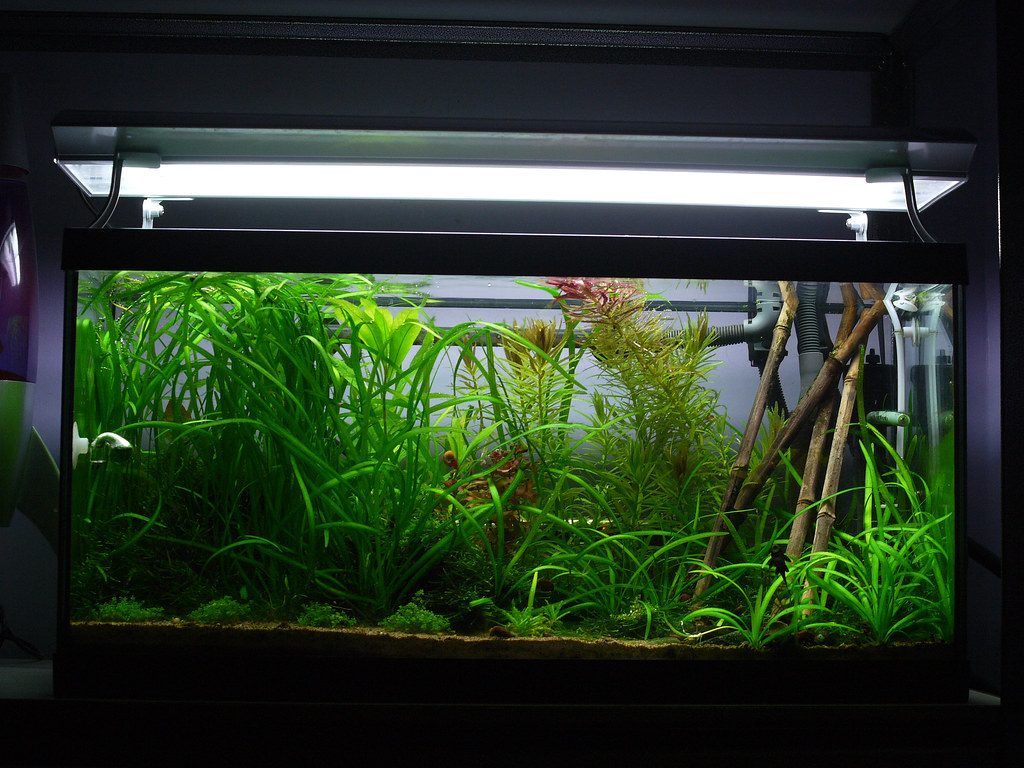
- Aim for about 30 ppm CO2 in a high-tech planted tank; a drop checker turning lime-green is a good visual guide.
- A good diffuser placed near the filter outlet spreads CO2 far better than one in a still corner.
- Turn CO2 on 1–2 hours before lights on and off an hour before lights out.
- Fish gasping at the surface is the first sign of too much CO2; increase surface agitation and lower the bubble rate immediately.

- 2003First tank
- 20+Years keeping
- 40+Tanks kept
- 0Sponsored picks
Howard set up his first 10-gallon planted tank in 2003 and lost half of it within six weeks. Two decades and more than forty aquariums later, he writes the guides he wished he had then: clear numbers, the reasons behind them, and what actually goes wrong in home tanks.