Aquarium Plant Apical Dominance – Explained Simply
Aquarium plant apical dominance is a biological process where the main stem grows faster than side branches. By pruning the terminal bud, you redirect hormones to trigger bushier growth and lateral spreading in your tank.
Every aquarist dreams of that well-grown, wall-to-wall carpet of greenery that looks like a miniature underwater forest.
In my experience, the biggest hurdle to achieving this look isn’t just about the light or the nutrients, but understanding how your plants actually decide to grow.
When I first started keeping high-tech tanks over a decade ago, I was frustrated by “leggy” plants that grew straight to the surface without any side branches.
I soon learned that I was fighting against aquarium plant apical dominance, a natural survival mechanism that prioritizes height over width.
Understanding this concept is the “secret sauce” that professional aquascapers use to create those dense, pillow-like mounds of Rotala rotundifolia or Ludwigia.
Once you learn the way hormones move through a plant, you can literally “command” your greenery to grow exactly where you want it.
What is Aquarium Plant Apical Dominance?
At its core, apical dominance is a hormonal control system that helps keep the primary vertical stem (the apex) remains the dominant grower.
The plant does this by producing a specific hormone called indole-3-acetic acid, which is a type of auxin.
This hormone is produced in the very tip of the stem and travels downward through the plant.
As it moves down, it suppresses the growth of the “axillary buds,” which are the little nodes where new branches would normally sprout.
The Role of Auxins and Cytokinins
In plant biology, growth is often a tug-of-war between two main groups of hormones.
While auxins travel down from the top to stop side growth, another group called cytokinins moves up from the roots to encourage it.
The cytokinin-to-auxin ratio is the internal “switch” that tells a plant whether to grow tall or grow wide.
When the tip is intact, the high concentration of auxin keeps the plant focused on reaching the light as fast as possible.
Why Do Plants Evolve This Way?
In nature, plants are often in a race to reach the water’s surface to access better light and atmospheric CO2.
If a plant spent all its energy growing sideways in the shade of a larger neighbor, it would eventually die.
If you prioritise the main stem, the plant makes sure it stays competitive in its natural habitat.
Pro Tip: If you notice your stem plants are growing very thin with large gaps between leaves, don’t just add more fertilizer. This is often a sign that the plant is “stretching” for light, a process called internodal elongation, which strengthens apical dominance.
The Science of Pruning and Lateral Growth
To get a bushier look, we have to manually intervene in the plant’s hormonal signaling.
When we “top” a plant—meaning we cut off the leading growth tip—we remove the primary source of indole-3-acetic acid.
Suddenly, the downward flow of this inhibitory hormone stops.
This drop in auxin levels triggers axillary bud activation, allowing the side shoots to finally wake up and start growing.
Basipetal Auxin Transport Explained
The term basipetal auxin transport refers to the specific way these hormones move from the “apex” (top) toward the “base” (bottom).
When you make a clean cut with sharp aquascaping scissors, you break this transport chain.
I have noticed that within just 48 to 72 hours of a heavy trim, most healthy stem plants will begin showing two or more new shoots at the node just below the cut.
Lateral Meristematic Tissue
The new growth doesn’t come out of thin air; it comes from the lateral meristematic tissue.
These are essentially “stem cells” for plants that stay dormant as long as the main tip is sending down the “stay asleep” signal.
By removing that signal, you are effectively “waking up” the plant’s potential for density.
| Hormone/Process | Effect on Plant | Aquarist Goal |
|---|---|---|
| Auxin (Indole-3-acetic acid) | Suppresses side branches; promotes height. | Reduce via pruning for bushiness. |
| Cytokinins | Promotes cell division and side shoots. | Encourage via healthy root systems. |
| Gibberellins | Regulates stem elongation and leaf size. | Manage via lighting levels. |
| Photomorphogenesis | Light-mediated growth patterns. | Optimize for compact growth. |
How to Effectively Manage Growth Patterns
Managing the growth in your tank requires more than just random snipping.
You need to understand how different species respond to the removal of their dominant tip.
For instance, many hobbyists keeping tall stem plants find that the first trim is the scariest but the most satisfying.
The “Cut One, Get Two” Rule
In most cases, when you prune a stem, the node immediately below the cut will produce two new stems.
If you prune those two stems later, you get four.
This exponential growth is how those famous “Dutch Style” aquariums look so incredibly full and thick.
Timing Your Pruning
Don’t rush to prune a newly planted stem.
I usually wait until the plant has reached the surface and has established a strong root system.
The plant needs energy reserves (sugars and starches) stored in its tissues to fuel the adventitious shoot formation that follows a trim.
Replanting the “Tops”
One of the best ways to increase density is to take the portion you just cut off and replant it next to the original stem.
The “top” still has its apical bud, so it will continue to grow vertically.
Meanwhile, the “bottom” part will start branching out, giving you both height and width simultaneously.
Common Mistake: Using dull scissors is a recipe for disaster. Dull blades crush the stem rather than slicing it, which can lead to rot at the cut site and prevent new shoots from forming. Always use dedicated, sharp stainless steel aquascaping shears.
Environmental Factors Influencing Apical Dominance
While hormones are the internal messengers, the environment provides the external cues.
Light and CO2 play a massive role in how strongly a plant clings to its vertical growth habit.
Light Quality and Intensity
Plants use photomorphogenesis to sense their surroundings through light receptors.
If the light is too dim, the plant will produce more gibberellins, causing the stem to stretch rapidly toward the light.
This results in a “gangly” look where the leaves are spaced far apart, making it harder to create a dense bush.
By increasing light intensity, you often signal to the plant that it has “reached the sun,” which can naturally soften the strength of its apical dominance.
High light, combined with maximizing CO2 levels, allows the plant to produce enough energy to support multiple branches at once.
Nutrient Availability
A plant that is struggling for nutrients will almost always focus on its main stem.
It simply doesn’t have the “budget” to support side branches.
Ensuring a steady supply of micro and macronutrients helps make sure that once you trigger those axillary buds, they have the fuel they need to grow strong.
Troubleshooting Common Growth Issues
Even with the best pruning technique, sometimes plants don’t behave the way we expect.
Here is a quick checklist to help you identify why your plants might be resisting bushier growth.
Symptom Checklist for Poor Branching
- Stems Rotting After Cut: This usually means the water flow is too low or the scissors were dull.
- Only One Shoot Re-growing: The plant might be light-starved or nutrient-deficient, keeping the cytokinin-to-auxin ratio too low.
- Lower Leaves Falling Off: This is often a sign that the upper canopy is too dense, blocking light from the bottom of the stems.
- Pale New Growth: This is almost always a sign of an iron or general micro-nutrient deficiency.
Practical Decision Table: When to Trim
| Observation | Likely Cause | Recommended Action |
|---|---|---|
| Plant reached the surface. | Natural vertical limit. | Trim top 3-4 inches and replant. |
| Large gaps between leaves. | Low light (internodal elongation). | Increase light; trim low to reset growth. |
| Side shoots are very weak. | Nutrient or CO2 deficiency. | Check CO2 levels and fertilization. |
| Main stem is very thick, no branches. | Strong apical dominance. | “Top” the plant to break dominance. |
Advanced Techniques: Beyond Simple Topping
Once you are comfortable with basic pruning, you can experiment with more advanced ways to manipulate plant shape.
These techniques are common in competitive aquascaping but are perfectly applicable to a home tank.
Training the Plant
You don’t always have to cut the stem to break dominance.
Some aquarists use “bending” or “pinning” techniques.
By gently bending a stem horizontally, you disrupt the flow of auxins.
The hormones tend to pool on the “down” side of the stem, often triggering shoots to grow vertically from every single node along the horizontal length.
The “Hedge” Method
For plants like Micranthemum umbrosum or Rotala, you can treat them like a garden hedge.
Instead of carefully cutting individual stems, you use large shears to shape the entire group into a mound.
This creates hundreds of small cuts, leading to a massive explosion of lateral growth that creates a solid, opaque “wall” of green.
Managing Adventitious Roots
Sometimes, when you break apical dominance, the plant gets “confused” and starts growing roots from the middle of the stem.
These are adventitious roots.
While they can be unsightly, they are simply the plant’s way of trying to grab more nutrients to support its new side branches.
You can simply trim these off with scissors if they ruin the aesthetic of your scape.
Quick checklist
- Root feeders such as swords, crypts and vallisneria need root tabs or a nutrient-rich substrate, not only liquid fertiliser.
- Add plants before fish in a new tank; they start using ammonia and nitrate right away.
- Remove melting or dead leaves promptly so they do not break down into ammonia.
- Yellowing older leaves often point to nitrogen or potassium shortage; yellowing new leaves usually point to iron.
A few common questions
Does every aquarium plant have apical dominance?
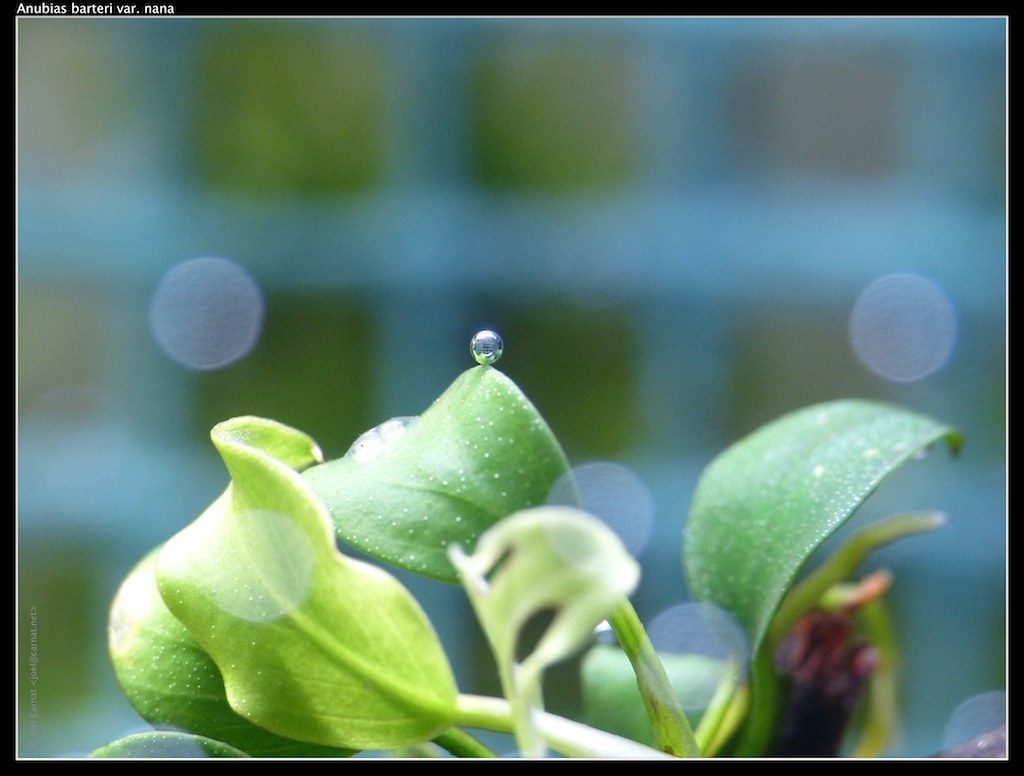
Most stem plants exhibit strong apical dominance. However, rosette plants (like Amazon Swords) and rhizome plants (like Anubias) grow differently. In Anubias, the “apical bud” is at the end of the rhizome; cutting the rhizome will often trigger new growth points along the old wood.
How often should I prune to maintain bushiness?
In a high-tech tank with CO2, you might need to prune every 1-2 weeks. In a low-tech tank, once a month is usually sufficient. The key is to prune before the plant looks overgrown, as this maintains light flow to the lower leaves.
Can I stop a plant from growing tall without cutting it?
Increasing light intensity is the most effective way to discourage vertical stretching. When light is abundant, the plant doesn’t “feel” the need to race to the surface, which can naturally result in shorter internodes and a more compact shape.
What happens if I never prune my stem plants?
If left alone, most stem plants will reach the surface, grow across the top of the water (shading everything below), and eventually the bottom leaves will rot away due to lack of light. The plant will become “top-heavy” and may even detach from the substrate.
Is indole-3-acetic acid dangerous for fish?
No, the natural hormones produced by plants are contained within their tissues and are not harmful to fish or shrimp. Even when you prune and some sap enters the water, the concentrations are far too low to affect your livestock.
Summary of Growth Management
Mastering aquarium plant apical dominance is the transition point between being a “plant keeper” and an “aquascaper.”
It requires a shift in mindset: you are no longer just letting the plants grow; you are directing their energy.
Pruning is not “hurting” the plant.
In fact, it is a rejuvenation process.
By removing the old, dominant tips, you are allowing the plant to utilize its full genetic potential to fill your aquarium with life.
Start with a sharp pair of scissors and a healthy dose of confidence.
In my experience, the most beautiful tanks are the ones where the owner isn’t afraid to make that first cut.
Your plants will thank you with thicker stems, more rich colors, and that coveted bushy appearance.

- 2003First tank
- 20+Years keeping
- 40+Tanks kept
- 0Sponsored picks
Howard set up his first 10-gallon planted tank in 2003 and lost half of it within six weeks. Two decades and more than forty aquariums later, he writes the guides he wished he had then: clear numbers, the reasons behind them, and what actually goes wrong in home tanks.