Angelfish In A Planted Aquarium – Setup Checklist
Keeping angelfish in a planted aquarium provides a natural, low-stress environment that mimics their Amazonian habitat. Success relies on choosing tall plants like Amazon Swords, maintaining warm water, and making sure plenty of vertical swimming space.
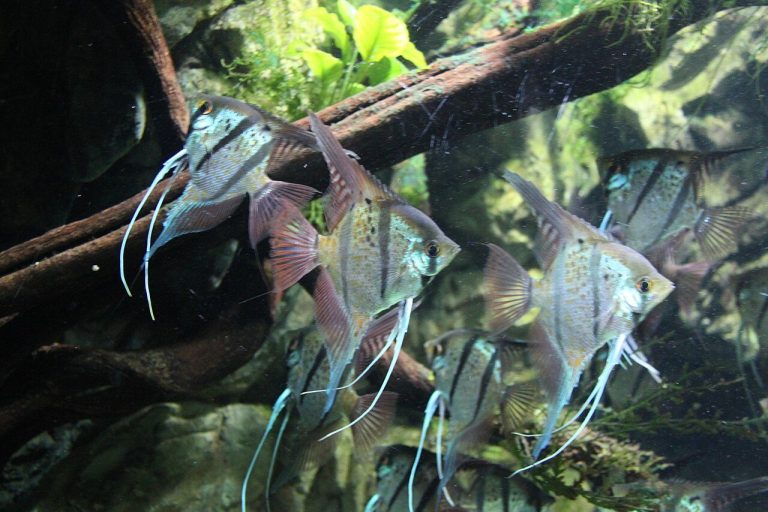
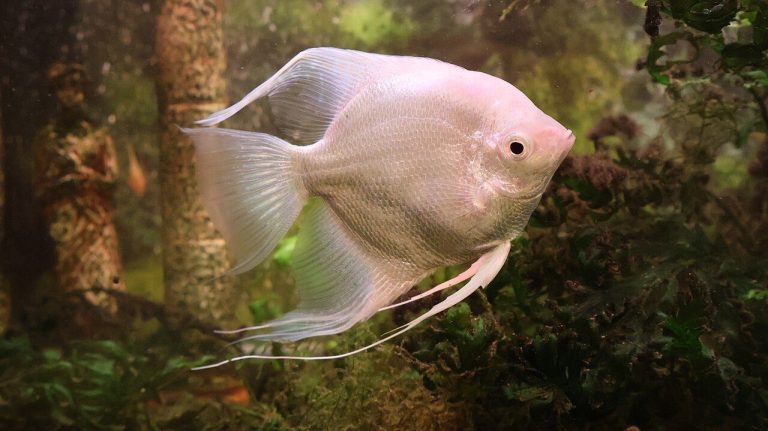
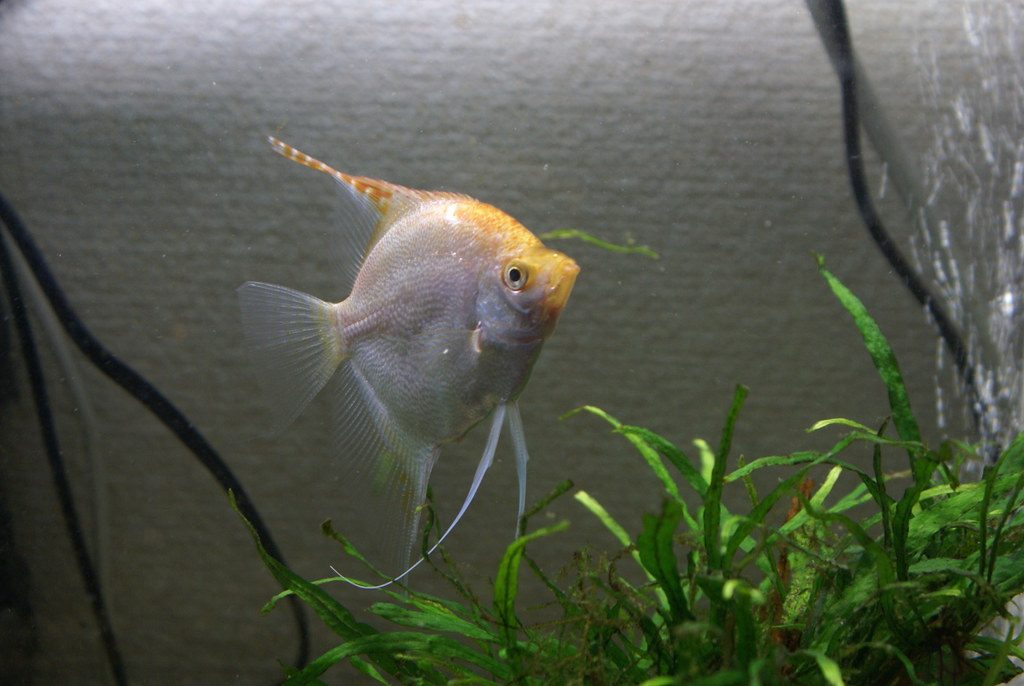
There is something hypnotic about watching a group of Pterophyllum scalare glide effortlessly through a dense, green underwater forest.
In my ten years of keeping these “kings of the aquarium,” I have found that nothing brings out their vivid colors and majestic behavior like a well-designed planted tank.
Angelfish in a planted aquarium flourish because the vegetation offers them a sense of security and natural boundaries.
In this guide, I will share the exact strategies I use to balance the needs of these elegant cichlids with the requirements of a high-tech or low-tech planted setup.
Pro Tip: When first introducing angelfish to a planted tank, always choose smaller, juvenile fish. They are much more likely to adapt to the environment and their tank mates without the territorial aggression often seen in mature adults.
At a glance: Freshwater angelfish (Pterophyllum scalare)
- Temperature
- 76–84°F (24–29°C)
- Water pH
- 6.0–7.5
- Adult size
- 6 in long, 8 in tall (15 × 20 cm)
- Minimum tank
- 30 gal for a pair, 55 gal tall for a group
- Group size
- Pair or group of 5+
- Temperament
- Semi-aggressive, territorial when breeding
- Diet
- Omnivore: pellets, flakes, frozen bloodworm and brine shrimp
- Lifespan
- 10–12 years
Keeper’s tip: Choose a tall tank; height matters more than length for a fish that grows taller than it is long.
The Natural Connection Between Angelfish and Plants
In the wild, angelfish inhabit the slow-moving tributaries of the Amazon River, often found among submerged roots and dense vegetation.
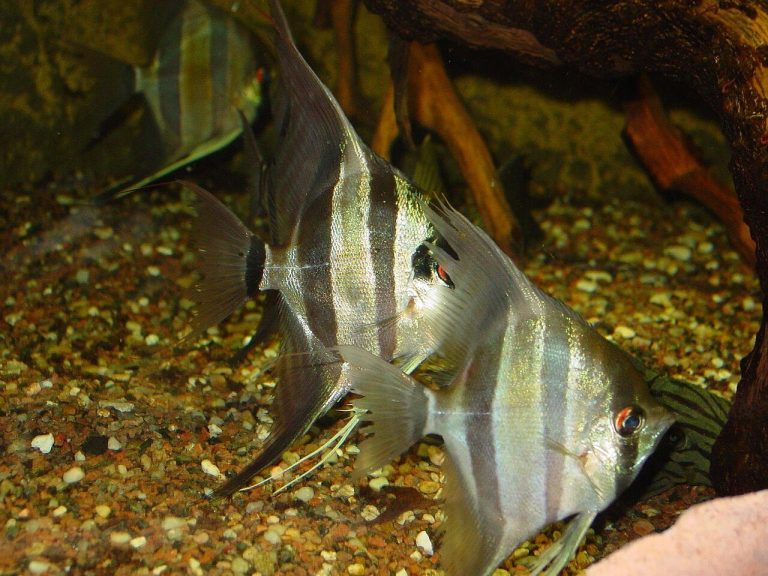
Their unique, laterally compressed bodies are a biological adaptation for vertical stratification, allowing them to slip between narrow plant stems with ease.
By recreating this environment, you are not just making the tank look beautiful; you are supporting their natural instincts.
Plants provide shade from bright lights and serve as potential spawning sites for bonded pairs.
I have often noticed that angelfish kept in bare tanks appear flighty and stressed compared to those in heavily planted enclosures.
Essential Water Parameters for Success
To keep both your fish and your flora healthy, you must find a “sweet spot” in your water chemistry.
Angelfish prefer soft, slightly acidic water, which fortunately aligns perfectly with the needs of most tropical aquatic plants.
One of the most critical factors is Carbonate hardness (KH), which helps stabilize your pH levels.
If your KH is too low, the addition of CO2 for your plants could cause dangerous pH swings that stress your fish.
| Parameter | Ideal Range for Angelfish | Importance Level |
|---|---|---|
| Temperature | 78°F – 84°F (25.5°C – 29°C) | Critical |
| pH Level | 6.5 – 7.2 | High |
| Carbonate Hardness (KH) | 3 – 8 dKH | Moderate |
| Nitrates | Below 20 ppm | Critical |
Maintaining these levels helps make sure that your fish can manage their osmoregulation efficiently.
When water parameters drift too far from their biological needs, their internal salt and water balance is disrupted, leading to a weakened immune system.
Choosing the Best Plants for Your Angelfish
Not all plants are created equal when it comes to an angelfish habitat.
Because these fish grow quite large and have long, delicate fins, you want to avoid plants with sharp edges or extremely dense, “tangling” growth patterns.
I highly recommend starting with the Amazon Sword (Echinodorus grisebachii).
Its broad, sturdy leaves provide the perfect surface for angelfish to clean and eventually deposit their eggs during spawning.
Tall Background Options
Since angelfish are tall fish, they appreciate tall plants that reach the water’s surface.
Vallisneria gigantea is an excellent choice as it creates a “curtain” effect in the back of the tank.
The long, flowing blades of Vallisneria mimic the tall grasses found in the Amazonian floodplains.
This gives the fish plenty of places to hide if they feel threatened by a dominant tank mate.
Midground and Foreground
For the midground, consider Cryptocoryne species or Java Fern attached to driftwood.
These plants are hardy and can withstand the occasional “tasting” from a curious angelfish.
Avoid using very fine-leaved floating plants like Duckweed, as angelfish may try to eat them, which can lead to digestive issues.
Instead, use larger floaters like Amazon Frogbit to provide dappled shade.
Lighting and Nutrient Management
When maintaining angelfish in a planted aquarium, your lighting needs to serve two masters.
Your plants require specific Photosynthetically Active Radiation (PAR) levels to grow, but angelfish can be sensitive to overly intense, direct light.
I suggest using a dimmable LED system that allows you to ramp the light up and down gradually.
This mimics a natural sunrise and sunset, preventing the “startle response” that often causes fish to dart into the glass.
Fertilization and Iron
To keep your Amazon Swords bright, you will likely need to supplement with Chelated iron.
Iron is essential for chlorophyll production, and Swords are notorious “heavy feeders” that pull nutrients from the substrate.
I have found that using root tabs placed directly under the root system of your large plants works best.
This keeps the nutrients in the soil and out of the water column, which helps prevent algae outbreaks.
Pro Tip: If you notice your angelfish nipping at the new growth of your plants, try increasing the amount of vegetable-based flakes or blanched zucchini in their diet. Often, this “grazing” behavior is just a sign they are looking for more vitamins.
Aquascaping for Vertical Swimmers
The layout of your tank is just as important as the plants you choose.
Angelfish need “swimming lanes”—open vertical spaces where they can move without constantly hitting leaves or décor.
When I set up a new tank, I follow the “rule of thirds” but leave a significant clearing in the center or slightly off-center.
This allows the fish to display their fins fully and participate in their social “pecking order” behaviors.
Incorporating tall pieces of driftwood can also help break up lines of sight.
This is vital if you have a breeding pair, as it allows other fish to stay out of the pair’s territorial zone.
Compatible Tank Mates in a Planted Setting
Choosing the right neighbors is essential for a peaceful environment.
Angelfish are generally peaceful but are still cichlids, meaning they can be predatory toward very small fish.
I always suggest looking for social community species that are too large to be considered a snack.
Deep-bodied tetras, such as Rummy Nose or Bleeding Heart tetras, are fantastic schooling companions for angelfish.
Fish to Avoid
Avoid “fin nippers” like Tiger Barbs or Serpae Tetras, as they will find the long filaments of an angelfish irresistible.
Similarly, avoid very small shrimp, as they will quickly become an expensive meal for a hungry adult angelfish.
If you are looking for a centerpiece fish that won’t harass your plants, following proper care routines is the best way to ensure harmony.
Maintenance and Disease Prevention
A planted tank requires a different maintenance approach than a “fish-only” setup.
Decaying plant matter can quickly spike ammonia levels, which is detrimental to angelfish health.
I make it a habit to prune dead leaves every week during my water change.
I also use Peat filtration or add Indian Almond leaves to the filter to naturally lower the pH and release beneficial tannins.
Watching for Hexamita
One common issue with angelfish is “Hole in the Head” disease, often caused by the parasite Hexamita.
This condition is frequently linked to poor water quality and mineral deficiencies.
In a planted tank, the natural filtration provided by the plants helps, but you must still perform regular 25-30% water changes.
Clean water is the best preventative medicine for any cichlid species.
Feeding Your Angelfish for Growth and Color
To see the best results with angelfish in a planted aquarium, a varied diet is non-negotiable.
While they will eat high-quality flakes, they stay healthy on frozen or live foods.
I feed my angels a mix of bloodworms, brine shrimp, and mysis shrimp.
These protein-rich foods support their growth and help the females produce healthy eggs.
Be careful not to overfeed, as excess food will fall into the plants and rot.
In a densely planted tank, it can be hard to see where “lost” food ends up, so feed in small increments.
Frequently asked questions
Do angelfish eat aquarium plants? Generally, no. They may occasionally nip at soft new shoots or algae on the leaves, but they are not “plant destroyers” like Oscars or Silver Dollars. If they are eating your plants, they likely need more greens in their diet.
What is the minimum tank size for angelfish in a planted tank? I recommend a minimum of 30 gallons for a single pair, but a 55-gallon “tall” tank is much better. The extra height allows for both plant growth and the vertical space angelfish require.
Can I use CO2 in an angelfish tank? Yes, but you must be careful. Make sure you have plenty of surface agitation to keep oxygen levels high. Monitor your fish closely; if they are gasping at the surface, your CO2 levels are too high.
What substrate is best for a planted angelfish tank? A nutrient-rich soil capped with fine gravel or sand is ideal. Sand is particularly good because angelfish like to sift through the surface for bits of food, and it won’t scratch their delicate bodies.
My final take
Successfully keeping angelfish in a planted aquarium is one of the most satisfying experiences in the hobby.
If you prioritise vertical space, choosing the right species like Echinodorus grisebachii, and maintaining stable water chemistry, you create a living piece of art.
Keep an eye on your Carbonate hardness and provide a varied diet to keep your fish’s immune systems strong.
With a little patience and the right setup, your angelfish will reward you with years of beauty and remarkable social behavior.
If you are just starting out, don’t be afraid to start with hardy plants and a few juvenile fish.
The journey of watching your underwater garden and your “kings of the tank” grow together is unparalleled.

- 2003First tank
- 20+Years keeping
- 40+Tanks kept
- 0Sponsored picks
Howard set up his first 10-gallon planted tank in 2003 and lost half of it within six weeks. Two decades and more than forty aquariums later, he writes the guides he wished he had then: clear numbers, the reasons behind them, and what actually goes wrong in home tanks.