What Plants Do Angelfish Not Destroy – 11 Expert-Approved Species
Angelfish generally do not destroy plants with tough, leathery foliage such as Anubias, Java Fern, and Amazon Swords. These hardy species possess high cellulose density and lignified tissue that effectively resist grazing and damage during spawning.
In my decade of keeping Pterophyllum scalare, I have learned that “angelfish-proof” is a relative term. These majestic cichlids are not naturally destructive like Oscars, but they have specific behaviors that can wreak havoc on a delicate aquascape.
When I first started, I made the mistake of planting soft, feathery stems that looked like a salad bar to my hungry fish. Within days, my expensive plants were reduced to bare stalks, leaving me frustrated and confused.
Understanding what plants do angelfish not destroy is the secret to maintaining a dense, green environment while keeping these “Kings of the Aquarium” happy. If you choose species with the right structural defenses, you can create a beautiful South American biotope that lasts for years.
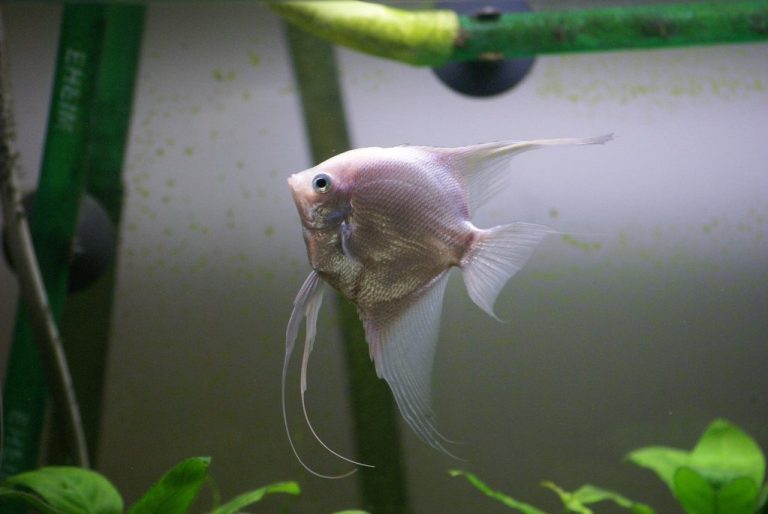
At a glance: Freshwater angelfish (Pterophyllum scalare)
- Temperature
- 76–84°F (24–29°C)
- Water pH
- 6.0–7.5
- Adult size
- 6 in long, 8 in tall (15 × 20 cm)
- Minimum tank
- 30 gal for a pair, 55 gal tall for a group
- Group size
- Pair or group of 5+
- Temperament
- Semi-aggressive, territorial when breeding
- Diet
- Omnivore: pellets, flakes, frozen bloodworm and brine shrimp
- Lifespan
- 10–12 years
Keeper’s tip: Choose a tall tank; height matters more than length for a fish that grows taller than it is long.
Why Do Angelfish Attack Aquarium Plants?
To choose the right flora, we first need to understand why these fish interact with plants in the first place. Angelfish are opportunistic omnivores that naturally graze on biofilm and small organisms found on leaf surfaces.
During their grazing sessions, they may accidentally (or intentionally) tear soft leaves that lack structural integrity. This is especially common if their diet is lacking in essential vegetable matter or fiber.
Another major factor is their breeding behavior. When a pair prepares to spawn, they carefully clean a flat surface—often a broad leaf—using their mouths to scrub away algae and debris.
Pro Tip: If you notice your fish aggressively “pecking” at a specific leaf, check for spawning behavior. Providing a dedicated ceramic breeding slate can often distract them from scrubbing your prized Amazon Swords to death.
If the leaf is too thin, this vigorous cleaning process can cause significant bruising or tearing. If you choose plants with high cellulose density, you make sure the leaves can withstand the “tough love” of a breeding pair.
The Science of “Angelfish-Proof” Plants
Not all plants are created equal when it comes to durability. Experts look for specific biological traits that make a plant resistant to the curious mouths of cichlids.
The most important factor is lignified tissue. This refers to the woody, toughened parts of a plant that provide rigid support and make the leaves difficult to chew or tear.
Plants that grow from a rhizome also tend to be more resilient. Because the main “energy center” of the plant is a thick, horizontal stem, the plant can quickly recover even if a few leaves are damaged.
When you are researching what plants do angelfish not destroy, you should focus on species that are traditionally labeled as “low light” or “slow-growing.” These plants invest more energy into building tough cell walls rather than rapid, soft growth.
Top 11 Plants That Angelfish Will Not Destroy
Through years of trial and error in my own tanks, I have identified several species that consistently survive the antics of Pterophyllum scalare. These plants offer the perfect balance of beauty and brawn.
1. Anubias barteri (and varieties)
Anubias barteri is the gold standard for any cichlid tank. Its leaves are thick, leathery, and almost plastic-like in texture, which makes them completely unappealing to fish.
These plants are epiphytes, meaning they should be attached to driftwood or rocks rather than buried in the substrate. This keeps the rhizome safe from rot and away from any fish that might dig around the base.
2. Java Fern (Microsorum pteropus)
Microsorum pteropus is another fantastic choice because it is rumored to have a bitter taste that fish find repulsive. Even the hungriest angelfish will usually take one bite and never touch it again.
Java Fern is incredibly hardy and can settle in in a wide range of water parameters. It provides excellent cover for smaller tank mates while adding a wild, natural look to the midground.
3. Amazon Sword (Echinodorus grisebachii)
The Amazon Sword is the quintessential plant for an angelfish aquarium. While its leaves are softer than Anubias, its sheer size and rapid growth allow it to withstand most grazing.
These plants are the preferred spawning site for many pairs. Their broad, vertical leaves provide the perfect “nursery” for eggs, making them a functional and aesthetic addition.
| Plant Species | Growth Rate | Durability (1-10) | Best Placement |
|---|---|---|---|
| Anubias barteri | Slow | 10 | Rocks/Driftwood |
| Java Fern | Slow to Medium | 9 | Midground |
| Amazon Sword | Fast | 7 | Background |
| Jungle Vallisneria | Very Fast | 8 | Background |
| Cryptocoryne wendtii | Medium | 8 | Foreground/Mid |
4. Jungle Vallisneria (Vallisneria americana)
If you want a “forest” look, Vallisneria americana is your best friend. Its long, ribbon-like leaves are surprisingly tough and can grow to reach the surface of the water.
Angelfish love swimming through the “grass” provided by Vallisneria. Because it spreads via runners, the plant can usually outgrow any minor damage the fish might cause.
5. Cryptocoryne wendtii
Cryptocoryne wendtii is a versatile plant that comes in various colors, including brown, green, and red. It is a root-feeder that develops a very strong root system once established.
In my experience, angelfish ignore Crypts entirely. They are a great way to add color to the lower levels of your tank without worrying about them becoming a snack.
6. African Water Fern (Bolbitis heudelotii)
Bolbitis heudelotii is a striking plant with translucent, dark green leaves. Like Java Fern, it is an epiphyte that stays healthy in areas with good water flow.
Its leaves are quite rigid and resistant to tearing. It adds a sophisticated texture to the aquarium that contrasts beautifully with the broad leaves of Swords or Anubias.
Creating the Perfect Environment for Plants and Fish
Choosing the right plants is only half the battle. You also need to keep your water parameters support both your flora and your properly caring for these cichlids.
Angelfish prefer warm, slightly acidic to neutral water. Most of the plants listed above are highly adaptable and will stay healthy in these conditions as long as you provide basic nutrients.
| Parameter | Ideal Range for Angelfish & Plants |
|---|---|
| Temperature | 76°F – 84°F (24°C – 29°C) |
| pH Level | 6.5 – 7.5 |
| Water Hardness | 3 – 8 dKH |
| Nitrate | Below 20 ppm |
Maintaining a stable freshwater environment is essential. Large fluctuations in water chemistry can stress your plants, making them more susceptible to melting and, consequently, more tempting for fish to pick at.
Strategic Aquascaping to Prevent Damage
When you are considering what plants do angelfish not destroy, think about the layout of your tank. Angelfish are large, deep-bodied fish that need open swimming space in the center.
If you crowd the middle of the tank with delicate plants, the fish will likely knock into them or tear them while handling. Use tall, sturdy plants like Vallisneria along the back and sides.
Place your Anubias and Java Fern on driftwood “islands” in the midground. This creates a natural barrier and provides hiding spots without obstructing the main swimming lanes.
Pro Tip: Use a tiny amount of cyanoacrylate-based superglue gel to attach epiphytes to rocks. This prevents the fish from dislodging the plants before the roots have a chance to wrap around the hardscape.
By organizing your tank this way, you satisfy the biological needs of your choosing the right variety while protecting your greenery.
Managing Angelfish Behavior Around Plants
Even with the toughest plants, a bored or hungry angelfish can still be a nuisance. One of the best ways to protect your plants is to keep your fish well-fed.
I recommend incorporating high-quality spirulina flakes or blanched vegetables like zucchini into their diet. When their craving for greens is satisfied by their food, they are much less likely to graze on your Amazon Swords.
Furthermore, keep an eye on the maturity of your fish. Juvenile angelfish are often more “mouthy” and curious than established adults.
As they grow, they generally settle down, especially if they have a consistent routine. Providing plenty of enrichment, such as varied frozen foods and a calm environment, can reduce destructive behaviors.
Common Mistakes to Avoid
Many hobbyists fail because they try to keep “soft” plants like Hornwort, Cabomba, or Duckweed with large cichlids. These plants are essentially fish snacks and will be destroyed in a matter of days.
Another mistake is failing to provide enough light or nutrients for the “tough” plants. If an Anubias leaf starts to decay due to poor light, it becomes soft, loses its cellulose density, and the fish will immediately start tearing it apart.
Always ensure you are using a quality liquid fertilizer and, if necessary, root tabs for heavy feeders like Amazon Swords. A healthy plant is a resilient plant.
Finally, don’t forget the importance of substrate. While epiphytes don’t care, plants like Vallisneria and Crypts need a nutrient-rich substrate to develop the strong root systems that keep them anchored against the movements of large fish.
Quick answers
Can angelfish live with floating plants?
Yes, but choose carefully. Large floating plants like Amazon Frogbit or Water Lettuce are usually safe because their roots are tough, but tiny plants like Duckweed will likely be eaten.
Do angelfish eat moss?
Usually, no. However, moss can trap a lot of debris and leftover food, which might lead to angelfish picking at the moss to get to the snacks, potentially pulling the moss apart.
Will angelfish destroy red plants?
Most red plants, like Alternanthera reineckii, are stem plants with softer leaves. Unless you have a very large, established colony, angelfish may pick at them more than green, leathery varieties.
How do I stop my angelfish from pulling up new plants?
Use lead weights (aquarium safe) or large river stones to weigh down the base of new plants until their root systems are fully established in the substrate.
A closing note
Finding what plants do angelfish not destroy is a journey of understanding the intersection of botany and fish behavior. If you focus on species with lignified tissue and high cellulose density, you can build a tank that is both beautiful and durable.
Plants like Anubias barteri, Microsorum pteropus, and Echinodorus grisebachii are your most reliable allies. They provide the natural aesthetic that makes an angelfish tank so interesting while standing up to the unique challenges of keeping cichlids.
A successful aquarium is a balanced ecosystem. Feed your fish well, maintain your water parameters, and choose the right “angelfish-proof” species to enjoy a healthy, green underwater world for years to come.

- 2003First tank
- 20+Years keeping
- 40+Tanks kept
- 0Sponsored picks
Howard set up his first 10-gallon planted tank in 2003 and lost half of it within six weeks. Two decades and more than forty aquariums later, he writes the guides he wished he had then: clear numbers, the reasons behind them, and what actually goes wrong in home tanks.