Are Axolotls Related to Salamanders – The Real Connection
Yes, axolotls are not just related to salamanders—they are salamanders. Specifically, the axolotl (Ambystoma mexicanum) is a critically endangered mole salamander that remains fully aquatic throughout its life due to an evolutionary trait known as neoteny.
Aquarium enthusiasts often marvel at the alien appearance of the Mexican walking fish. With their feathery external gills, permanent smiles, and delicate limbs, these creatures look distinct from almost any common pet.
Beginner hobbyists frequently ask, are axolotls related to salamanders, or do they belong to an entirely different family of aquatic animals? The biological truth surprises many: the axolotl is not a fish, a reptile, or an evolutionary hybrid, but a true amphibian belonging directly to the salamander lineage.
Understanding this evolutionary kinship is vital for any aquarist. When you appreciate the biology behind the species, you can provide far better captive care, recreate ideal aquatic conditions, and safeguard their delicate physiology.
To answer whether are axolotls related to salamanders from a scientific standpoint, one only needs to examine their taxonomic classification. Biologists classify the axolotl as Ambystoma mexicanum, placing it squarely in the order Urodela (the salamanders) and the family Ambystomatidae.
Members of the Ambystomatidae family are commonly called mole salamanders. This widespread family includes well-known North American species like the tiger salamander (Ambystoma tigrinum) and the spotted salamander (Ambystoma maculatum).
Consequently, the axolotl is not merely a distant cousin to salamanders. It is a genuine mole salamander that diverged genetically to adapt to its unique, prehistoric lake environment.
Kingdom: Animalia Phylum: Chordata Class: Amphibia Order: Urodela (Caudata) Family: Ambystomatidae Genus: Ambystoma Species: A. mexicanum
Within this family tree, the axolotl shares close genetic markers with the North American tiger salamander complex. In laboratory settings, axolotls can even interbreed with tiger salamanders, producing viable hybrid offspring.
This close compatibility proves that their underlying genetics remain remarkably aligned with standard terrestrial salamanders. The fundamental difference lies in how their genes regulate adult development.
The Phenomenon of Neoteny: Why Axolotls Stay Aquatic
Most amphibians follow a predictable life cycle. They hatch from aquatic eggs as gill-bearing larvae, grow within the water, and eventually undergo a dramatic metamorphosis.
During metamorphosis, standard salamanders lose their external gills, develop functioning lungs, thicken their skin, and crawl onto land as air-breathing terrestrial adults. They only return to the water to mate and deposit eggs.
The axolotl defies this traditional cycle through a biological adaptation called neoteny, also known as paedomorphosis. Neotenic animals reach full sexual maturity while permanently retaining their juvenile larval characteristics.
The physiological cause of neoteny involves the endocrine system. Axolotls possess a thyroid gland that fails to produce sufficient thyroid-stimulating hormone (TSH) to trigger systemic thyroxine release.
Without this biochemical trigger, the body never receives the signal to absorb its gills, remodel its jaw structure, or transition to terrestrial life. They remain fully aquatic juveniles in body, yet capable adults in reproduction.
Evolution favored this adaptation because the ancient home where wild axolotls originated—the high-altitude canal systems of Lake Xochimilco—provided a stable habitat. The surrounding terrestrial environment offered scarce food and abundant predators, making permanent aquatic life advantageous.
Common Mistake: Never expose your pet axolotl to supplemental iodine, thyroid hormones, or fluctuating terrestrial enclosures in an attempt to trigger metamorphosis. Artificially forcing an axolotl to morph causes extreme systemic stress, drastically reduces their immune function, and significantly shortens their lifespan.
Anatomical Comparison: Axolotl vs. Terrestrial Salamander
While the axolotl retains its larval body, it shares nearly all core skeletal and internal systems with land-dwelling salamanders. Examining their physical traits side-by-side illustrates both their close relationship and their aquatic divergence.
Axolotls retain extensive, branching external gill rami lined with delicate fimbriae that absorb oxygen directly from the water column. In contrast, an adult tiger salamander resorbs these gills entirely, developing functional internal lungs and breathing partly through cutaneous respiration across damp skin.
Furthermore, axolotls keep their broad, finned tail from head to vent, which propels them swiftly through water. Terrestrial salamanders develop a rounded, muscular tail designed for counterbalance, fat storage, and locomotion across damp soil.
| Biological Feature | Axolotl (Ambystoma mexicanum) | Tiger Salamander (Ambystoma tigrinum) |
|---|---|---|
| Life Cycle Type | Obligate neotenic (remains larval) | Metamorphic (aquatic larva to land adult) |
| Primary Respiration | External feathery gills, rudimentary lungs, skin | Internal lungs and permeable skin |
| Tail Structure | Broad, flattened caudal fin for swimming | Thick, rounded tail for terrestrial mobility |
| Eyelids | Absent (true larval characteristic) | Present (develop post-metamorphosis) |
| Adult Habitat | Strictly aquatic freshwater lakes and canals | Subterranean burrows, leaf litter, forest floor |
| Regenerative Ability | Exceptional (limbs, spinal cord, heart, brain) | Limited (primarily tail tip and juvenile limbs) |
Their internal skeletal structure also reflects this difference. While an adult tiger salamander ossifies its skeleton with dense bone to support its weight against gravity on land, an axolotl possesses a lighter, predominantly cartilaginous skeleton.
This supple framework is perfectly adapted for buoyancy in deep water. It is ill-suited, however, for walking unsupported across terrestrial ground.
Can an Axolotl Metamorphose into a Land Salamander?
Because axolotls carry all the dormant genetic programming of their terrestrial ancestors, metamorphosis is biologically possible under artificial conditions. When scientists inject axolotls with thyroxine or iodine in research laboratories, the latent genes activate.
During this process, the axolotl undergoes rapid, dramatic bodily restructuring. Their prominent external gills atrophy and dissolve within weeks.
Their eyes bulge outward and develop true eyelids. At the same time, the aquatic caudal dorsal fin recedes, and their skin thickens to prevent desiccation on land.
When the transformation concludes, the animal looks almost identical to an adult terrestrial mole salamander. However, this forced process is perilous and damaging.
Spontaneous metamorphosis in captive home aquariums is exceedingly rare, occurring in less than one in every several thousand individuals due to recessive genetics. Morphing puts immense strain on internal organs, causes extreme metabolic trauma, and typically reduces their lifespan from fifteen years down to under three.
Native Habitat and Evolutionary Drivers
The unique biology of the axolotl developed because of the unique geography of the Valley of Mexico. Millions of years ago, tectonic activity and volcanism created a massive, closed endorheic basin filled with deep, glacier-fed lakes.
Lake Xochimilco and Lake Chalco were vast, nutrient-dense freshwater ecosystems fed by continuous mountain runoff. These waters provided abundant nourishment, including freshwater snails, amphipods, small fish, and insect larvae.
Conversely, the surrounding volcanic landmass was dry, rugged, and populated by predatory birds and small mammals. There was little ecological benefit for an amphibian to abandon a plentiful aquatic paradise to compete on harsh dry land.
As generations passed, natural selection favored individuals that remained underwater permanently. Genetic mutations downregulating thyroid activity became widespread throughout the population, cementing neoteny as the standard survival strategy for the species.
Today, understanding these environmental origins helps keepers realize why pristine water parameters are non-negotiable. Because they never adapted to survive outside their cool aquatic cradle, their tolerance for poor water conditions is low.
Captive Care Implications for Aquatic Salamanders
Knowing that axolotls are permanently aquatic salamanders shifts how an aquarist manages their habitat. They cannot be kept like semi-aquatic newts, nor can they be treated like standard tropical fish.
First, temperature control is paramount. As cold-water amphibians from high-elevation lakes, their metabolic systems require water temperatures between 60°F and 68°F (15°C to 20°C).
Warm aquarium water above 72°F (22°C) causes chronic immune suppression, bacterial blooms, and systemic fungal infections. Maintaining these cool conditions is one reason why mastering axolotl care and maintenance requires specialized equipment like aquarium chillers or cooling fans.
Second, their larval skin and external gills are acutely sensitive to dissolved toxins. Ammonia and nitrite must remain at absolute zero, while nitrates should consistently register below 20 ppm through biological filtration and weekly partial water changes.
Pro Tip: Install a low-flow spray bar or baffle your filter outlet. Axolotls evolved in calm, slow-moving lake canals; high water currents cause constant stress, prompting them to curl their gills forward and refuse food.
Additionally, physical substrate choices must accommodate their suction-feeding behavior. Because axolotls inhale their prey whole by rapidly opening their mouths, gravel and small stones cause fatal gastrointestinal impactions.
A safe enclosure requires either an entirely bare-bottom glass tank or extremely fine aquarium sand (under 1 mm grain size) that passes effortlessly through their digestive tract.
Frequently Asked Questions About Axolotl Biology
Are axolotls lizards or salamanders?
Axolotls are amphibians and salamanders, not lizards. Lizards are reptiles with scaly, watertight skin, clawed toes, and lungs from birth, while axolotls have smooth, permeable skin, lack claws, and reproduce via soft aquatic eggs.
Can an axolotl survive out of water?
An axolotl cannot survive out of water. While they possess rudimentary lungs and occasionally gulp air from the surface, their external gills collapse and dry out quickly in the air, leading to rapid suffocation and lethal dehydration within hours.
Are mudpuppies and axolotls the exact same species?
Mudpuppies (Necturus maculosus) and axolotls are completely different species from separate families. Mudpuppies belong to the family Proteidae, are native to eastern North America, have four toes on their rear feet instead of five, and cannot be induced to metamorphose even with hormones.
Why do some captive axolotls look different from wild ones?
Centuries of captive breeding have produced numerous domestic color morphs, including Leucistic, Golden Albino, and Melanoid strains. In contrast, wild axolotls are naturally dark mottled green, brown, or gray, which provides natural camouflage against muddy lake substrates.
Final Thoughts on Axolotls and Salamanders
Discovering that axolotls are fully fledged salamanders opens a fascinating window into evolutionary biology. Their ability to pause metamorphosis, retain youthful traits, and thrive in an aquatic niche highlights the incredible adaptability of the amphibian class.
For aquarium keepers, respecting their identity as neotenic salamanders is the foundation of successful husbandry. By providing cool, clean, low-flow water and honoring their unique anatomy, you ensure these remarkable animals thrive for many years to come.
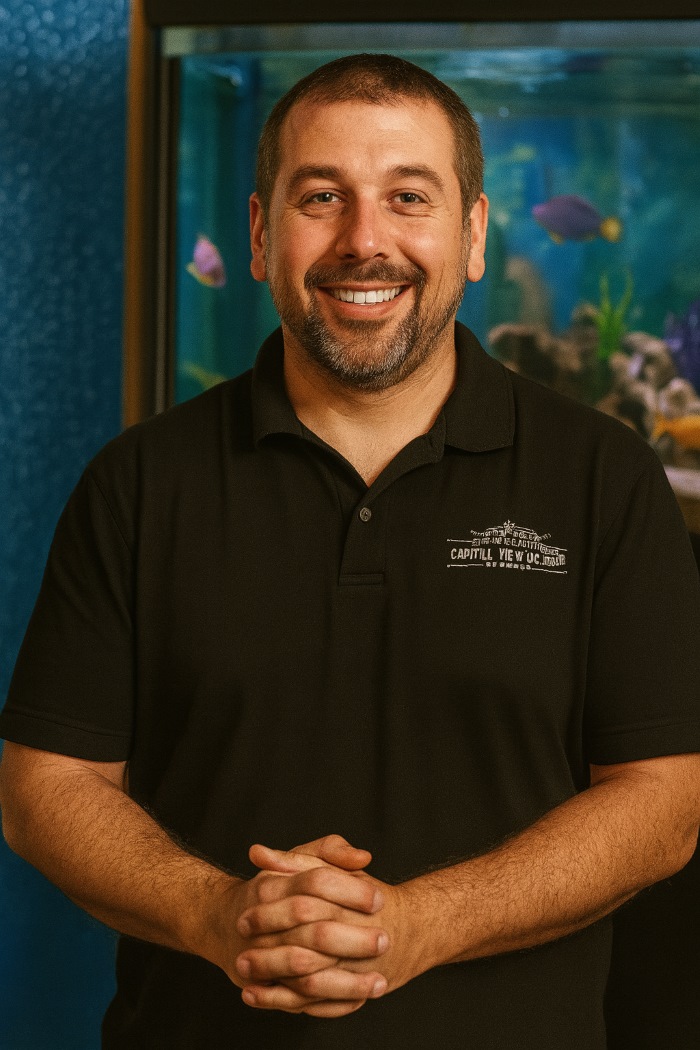
- 2003First tank
- 20+Years keeping
- 40+Tanks kept
- 0Sponsored picks
Howard set up his first 10-gallon planted tank in 2003 and lost half of it within six weeks. Two decades and more than forty aquariums later, he writes the guides he wished he had then: clear numbers, the reasons behind them, and what actually goes wrong in home tanks.