How To Stop Angelfish Eggs From Turning White – The Expert Guide
To stop angelfish eggs from turning white, you must ensure successful fertilization, maintain pristine water quality, and use anti-fungal agents like Methylene blue to prevent the spread of Saprolegnia fungus from dead eggs to healthy ones.
There is nothing quite like the excitement of seeing a pair of angelfish cleaning a leaf or a piece of slate in preparation for spawning.
As a hobbyist with over a decade of experience breeding Pterophyllum scalare, I know that rush of adrenaline when you see those first few translucent beads appear.
However, that excitement often turns to heartbreak within 24 to 48 hours when those beautiful amber eggs begin to turn a ghostly, opaque white.
In my early years of fish keeping, I lost dozens of spawns to this exact issue before I understood the biological “why” behind the failure.
Learning how to stop angelfish eggs from turning white is the single most important skill you can develop if you want to see those eggs transform into a cloud of free-swimming fry.
In this guide, we will look closely at the chemistry, biology, and practical techniques required to make sure your next batch of eggs remains healthy and viable.
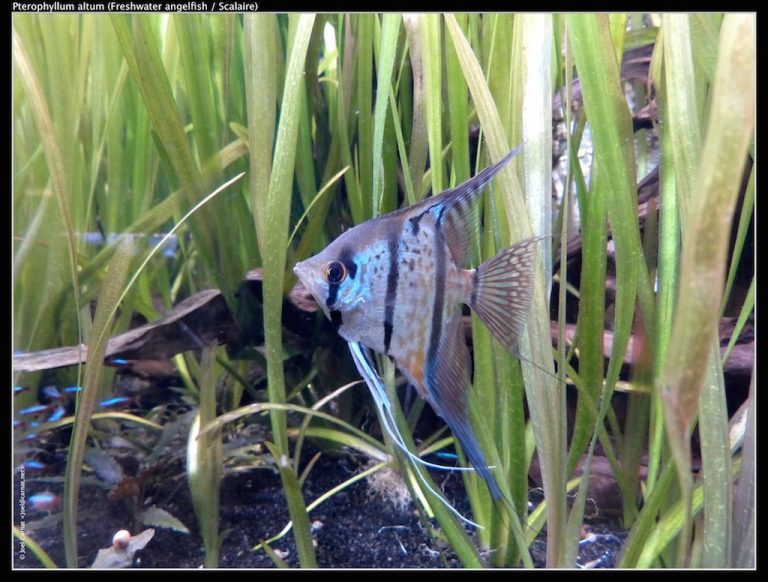
At a glance: Freshwater angelfish (Pterophyllum scalare)
- Temperature
- 76–84°F (24–29°C)
- Water pH
- 6.0–7.5
- Adult size
- 6 in long, 8 in tall (15 × 20 cm)
- Minimum tank
- 30 gal for a pair, 55 gal tall for a group
- Group size
- Pair or group of 5+
- Temperament
- Semi-aggressive, territorial when breeding
- Diet
- Omnivore: pellets, flakes, frozen bloodworm and brine shrimp
- Lifespan
- 10–12 years
Keeper’s tip: Choose a tall tank; height matters more than length for a fish that grows taller than it is long.
Understanding Why Angelfish Eggs Turn White
Before we can fix the problem, we have to understand what a white egg actually represents in angelfish breeding.
A healthy, fertilized angelfish egg should be translucent with a slight amber or brownish tint, depending on the specific strain of the parents.
When an egg turns white, it means the embryo inside is dead, and the tissue has begun to decay, often becoming a host for opportunistic pathogens.
Fertilization Failure vs. Fungal Infection
The most common reason eggs turn white is that they were never fertilized in the first place by the male.
If the male is too young, inexperienced, or if the water flow is too high, the sperm may never reach the eggs deposited by the female.
Once an egg remains unfertilized, it dies quickly, and within hours, it will turn opaque white and attract Saprolegnia, a common water mold.
The Role of Saprolegnia Fungus
Saprolegnia is an opportunistic fungus that exists in almost every aquarium environment, waiting for dead organic matter to consume.
In my experience, the real danger isn’t just one white egg; it is the fact that the fungus on that one egg can quickly spread to its healthy neighbors.
If you do not intervene, a single unfertilized egg can act as “ground zero,” leading to a fuzzy white carpet that consumes the entire spawn.
Pro Tip: If you see only a few white eggs scattered randomly, it is likely a fertilization issue. If the entire batch turns white simultaneously after 24 hours, your water parameters are likely the culprit.
Optimizing Water Chemistry for Egg Viability
Water chemistry is perhaps the most overlooked factor when hobbyists ask how to stop angelfish eggs from turning white.
Angelfish are native to the soft, acidic waters of the Amazon basin, and their eggs have evolved to do well in very specific conditions.
If your water is too hard or the pH is too high, the delicate membrane of the egg can be affected, leading to premature death.
The Impact of Carbonate Hardness (KH)
High carbonate hardness can cause the outer shell of the egg to “calcify” or harden too quickly during the spawning process.
If the shell hardens before the male has a chance to fertilize it, the sperm cannot penetrate the egg, leading to an unfertilized spawn.
I have noticed that keeping the KH between 1 and 3 dKH significantly improves the fertilization rate in my breeding tanks.
Managing Osmotic Pressure
Osmotic pressure refers to the balance of salts and minerals between the inside of the egg and the surrounding water.
In very hard water, the high mineral content can literally “suck” the moisture out of the developing embryo, leading to its death.
Maintaining a low TDS (Total Dissolved Solids) environment is one of the secrets to professional-level breeding success.
| Parameter | Ideal Range for Breeding | Impact on Eggs |
|---|---|---|
| Temperature | 80°F – 82°F (26.5°C – 28°C) | Speeds up development; reduces fungal window. |
| pH Level | 6.5 – 6.8 | Acidic water naturally inhibits some fungal growth. |
| Carbonate Hardness | 1 – 3 dKH | Keeps egg membranes soft for fertilization. |
| General Hardness | 3 – 6 dGH | Prevents osmotic shock to the embryo. |
Using Antifungal Treatments Effectively
If you are pulling the eggs away from the parents to hatch them artificially, using an antifungal agent is almost mandatory.
Even in the cleanest tanks, microscopic fungal spores are present and will attack any egg that isn’t perfectly healthy.
There are several methods I’ve used over the years, ranging from traditional dyes to more modern chemical approaches.
The Methylene Blue Method
Methylene blue is the “gold standard” for preventing white eggs in the hobby, and for good reason.
It works by preventing fungal hyphae from attaching to the egg surface and also helps transport oxygen to the developing embryo.
When I first tried this, I was worried about the deep blue tint, but it is incredibly effective at stopping the spread of Saprolegnia.
Acriflavine and Hydrogen Peroxide
Acriflavine is another excellent option, often preferred by commercial breeders because it doesn’t stain the silicone of the tank as badly as Methylene blue.
Some advanced keepers also use 3% Hydrogen peroxide as a daily dip or a metered dose to keep the egg surface sterile.
However, Hydrogen peroxide requires very precise dosing, as an overdose can be lethal to the delicate embryos.
Pro Tip: When using Methylene blue in a hatching container, use just enough to make the water a deep sky blue. You should still be able to see the eggs clearly through the water.
The Importance of Proper Incubation Equipment
The physical environment where the eggs are kept plays a massive role in whether they stay translucent or turn white.
If the eggs are left in a stagnant corner of the tank, they will quickly succumb to low oxygen levels and bacterial rot.
Whether you leave them with the parents or hatch them yourself, movement is key.
Using a Vertical Slate
In the wild, angelfish prefer to lay their eggs on vertical surfaces like broad leaves or submerged wood.
In the aquarium, providing a vertical slate or a PVC pipe allows the parents to easily fan the eggs and remove debris.
A vertical orientation also makes sure that waste particles don’t settle on the eggs, which is a major cause of bacterial death.
Maintaining High Dissolved Oxygen
Eggs “breathe” through their shells, and a high level of dissolved oxygen is required for the embryo to survive.
If you are hatching eggs artificially, you must place an air stone near the eggs to create a gentle current.
The bubbles should not hit the eggs directly, as the physical impact can damage them, but the water movement must be constant.
Troubleshooting the Breeding Pair
Sometimes, the reason you can’t stop angelfish eggs from turning white has nothing to do with water or fungus, but with the fish themselves.
I have seen many beginners struggle for months only to realize that their “pair” was actually two females laying eggs together.
Understanding the behavior and health of your Pterophyllum scalare is vital for long-term success.
Identifying Inexperienced Males
Young males often take five or six tries before they figure out how to properly fertilize a clutch of eggs.
During the first few spawns, the male might be more interested in eating the eggs or defending the territory than actually doing his job.
If you have consistent failure, check out our proper angelfish care guide to ensure your breeders are in peak physical condition.
The Myth of “Egg Eaters”
Many hobbyists believe their angelfish are “bad parents” because they eat the eggs when they turn white.
In reality, this is an instinctive behavior designed to save the rest of the spawn.
The parents can sense which eggs are dead or fungused, and they remove them to prevent the Saprolegnia from spreading.
If your parents are eating the eggs, it is usually because the eggs were already dying, not because the parents are aggressive.
Artificial Incubation: A Step-by-Step Guide
If your goal is to maximize the number of fry, artificial incubation is usually more successful than leaving them with the parents.
This process allows you to control every variable and use the chemical treatments mentioned earlier without affecting the main tank.
Follow this workflow to minimize the number of eggs that turn white during the process.
Step 1: Preparation of the Hatching Container
Use a small 1-gallon or 2-gallon container filled with water from the breeding tank.
Make sure the temperature is matched perfectly to the main tank to avoid shocking the eggs.
Add a heater and a small air stone to keep the water circulating and oxygenated.
Step 2: Moving the Eggs
Once the spawning is complete, carefully remove the vertical slate or leaf and place it in the hatching container.
Try to keep the eggs submerged during the transfer to prevent exposure to air, though a few seconds of air exposure is usually fine.
Position the slate at an angle so that the air bubbles from the stone flow past the eggs without buffeting them.
Step 3: Chemical Sterilization
Add your chosen antifungal, such as Methylene blue, until the water is tinted.
If you have a UV sterilization unit on your main system, using that water for the hatching container can also drastically reduce the bacterial load.
Monitor the eggs every 12 hours and use a sterilized pipette to remove any eggs that have turned white despite your efforts.
Things people often ask
How long does it take for angelfish eggs to hatch?
At a temperature of 82°F, angelfish eggs typically hatch into “wigglers” in about 48 to 60 hours. If the eggs have not turned white by the 48-hour mark, you are likely in the clear and will soon see the tails moving.
Can I use aquarium salt to stop eggs from turning white?
While salt can inhibit some fungal growth, it can also affect the osmotic pressure of the egg. I generally recommend against using high concentrations of salt for angelfish eggs, as they are a soft-water species.
Why do my angelfish eggs turn white even with Methylene blue?
If you are using antifungals and the eggs still turn white, the issue is likely fertilization. Methylene blue prevents fungus from spreading, but it cannot bring an unfertilized egg to life. Check your male’s behavior and keep your standard freshwater setups aren’t creating too much flow during the spawning act.
Should I leave the lights on for the eggs?
In my experience, eggs are slightly sensitive to intense light. Keeping the hatching container in a dim area or using a low-wattage light can help reduce stress and may slightly inhibit some types of algae and fungal growth that stay healthy in bright light.
The short version
Learning how to stop angelfish eggs from turning white is a journey of patience and observation.
Whether you are working with common silvers or more exotic different angelfish varieties, the principles of cleanliness and chemistry remain the same.
If you focus on soft water, high dissolved oxygen, and the strategic use of antifungal treatments, you can turn a failing breeding project into a massive success.
Remember that even the most experienced breeders lose eggs occasionally; the key is to learn from each spawn and refine your technique.
With the right parameters and a bit of luck, you’ll soon be watching a cloud of tiny fry explore their new world.

- 2003First tank
- 20+Years keeping
- 40+Tanks kept
- 0Sponsored picks
Howard set up his first 10-gallon planted tank in 2003 and lost half of it within six weeks. Two decades and more than forty aquariums later, he writes the guides he wished he had then: clear numbers, the reasons behind them, and what actually goes wrong in home tanks.