How Quickly Do Angelfish Eggs Turn White If Unfertilized
Angelfish eggs typically turn white within 12 to 24 hours if they remain unfertilized. This rapid color change signals that the egg is no longer viable and is beginning to decompose or succumb to fungal growth.
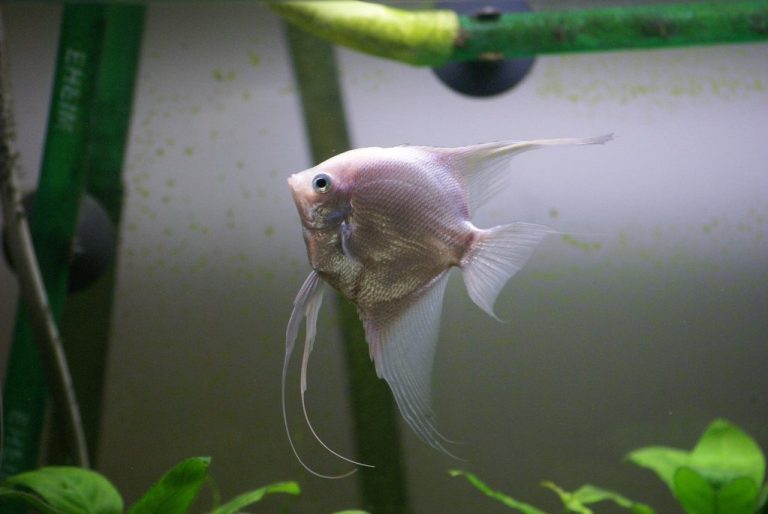
Watching your Pterophyllum scalare pair deposit a clutch of eggs on a leaf or slate is one of the most satisfying moments in the hobby.
However, that excitement can quickly turn to concern when you notice a few white specks among the translucent amber beads.
Understanding how quickly do angelfish eggs turn white if unfertilized is essential for any breeder looking to maximize their hatch rate and maintain a healthy environment.
In my experience, the first 24 hours are the most critical window for determining whether your spawn will be successful or if you are looking at a “dud” clutch.
I have spent over a decade breeding various unique angelfish strains, and I’ve learned that the speed of this color change tells a detailed story about your water chemistry and pair compatibility.
At a glance: Freshwater angelfish (Pterophyllum scalare)
- Temperature
- 76–84°F (24–29°C)
- Water pH
- 6.0–7.5
- Adult size
- 6 in long, 8 in tall (15 × 20 cm)
- Minimum tank
- 30 gal for a pair, 55 gal tall for a group
- Group size
- Pair or group of 5+
- Temperament
- Semi-aggressive, territorial when breeding
- Diet
- Omnivore: pellets, flakes, frozen bloodworm and brine shrimp
- Lifespan
- 10–12 years
Keeper’s tip: Choose a tall tank; height matters more than length for a fish that grows taller than it is long.
Understanding the Initial Color Change
When angelfish spawn, the eggs are initially a translucent, amber, or slightly yellowish color.
This transparency allows you to see through the chorion, which is the outer protective shell of the egg.
Fertilization happens almost instantly as the male follows the female, but the visible signs of failure appear much faster than the signs of success.
If an egg is not fertilized, the blastodisc (the small patch of cytoplasm that should become an embryo) fails to divide.
Without this biological activity, the vitelline membrane begins to break down, allowing water to rush in due to osmotic pressure.
This process causes the proteins inside the egg to coagulate, turning the egg from a clear window into an opaque white marble.
Pro Tip: Don’t panic if you see one or two white eggs in the first 12 hours. It is perfectly normal for a small percentage of a clutch to remain unfertilized, even with an experienced male.
how quickly do angelfish eggs turn white if unfertilized?
In a standard tropical setup kept at 80°F (26.5°C), the timeline for decay is relatively predictable.
Most hobbyists will notice the first white eggs appearing between 12 and 18 hours after the spawning event is completed.
By the 24-hour mark, nearly every unfertilized egg in the clutch will have turned a stark, solid white.
If your water temperature is higher, this process can accelerate, sometimes showing white eggs in as little as 8 to 10 hours.
Conversely, in cooler water, the decomposition might slow down, though this is rarely beneficial as angelfish require warmth for proper development.
Similar to identifying unviable eggs in other species, the contrast between the healthy “living” eggs and the white “dead” eggs becomes very obvious to the naked eye.
The reason how quickly do angelfish eggs turn white if unfertilized matters is because of the risk of contagion.
Once an egg turns white, it becomes a prime target for Saprolegnia, a common water mold that can quickly spread to healthy, fertilized eggs.
Biological Factors Influencing Egg Viability
Several biological factors determine whether an egg will turn white or stay translucent.
The health of the parent fish is the primary driver; a diet rich in high-quality proteins and vitamins ensures the female produces eggs with a strong chorion.
The male’s maturity also plays a role, as young males often struggle with “aim” or sperm count during their first few attempts.
Water hardness, specifically dGH (Degrees of General Hardness), is another critical factor that many beginners overlook.
If the water is too hard, the shell of the egg can harden too quickly before the sperm can penetrate it.
This results in a high percentage of unfertilized eggs that turn white rapidly.
| Parameter | Ideal Range for Eggs | Impact on Viability |
|---|---|---|
| Temperature | 80°F – 82°F | Higher temps speed up fungus growth. |
| pH | 6.5 – 7.0 | Slightly acidic water inhibits bacteria. |
| General Hardness (dGH) | 3 – 6° | Soft water prevents premature shell hardening. |
| Dissolved Oxygen | High | Essential for embryo respiration. |
The Threat of Saprolegnia and Fungal Spread
The real danger isn’t necessarily the unfertilized egg itself, but what happens next.
Within hours of turning white, the dead organic matter attracts fungal spores that are naturally present in any aquarium.
This fungus, often Saprolegnia, looks like fine white fuzz or cotton candy growing around the egg.
If left unchecked, the fungal hyphae (filaments) will reach out and touch neighboring healthy eggs.
Even if those neighboring eggs are fertilized, the fungus can suffocate them by blocking oxygen exchange through the chorion.
This is why you will see parent angelfish hovering over the vertical spawning substrate and picking at the eggs.
They are not eating their babies; they are performing “egg triage” by removing the white ones before the fungus can spread.
In my early years of raising healthy angels, I was terrified when I saw parents eating eggs, but I soon realized they were actually saving the rest of the clutch.
Chemical Interventions: Using Methylene Blue
If you are artificially hatching eggs (removing them from the parents), you don’t have the fish to do the cleaning for you.
In this scenario, understanding how quickly do angelfish eggs turn white if unfertilized helps you time your chemical treatments.
Most breeders use Methylene blue, an anti-fungal agent, to prevent the spread of mold from the white eggs to the healthy ones.
You should add enough Methylene blue to make the water a deep blue, which prevents the fungus from colonizing the dead eggs.
However, you must still keep an eye on the clutch, as even with medication, a massive amount of white eggs can foul the water.
I’ve found that using a pipette to manually remove white eggs every 12 hours is the best way to ensure a high hatch rate when the parents aren’t involved.
Common Mistake: Adding too much Methylene blue can sometimes make it difficult to see the eggs. Use just enough to tint the water dark, and make sure you have an air stone nearby to provide high dissolved oxygen levels.
Why Do All My Angelfish Eggs Turn White?
If you find that 100% of your clutch turns white within 24 hours, you likely have one of three issues.
First, you may have two females “pairing” together; this is common in angelfish communities where two females will lay eggs together, but obviously, none will be fertilized.
Second, you might have a sterile male or a male that is simply too young to understand the process.
Third, your water parameters might be so far out of range that the sperm is dying before it can reach the eggs.
High nitrate levels or extreme pH swings can terminate the fertilization process before it even begins.
When I first tried breeding, I didn’t realize my water was too hard, and I watched three consecutive spawns turn white because the eggs were essentially “armored” against fertilization.
Breeding Success Timeline
To help you track your progress, I’ve put together a typical timeline for a successful angelfish spawn.
This will help you distinguish between a healthy developmental stage and a failed fertilization event.
| Time Elapsed | What to Expect (Healthy) | Warning Signs (Unfertilized) |
|---|---|---|
| 0 – 6 Hours | Translucent amber/yellow eggs. | None yet; all eggs look similar. |
| 12 – 18 Hours | Continued transparency. | Scattered eggs turn opaque white. |
| 24 – 36 Hours | Slight darkening (embryo forming). | Mass whitening; fuzzy fungal growth. |
| 48 – 60 Hours | “Wigglers” begin to emerge. | Complete loss of the clutch if untreated. |
The Importance of Vertical Spawning Substrates
Angelfish are naturally inclined to lay their eggs on vertical surfaces.
In the wild, this might be a broad leaf or a submerged branch; in the aquarium, we often provide slate, PVC pipes, or ceramic cones.
The choice of substrate can actually influence how quickly do angelfish eggs turn white if unfertilized because of water flow.
Eggs laid on a surface with poor circulation are more likely to collect debris and succumb to fungus faster than those in a well-oxygenated area.
I’ve noticed that when I use a slightly textured slate, the eggs adhere better, and the male has an easier time fertilizing them as he glides over the surface.
FAQ
How can I tell if an egg is fertilized? Fertilized eggs remain translucent for the first 48 hours. As they develop, you may see two tiny black dots (the eyes) and a slight vibrating motion as the fry begins to move inside the egg.
Should I remove white eggs myself? If the parents are doing a good job, let them handle it. If you are raising the eggs in a separate jar, use a turkey baster or a sharpened pipette to carefully suck out the white eggs without disturbing the healthy ones.
Does light affect how quickly eggs turn white? While light doesn’t directly cause the eggs to turn white, some breeders believe that keeping the eggs in a dimmer environment reduces stress for the parents, which leads to better care and fewer eggs being eaten.
Can a white egg ever hatch? No. Once an egg has turned solid white, the biological material inside has died and the proteins have denatured. It is no longer a living organism.
What is the best way to prevent fungus? Maintaining pristine water quality is number one. Low nitrates and high dissolved oxygen are your best defenses. Methylene blue is a great secondary tool for artificial hatching.
Putting it all together
Understanding how quickly do angelfish eggs turn white if unfertilized is a vital skill for any aquarist interested in breeding.
By recognizing that white eggs usually appear within 12 to 24 hours, you can take immediate action—whether that means trusting the parents to clean the clutch or stepping in with anti-fungal treatments.
Breeding is a learning process for both you and your fish.
It is common for a pair to fail several times before they successfully raise a swarm of fry.
Keep your water soft, your temperature stable, and your observations keen, and soon you’ll be watching those translucent amber eggs transform into a cloud of tiny, swimming angelfish.

- 2003First tank
- 20+Years keeping
- 40+Tanks kept
- 0Sponsored picks
Howard set up his first 10-gallon planted tank in 2003 and lost half of it within six weeks. Two decades and more than forty aquariums later, he writes the guides he wished he had then: clear numbers, the reasons behind them, and what actually goes wrong in home tanks.