How Long Can An Angelfish Live? Maximizing The Lifespan
In a well-maintained home aquarium, an angelfish can live for 10 to 12 years on average. With exceptional water quality, a varied diet, and a stress-free environment, some individuals have been known to reach 15 years.
Bringing a South American cichlid like the angelfish into your home is a long-term commitment that rivals owning a dog or a cat. These “Kings of the Aquarium” are not just beautiful to look at; they are intelligent, social creatures that develop unique personalities over time.
In my fifteen years of keeping various cichlids, I have found that angelfish are remarkably hardy if you respect their biological needs. However, many beginners are surprised to learn how long they can actually survive when given the right start.
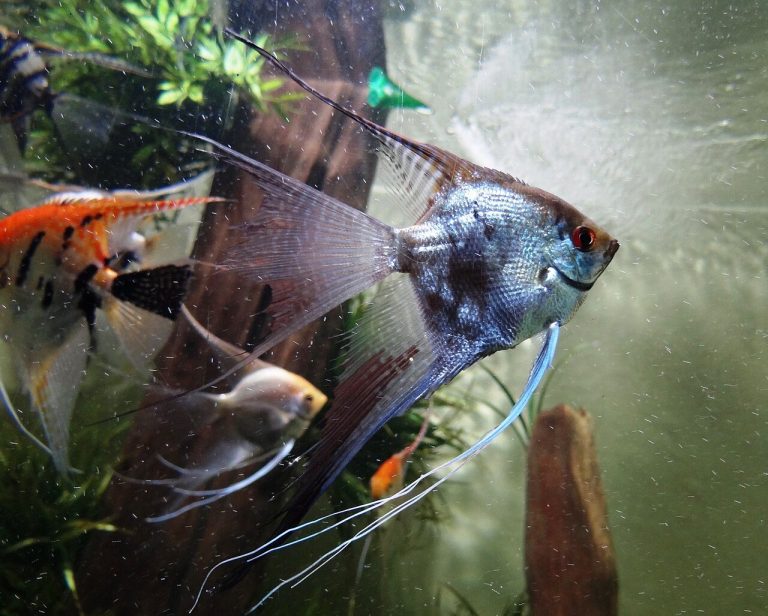
Understanding how long can an angelfish live is the first step toward creating a habitat that supports their full life cycle. Whether you are keeping the common Pterophyllum scalare or the more demanding Pterophyllum altum, longevity is a direct reflection of your husbandry.
Pro Tip: When selecting your fish at the store, look for “silver dollar” sized juveniles rather than full-grown adults. This makes sure you aren’t bringing home a fish that has already spent several years in unknown conditions, giving you the best chance at a decade-long bond.
At a glance: Freshwater angelfish (Pterophyllum scalare)
- Temperature
- 76–84°F (24–29°C)
- Water pH
- 6.0–7.5
- Adult size
- 6 in long, 8 in tall (15 × 20 cm)
- Minimum tank
- 30 gal for a pair, 55 gal tall for a group
- Group size
- Pair or group of 5+
- Temperament
- Semi-aggressive, territorial when breeding
- Diet
- Omnivore: pellets, flakes, frozen bloodworm and brine shrimp
- Lifespan
- 10–12 years
Keeper’s tip: Choose a tall tank; height matters more than length for a fish that grows taller than it is long.
The Biological Reality: Pterophyllum Scalare vs. Pterophyllum Altum
When we discuss the lifespan of these fish, we are usually referring to the common Pterophyllum scalare. This species has been captive-bred for decades, making it highly adaptable to a wide range of aquarium conditions.
In the wild, these fish face predators, fluctuating food sources, and seasonal shifts that often shorten their lives. In the safety of your tank, they can easily double their wild expectancy, provided you maintain a stable Nitrogen cycle.
The Pterophyllum altum, or Altum Angelfish, is a different story entirely. These are the giants of the genus and are often wild-caught, requiring much stricter water parameters to reach their full potential.
| Feature | Pterophyllum scalare | Pterophyllum altum |
|---|---|---|
| Average Lifespan | 10 – 12 Years | 12 – 15 Years |
| Max Height | 6 – 8 Inches | 12 – 15 Inches |
| Difficulty Level | Beginner / Intermediate | Expert |
| Ideal pH Range | 6.0 – 7.5 | 4.5 – 6.0 |
Critical Factors in Determining How Long Can an Angelfish Live
The question of how long can an angelfish live is never answered by genetics alone. Environmental factors play a massive role in whether a fish reaches its senior years or dies prematurely.
Water chemistry is the foundation of health. Angelfish are sensitive to high nitrate concentration, which can lead to stunted growth and a weakened immune system over time.
In my experience, consistency is more important than “perfect” numbers. While they prefer soft, acidic water, a stable pH of 7.4 is much better than a pH that swings wildly between 6.0 and 7.0 every week.
The Importance of Osmoregulation and Water Hardness
The process of osmoregulation is how a fish maintains the balance of water and salt in its body. When water parameters are outside their natural range, the fish’s organs must work overtime to maintain this balance.
If your carbonate hardness (KH) is too low, your pH may crash, causing massive stress. Conversely, if the water is excessively hard, the fish’s kidneys can eventually fail after years of overexertion.
I always recommend testing your tap water before adding fish. Knowing your baseline allows you to adjust your maintenance routine to support a longer life for your pets.
Filtration and Dissolved Oxygen
Angelfish have a high metabolic rate and produce a significant amount of waste as they grow. To keep them healthy for a decade, you need strong filtration that provides high dissolved oxygen saturation.
I prefer using proper angelfish care techniques which include using high-quality canister filtration. These filters provide ample space for biological media, making sure your ammonia and nitrites stay at zero.
Good surface agitation is also vital. While angelfish don’t like “washing machine” currents, they do need oxygen-rich water to settle in and remain active as they age.
Nutrition: Feeding for a Decade of Health
Diet is often where keepers unknowingly shorten their fish’s lives. Feeding only one type of flake food can lead to nutritional deficiencies and digestive issues.
In the wild, angelfish are opportunistic omnivores. They eat small crustaceans, insect larvae, and even small fish like the neon tetra.
To maximize their lifespan, you should provide a rotation of high-quality pellets, frozen bloodworms, and brine shrimp. This variety ensures they receive all the necessary vitamins and minerals for a strong immune system.
Pro Tip: Avoid overfeeding, especially as your angelfish gets older. Obesity in fish can lead to fatty liver disease, which is a common cause of “unexplained” deaths in fish over five years old.
Common Health Challenges That Affect Longevity
Even with the best care, angelfish are susceptible to specific ailments. Being able to identify and treat these early is the key to making sure they reach their 10th birthday.
Parasitic infections are common in many cichlids. Hexamita, also known as “Hole-in-the-head” disease, is often linked to poor water quality and mineral deficiencies.
If you notice small pits forming on the fish’s head or stringy white feces, you must act quickly. Improving water quality and adding vitamin-soaked foods can often reverse the early stages of this condition.
Dealing with Ich and Other External Parasites
Ichthyophthirius multifiliis, commonly known as Ich, is another frequent visitor to the aquarium. These white spots can quickly overwhelm a fish if the temperature isn’t managed or if the fish is stressed.
Stress is the primary trigger for Ich. Whether it is from aggressive tank mates or sudden temperature drops, a stressed fish has a lowered immune response, making it an easy target for parasites.
Choosing compatible tank mates is essential for a peaceful environment. Stress from constant nipping or territorial disputes can shave years off an angelfish’s life.
Tank Size and Physical Environment
Many beginners try to keep angelfish in 20-gallon tanks. While a juvenile may seem fine there, a full-grown adult needs much more vertical space due to its tall finnage.
A 55-gallon tank is generally considered the minimum for a pair of adult angelfish. This volume provides enough room for them to swim freely and helps dilute waste, maintaining better water quality.
In my years of keeping these fish, I’ve noticed they are much calmer in heavily planted tanks. Plants like Amazon Swords provide natural hiding spots and help consume nitrates, further extending the fish’s life.
The Role of Temperature in Aging
Angelfish are tropical fish that flourish in temperatures between 78°F and 84°F. While they can survive in cooler water, it slows their metabolism and can lead to lethargy.
However, keeping them at the very high end of the spectrum (above 84°F) permanently can actually accelerate their metabolism. This might lead to faster growth, but it can also result in a slightly shorter overall lifespan.
I find that a steady 80°F (26.5°C) is the “sweet spot” for longevity. It is warm enough to keep their immune system active but not so hot that it causes premature aging.
Selecting Long-Living Fish For Your Aquarium
If your goal is to have a pet that stays with you for many years, angelfish are one of the best choices among species with long lifespans. Unlike many smaller tetras that may only live 3-5 years, angelfish offer a much longer companionship.
When considering how long can an angelfish live, you must also consider the source. Fish from high-quality local breeders often live longer than those from mass-production farms.
Local breeders often select for health and longevity rather than just color. This genetic foundation is the starting point for a fish that can survive the decade mark.
A Comprehensive Maintenance Checklist for Longevity
To help your angelfish reach its maximum age, consistency in maintenance is non-negotiable. Use the following table as a guide for your routine.
| Frequency | Task | Purpose |
|---|---|---|
| Daily | Observation & Feeding | Check for stress or disease early signs. |
| Weekly | 25% Water Change | Reduces nitrate concentration and replenishes minerals. |
| Monthly | Filter Maintenance | Helps keep canister filtration is running at peak efficiency. |
| Bi-Annually | Full Water Test (GH/KH/pH) | Ensures osmoregulation is not being stressed by drift. |
Questions and answers
Do angelfish live longer in pairs or alone?
Angelfish are social but can be aggressive. A bonded pair often lives a very healthy life, but a single angelfish in a community tank can also do well for 10+ years if it isn’t lonely or stressed.
Can water temperature affect their lifespan?
Yes, consistently high temperatures (above 85°F) speed up their metabolism, which can lead to a shorter lifespan. Keeping them at 78-80°F is ideal for long-term health.
Why did my angelfish die after only two years?
Premature death is usually caused by chronic stress, poor diet, or a failure to maintain the Nitrogen cycle. High nitrates are the “silent killer” for many older angelfish.
Do different colors of angelfish live for different amounts of time?
Generally, no. However, some highly inbred “fancy” varieties might have slightly weaker immune systems than the standard silver or marble varieties.
How can I tell how old my angelfish is?
It is difficult to tell the exact age once they reach adulthood. Size is a general indicator, but stunting from poor early care can make an old fish look young.
Final Thoughts on Angelfish Longevity
The journey of keeping an angelfish is one of the most satisfying experiences in the hobby. When you realize how long can an angelfish live, you begin to see them as more than just “decor.”
If you focus on high-quality canister filtration, a diverse diet, and stable water parameters, you are giving your fish the best chance at a long, healthy life. Your fish depends entirely on you for its environment.
When I look back at my most successful tanks, the common thread was always patience and consistency. Avoid the temptation to make big, sudden changes to your water chemistry.
Instead, focus on small, regular maintenance tasks that keep the environment stable. Your angelfish will reward you with a decade of beauty, grace, and personality that few other freshwater fish can match.

- 2003First tank
- 20+Years keeping
- 40+Tanks kept
- 0Sponsored picks
Howard set up his first 10-gallon planted tank in 2003 and lost half of it within six weeks. Two decades and more than forty aquariums later, he writes the guides he wished he had then: clear numbers, the reasons behind them, and what actually goes wrong in home tanks.