Angelfish Fun Facts – Complete Guide
Angelfish are intelligent Amazonian cichlids famous for their disc-like shape, monogamous mating habits, and complex social behaviors. These “Kings of the Aquarium” recognize their owners and require specific care to settle in in home tanks.
In my ten years of keeping tropical fish, few species have captured my heart quite like the freshwater angelfish. These elegant swimmers bring a level of grace and personality to a tank that is hard to find in other species.
When I first started keeping them, I was struck by how much more they seemed to “think” compared to my schooling tetras. They don’t just swim; they observe their surroundings with a keen, calculating eye that betrays their high intelligence.
Understanding these angelfish fun facts is more than just trivia; it is the key to opening up a successful and peaceful aquarium. Once you learn about their natural history and biological quirks, you can provide a habitat that mimics their wild origins.
At a glance: Freshwater angelfish (Pterophyllum scalare)
- Temperature
- 76–84°F (24–29°C)
- Water pH
- 6.0–7.5
- Adult size
- 6 in long, 8 in tall (15 × 20 cm)
- Minimum tank
- 30 gal for a pair, 55 gal tall for a group
- Group size
- Pair or group of 5+
- Temperament
- Semi-aggressive, territorial when breeding
- Diet
- Omnivore: pellets, flakes, frozen bloodworm and brine shrimp
- Lifespan
- 10–12 years
Keeper’s tip: Choose a tall tank; height matters more than length for a fish that grows taller than it is long.
The Royal Lineage of the Cichlidae Family
Angelfish belong to the family Cichlidae, one of the most diverse and successful groups of fish on the planet. Unlike many of their more aggressive cousins from the African Rift Lakes, angelfish have evolved a specialized lifestyle in the rivers of South America.
There are three primary species recognized by scientists today: Pterophyllum scalare, Pterophyllum altum, and Pterophyllum leopoldi. While most hobbyists keep the Pterophyllum scalare, each species has its own unique charm and set of requirements.
The Pterophyllum altum, for instance, is the giant of the group, often reaching impressive heights that require very tall custom aquariums. In contrast, Pterophyllum leopoldi is the smallest and perhaps the most territorial of the three, though it is less common in the average pet store.
Pro Tip: If you are a beginner, stick with tank-bred Pterophyllum scalare. They are significantly hardier and more adapted to varying water conditions than the wild-caught Pterophyllum altum, which can be quite sensitive.
The Physics of Beauty: Lateral Compression
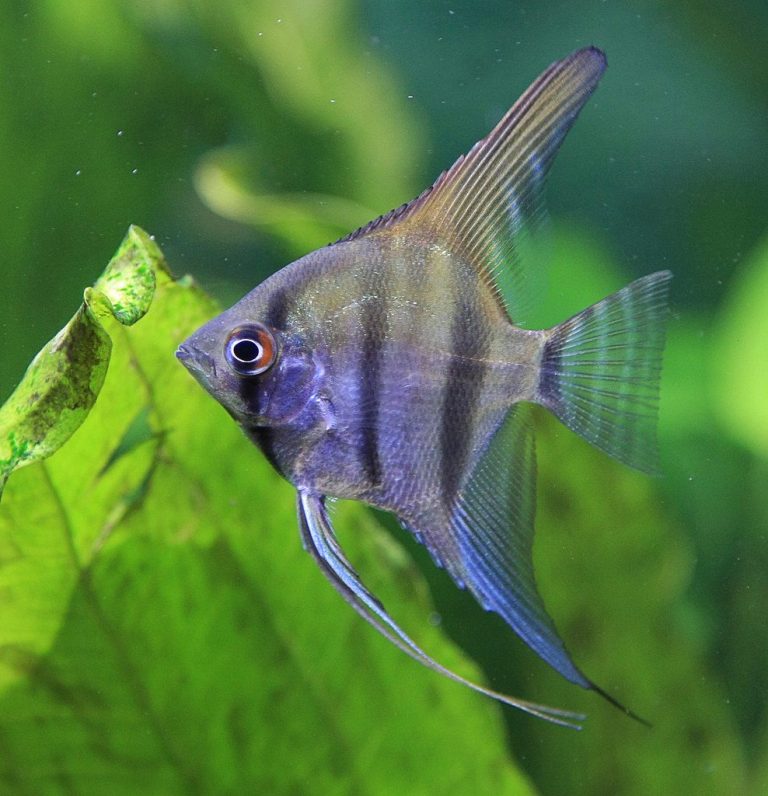
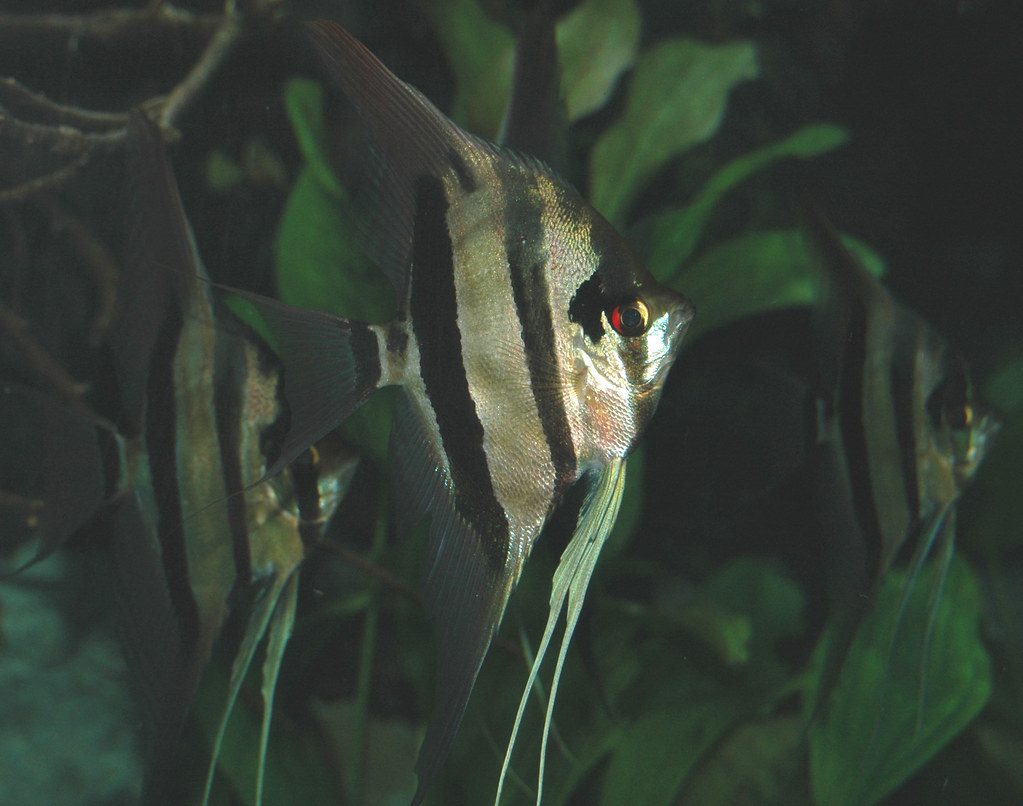
One of the most striking angelfish fun facts involves their unique body shape, known as lateral compression. Their bodies are incredibly thin when viewed from the front, allowing them to glide through dense vegetation and submerged tree roots.
In their native blackwater habitat, this thin profile is a vital survival mechanism. It allows them to hide from large predators like caimans or larger fish by slipping into narrow crevices where others cannot follow.
This shape also influences how they move; they use their long, trailing pelvic fins to feel their way through dark, murky waters. It is almost as if they have “fingers” that help them handle the complex underwater forests of the Amazon.
Angelfish are not solitary creatures, but they aren’t exactly “schooling” fish in the traditional sense either. They live in loose social hierarchies where a dominant individual often asserts control over the best feeding spots.
Perhaps the most touching aspect of their behavior is their monogamous pair bonding. Once an angelfish finds a mate, they often stay together for life, working as a coordinated team to defend their territory.
This bond is so strong that if one mate dies, the remaining fish may show signs of stress or refuse to pair with another individual for a long time. In my experience, watching a pair interact is one of the most satisfying aspects of the hobby.
| Species Name | Common Name | Max Height | Temperament |
|---|---|---|---|
| Pterophyllum scalare | Common Angelfish | 6 – 8 inches | Semi-aggressive |
| Pterophyllum altum | Altum Angelfish | 12 – 15 inches | Peaceful but shy |
| Pterophyllum leopoldi | Teardrop Angelfish | 4 – 5 inches | Highly territorial |
Survival Tactics and Vertical Substrate Spawning
When it comes to reproduction, angelfish are careful parents. They engage in vertical substrate spawning, meaning they prefer to lay their eggs on flat, upright surfaces like broad leaves or pieces of slate.
Before laying eggs, the pair will spend hours cleaning the chosen site with their mouths. This ensures that no fungus or debris interferes with the development of their offspring.
Once the eggs are laid, both parents take turns fanning them with their pectoral fins to provide oxygen. They are fiercely protective during this time and will not hesitate to charge at any tank mate that wanders too close to their nursery.
The Secret Weapon: Pharyngeal Jaws
A interesting biological feature of the angelfish is their possession of pharyngeal jaws. In addition to the teeth in their primary mouth, they have a second set of jaws located in their throat.
These “throat jaws” allow them to process food more effectively, grinding up tough insects or small crustaceans. This evolutionary trait is one reason why cichlids have been able to adapt to so many different environments.
In the aquarium, this means they can handle a variety of foods, from high-quality flakes to frozen bloodworms. Providing a diverse diet helps them maintain their rich colors and strong health.
angelfish fun facts About Their Intelligence
Did you know that angelfish can actually recognize their keepers? After a few weeks in a new home, many owners notice their fish swimming to the front of the glass specifically when they enter the room.
They learn to associate humans with food, but their recognition often goes deeper than just a hunger response. I have had angelfish that would ignore strangers but actively “dance” for me when I approached the tank.
This level of awareness makes them much more like “underwater dogs” than simple pets. Their ability to solve basic problems and work through complex social webs is proof of their cognitive depth.
Common Mistake: Many keepers underestimate the size of tank needed for these fish. Because of their vertical height, a standard 20-gallon tank is often too shallow, leading to stunted fin growth and increased stress.
Creating the Perfect Amazonian Environment
To see the most interesting behaviors, you need to mimic their amazonian river origins. This means providing plenty of vertical structures, such as driftwood and tall plants like Amazon Swords.
Angelfish settle in in slightly acidic water with a temperature range that stays consistently warm. In the wild, they are often found in areas with slow-moving water and plenty of tannins from decaying leaves.
While they are hardy, they do not tolerate poor water quality well. Keeping up with proper maintenance routines is essential to prevent common ailments like fin rot or parasitic infections.
Understanding Common Health Issues: Hexamita
One of the more serious angelfish fun facts involves a common parasite known as Hexamita. This is often the culprit behind “Hole-in-the-Head” disease, which can be devastating if not caught early.
Symptoms include white, stringy feces and small pits developing around the fish’s head and lateral line. This condition is frequently linked to poor water quality or a lack of essential minerals in their diet.
If you keep a clean environment and feeding a vitamin-enriched diet, you can significantly reduce the risk of this parasite. Always quarantine new arrivals to help they don’t bring unwanted “hitchhikers” into your main display tank.
The Striking Diversity of Color Patterns
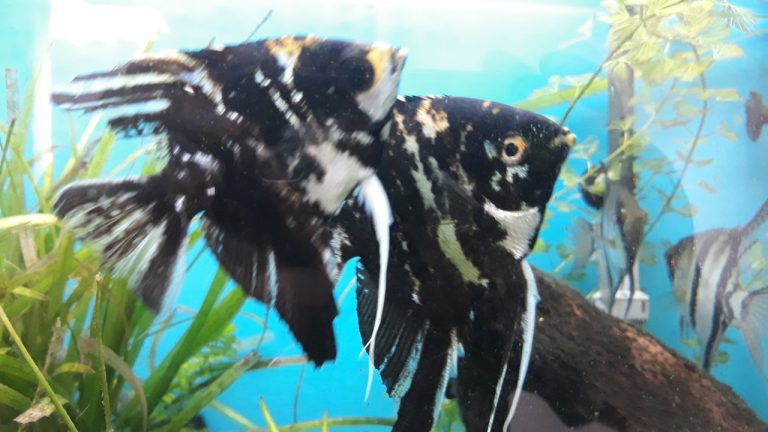
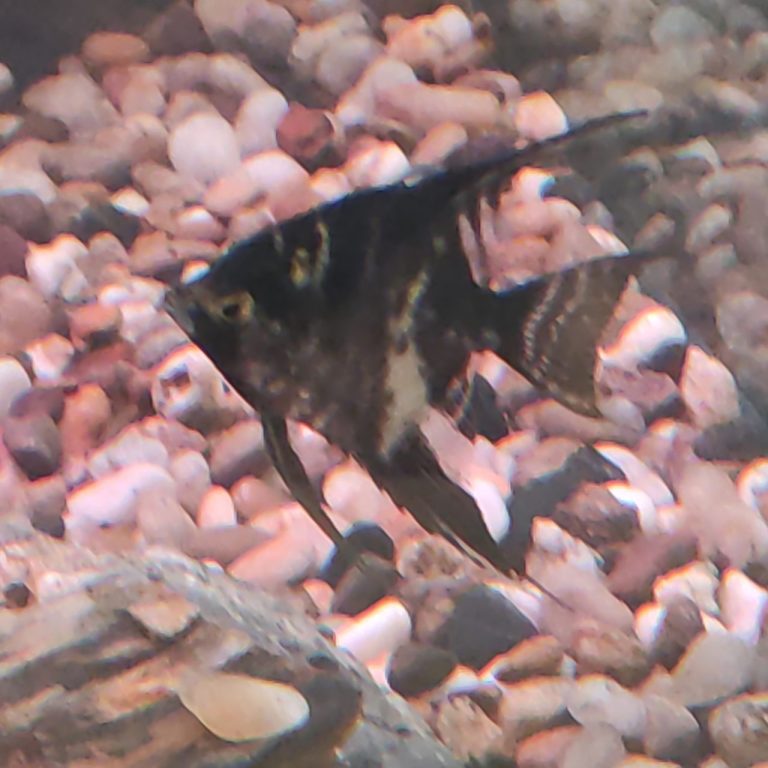
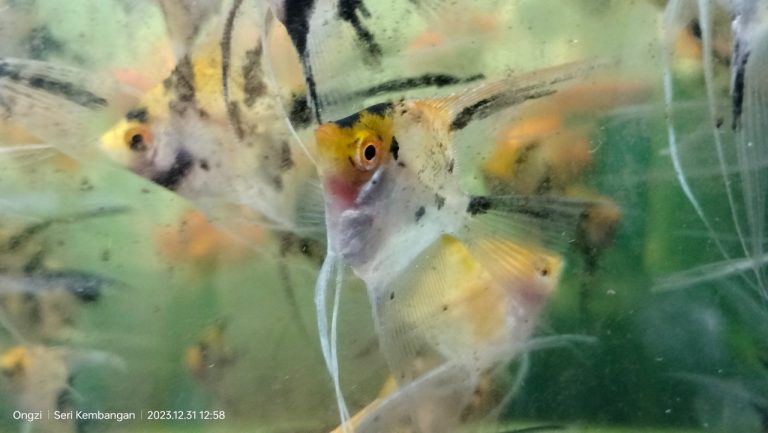
Through decades of selective breeding, the hobby has produced an incredible array of eye-catching color patterns. From the shimmering Platinum to the mottled Koi varieties, there is an angelfish for every aesthetic preference.
In the wild, their natural silver and black stripes serve as camouflage. The vertical bars break up their silhouette against the reeds and roots, making it harder for predators to spot them from a distance.
In the home aquarium, these stripes can actually tell you a lot about the fish’s mood. If an angelfish is stressed or frightened, its dark bars may fade almost entirely, while they darken significantly during courtship or aggression.
Reader questions About Angelfish
Are angelfish aggressive toward other fish? Angelfish are semi-aggressive, especially when they reach maturity or begin to pair off for breeding. They are notorious for eating smaller tank mates, like neon tetras, if they can fit them in their mouths.
How long do angelfish live? With excellent care, a freshwater angelfish can live for 10 to 12 years. Some hobbyists have even reported their fish reaching 15 years of age in large, well-maintained systems.
Can I keep a single angelfish? Yes, you can keep a single angelfish. In fact, making sure a single individual can sometimes be easier for beginners, as it eliminates the risk of territorial fighting between males or aggressive breeding pairs.
What is the best tank size for angelfish? For a single pair, a 30-gallon “tall” tank is the minimum recommended size. If you plan on keeping a small group, a 55-gallon or 75-gallon tank provides much more swimming room and reduces aggression.
Do angelfish need a heater? Absolutely. Being tropical fish from South America, they require temperatures between 76°F and 84°F (24°C – 29°C). A high-quality, submersible heater is a mandatory piece of equipment for their survival.
A last word
Exploring these angelfish fun facts reveals why these fish have remained a staple of the aquarium hobby for over a century. They are a perfect blend of prehistoric beauty, complex intelligence, and interesting social structures.
Whether you are mesmerized by their lateral compression or moved by their monogamous pair bonding, there is always something new to learn. If you respect their needs and understanding their biology, you can enjoy the company of these “Kings” for many years.
Every fish has its own personality. Spend time watching yours, and you will soon discover that the world beneath the surface is even more incredible than you imagined.

- 2003First tank
- 20+Years keeping
- 40+Tanks kept
- 0Sponsored picks
Howard set up his first 10-gallon planted tank in 2003 and lost half of it within six weeks. Two decades and more than forty aquariums later, he writes the guides he wished he had then: clear numbers, the reasons behind them, and what actually goes wrong in home tanks.