Why Is My Angelfish Turning Pale? 10 Causes And Expert Solutions
Angelfish turn pale primarily due to stress, poor water quality, or their natural sleep cycle. While temporary fading during rest is normal, persistent paleness often signals issues like ammonia spikes, low oxygen, or underlying illness.
Seeing your once-bright Pterophyllum scalare suddenly lose its color can be a heart-stopping moment for any aquarist. In my ten years of keeping these “Kings of the Amazon,” I have learned that their scales act as a mood ring for their internal health.
If you are asking why is my angelfish turning pale, you are already taking the first step toward being a responsible keeper. This loss of pigment is rarely a random event and almost always points to a specific environmental or biological trigger.
Understanding these triggers requires a blend of science and observation. By the end of this guide, you will be able to distinguish between a “sleeping fish” and a fish in desperate need of medical intervention.
At a glance: Freshwater angelfish (Pterophyllum scalare)
- Temperature
- 76–84°F (24–29°C)
- Water pH
- 6.0–7.5
- Adult size
- 6 in long, 8 in tall (15 × 20 cm)
- Minimum tank
- 30 gal for a pair, 55 gal tall for a group
- Group size
- Pair or group of 5+
- Temperament
- Semi-aggressive, territorial when breeding
- Diet
- Omnivore: pellets, flakes, frozen bloodworm and brine shrimp
- Lifespan
- 10–12 years
Keeper’s tip: Choose a tall tank; height matters more than length for a fish that grows taller than it is long.
1. The Natural Sleep Cycle and Circadian Rhythm
One of the most common reasons an angelfish loses color is perfectly natural and requires no treatment at all. Like many tropical fish, angelfish have a circadian rhythm that dictates their activity levels and physiological changes throughout a 24-hour period.
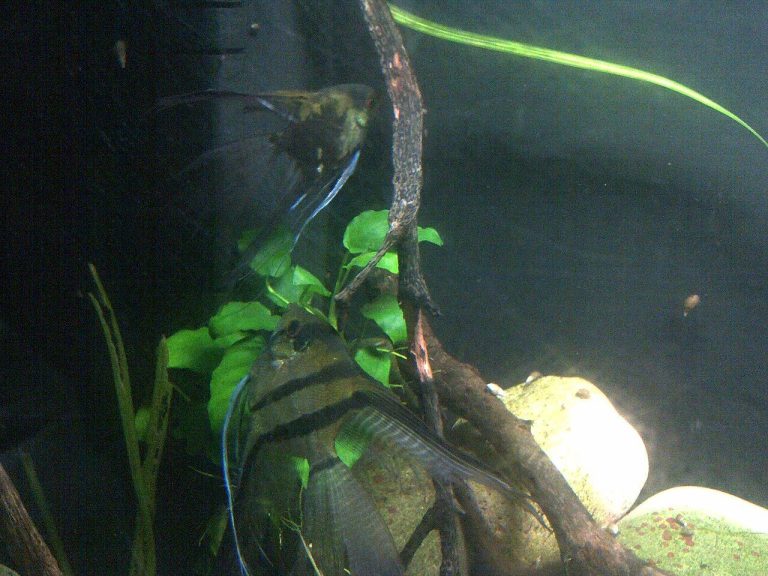
During the night, when the aquarium lights are off, angelfish enter a state of rest. To avoid detection by predators in the wild, they “turn off” their colorful patterns to blend into the shadows of the riverbank.
This process involves chromatophores, which are specialized pigment-containing cells in their skin. When the fish sleeps, these cells contract, causing the dark bars and bright hues to fade into a dull, ghostly grey or white.
Pro Tip: The Flashlight Test
If you notice your angelfish is pale first thing in the morning, do not panic. Observe them for 30 minutes after the lights come on; if their color returns to normal as they “wake up,” your fish is perfectly healthy.
2. Poor Water Quality and Chemical Stress
If the paleness persists throughout the day, the first thing I always check is the water chemistry. High ammonia concentration is a silent killer that causes immediate physiological stress, leading to a washed-out appearance.
Even a small spike in nitrite can lead to nitrite toxicity, which prevents the fish’s blood from carrying oxygen effectively. This condition, often called “brown blood disease,” results in a fish that looks lethargic, pale, and gasps at the surface.
Maintaining best water parameters is the cornerstone of keeping their colors popping. When the environment becomes toxic, the fish diverts all energy away from pigment production toward basic survival.
| Parameter | Ideal Range | Effect of Imbalance |
|---|---|---|
| Ammonia | 0 ppm | Severe stress, gill damage, and paleness. |
| Nitrite | 0 ppm | Reduced oxygen transport in blood. |
| Nitrate | < 20 ppm | Chronic stress and suppressed immune system. |
| Temperature | 78°F – 84°F | Slow metabolism or heat-induced stress. |
Why Is My Angelfish Turning Pale? Analyzing Stress Factors
When you ask why is my angelfish turning pale, you must look beyond the water and into the social dynamics of the tank. Angelfish are cichlids, and while they are often called the “Kings of the Aquarium,” they can be quite sensitive to bullying.
If an angelfish is being picked on by a dominant tank mate, it will often “mute” its colors as a sign of submission. This is a defensive mechanism designed to make them less noticeable to the aggressor.
Environmental changes can also trigger this response. Moving the tank, changing the substrate, or adding aggressive new fish can cause osmotic stress and general anxiety, resulting in a sudden loss of color.
3. Common Diseases and Pathogens
Disease is perhaps the most concerning reason for a pale angelfish. Bacterial infections like Columnaris often present as a pale, saddle-back pattern or general “fuzziness” on the skin.
Internal parasites are another major culprit. Hexamita, which causes “hole-in-the-head” disease, often leads to extreme paleness as the fish becomes malnourished and weak.
In my experience, if the paleness is accompanied by stringy white poop or a refusal to eat, you are likely dealing with an internal parasitic infection. These require immediate treatment with medicated flakes or water column treatments.
Pro Tip: The Quarantine Protocol
Whenever I see a pale fish that isn’t eating, I immediately move it to a dedicated hospital tank. This prevents the spread of potential pathogens like Columnaris and allows for targeted medication without affecting your beneficial bacteria.
4. Low Dissolved Oxygen Saturation
Angelfish have large, thin fins and a high metabolic rate, meaning they require plenty of oxygen. When dissolved oxygen saturation drops, the fish’s body enters a “low power mode” to conserve energy.
This often happens in tanks with high temperatures and poor surface agitation. Since warm water holds less oxygen than cool water, an un-aerated tank at 84°F can quickly become a low-oxygen environment.
You might notice the fish turning pale and hanging out near the filter output or gasping at the surface. Adding an air stone or increasing the flow of your filter can often bring their color back within hours.
5. Improper Lighting and Photoperiod
The photoperiod, or the amount of time your lights are on, plays a significant role in how your fish displays its colors. If the lights are too bright or left on for too long, the fish may become chronically stressed.
Conversely, if the tank is kept in a dark room with no consistent light cycle, the fish may never fully “wake up” its chromatophores. A consistent 8-10 hour light cycle mimics their natural habitat and encourages vivid pigmentation.
I have noticed that angelfish kept in tanks with very light substrate also tend to look paler. They naturally try to camouflage with their surroundings, so a dark substrate can actually help their blacks and silvers look much deeper.
6. Nutritional Deficiencies
What you feed your Pterophyllum scalare directly impacts their ability to produce pigment. If they are fed a mono-diet of low-quality flakes, they will lack the carotenoids and proteins needed for deep coloration.
In the wild, their diet is incredibly varied. To replicate this, I suggest a mix of high-quality pellets, frozen bloodworms, and brine shrimp to make sure they get a full spectrum of vitamins.
Providing proper angelfish care involves more than just keeping the water clean; it requires fueling their bodies with the building blocks of color. A well-fed fish is almost always a colorful fish.
Comprehensive Troubleshooting Flowchart
If you are still struggling to identify the cause, use this checklist to narrow down the possibilities. This systematic approach has saved many of my fish over the years.
| Observation | Likely Cause | Immediate Action |
|---|---|---|
| Pale in the morning, normal by noon. | Natural Sleep Cycle. | None; help consistent light cycle. |
| Pale with rapid gill movement. | Ammonia/Nitrite Spike. | 50% water change and add water conditioner. |
| Pale and hiding from others. | Social Stress / Bullying. | Rearrange decor or separate the aggressor. |
| Pale with white patches or slime. | Bacterial Infection (Columnaris). | Move to hospital tank; treat with antibiotics. |
| Pale and extremely thin. | Internal Parasites (Hexamita). | Treat with Metronidazole-infused food. |
7. Genetics and Color Strains
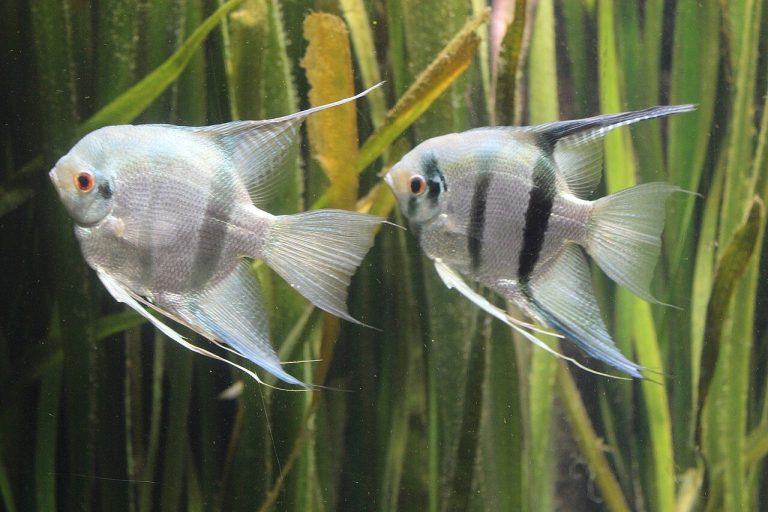
Sometimes, paleness is simply a result of the fish’s genetic makeup. Certain different angelfish varieties, such as the Platinum or Albino strains, are naturally very light in color.
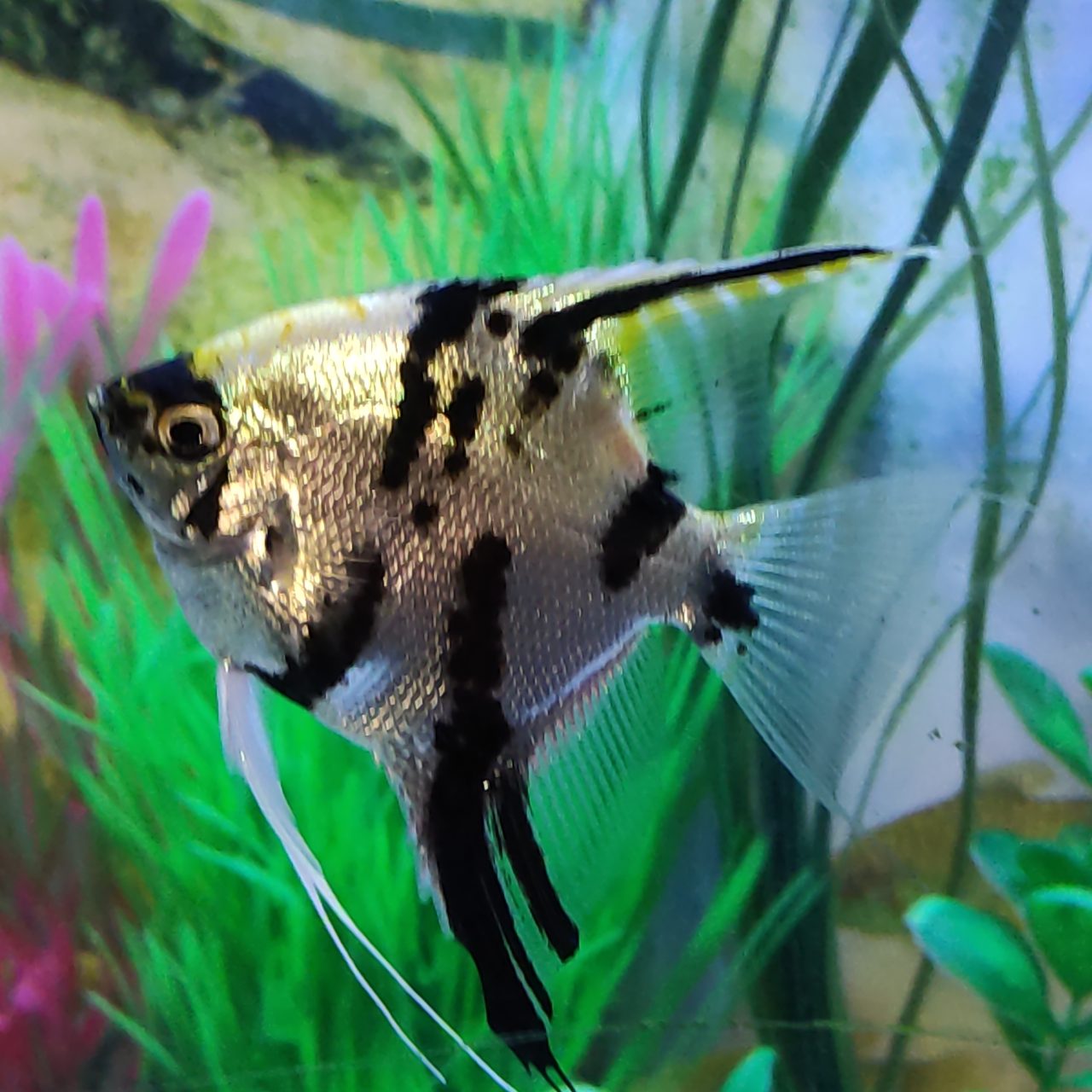
If you have a young angelfish, its colors may also shift as it matures. Silver angelfish often have bars that fade and darken depending on their mood, but a “Gold” or “Marble” variety may have large patches of pale scales that are entirely normal.
Always research the specific variety you purchased. What looks like paleness to a beginner might actually be the sought-after “pearlescent” sheen of a high-end Platinum variety.
Still wondering?
Can angelfish turn pale from cold water?
Yes. Angelfish are tropical and require temperatures between 78°F and 84°F. If the water drops below 76°F, their metabolism slows down, their immune system weakens, and they will lose color as a sign of temperature shock.
How long does it take for color to return?
If the cause was simple sleep, color returns in 15-30 minutes. If the cause was water quality, color usually improves within 24 hours of a water change. If the cause was disease, it may take several days of treatment before the fish regains its luster.
Is a pale angelfish always dying?
Absolutely not. Paleness is a symptom, not a death sentence. By identifying the root cause—whether it is a photoperiod issue or nitrite toxicity—you can almost always reverse the fading and save your fish.
Does “Old Tank Syndrome” cause paleness?
Yes, “Old Tank Syndrome” occurs when nitrates climb very high over months of neglect, and the KH (carbonate hardness) is depleted. This leads to a pH crash, which causes extreme stress and paleness in angelfish.
Wrapping up
Understanding why is my angelfish turning pale is about observing the subtle clues your fish provides. Whether it is the natural result of their circadian rhythm or a warning sign of ammonia concentration spikes, your response time is critical.
In my years of keeping these majestic fish, I have found that consistency is the best medicine. Regular water changes, a high-quality diet, and a peaceful environment are the “secret” ingredients to rich, healthy angelfish.
Don’t let a pale fish discourage you. Use the troubleshooting steps provided, test your water immediately, and watch your Pterophyllum scalare return to its full, regal glory. With a little patience and care, your aquarium will remain a healthy Amazonian paradise.

- 2003First tank
- 20+Years keeping
- 40+Tanks kept
- 0Sponsored picks
Howard set up his first 10-gallon planted tank in 2003 and lost half of it within six weeks. Two decades and more than forty aquariums later, he writes the guides he wished he had then: clear numbers, the reasons behind them, and what actually goes wrong in home tanks.