Rummy Nose Tetra Schooling – Group Size and Behavior
Rummy nose tetra schooling is widely regarded as the tightest and most synchronized behavior among all freshwater aquarium fish. To encourage this display, you must maintain a group of at least 10 to 15 individuals in a stable, well-maintained environment.
Few sights in the freshwater hobby are as interesting as a perfectly synchronized group of tetras moving as a single unit.
In my experience, rummy nose tetra schooling represents the gold standard for community tank behavior.
Unlike many other species that only cluster when they feel threatened, these fish seem to genuinely enjoy the company of their own kind.
Over the last decade, I have kept dozens of different characins, but the Rummy Nose remains my absolute favorite for mid-water activity.
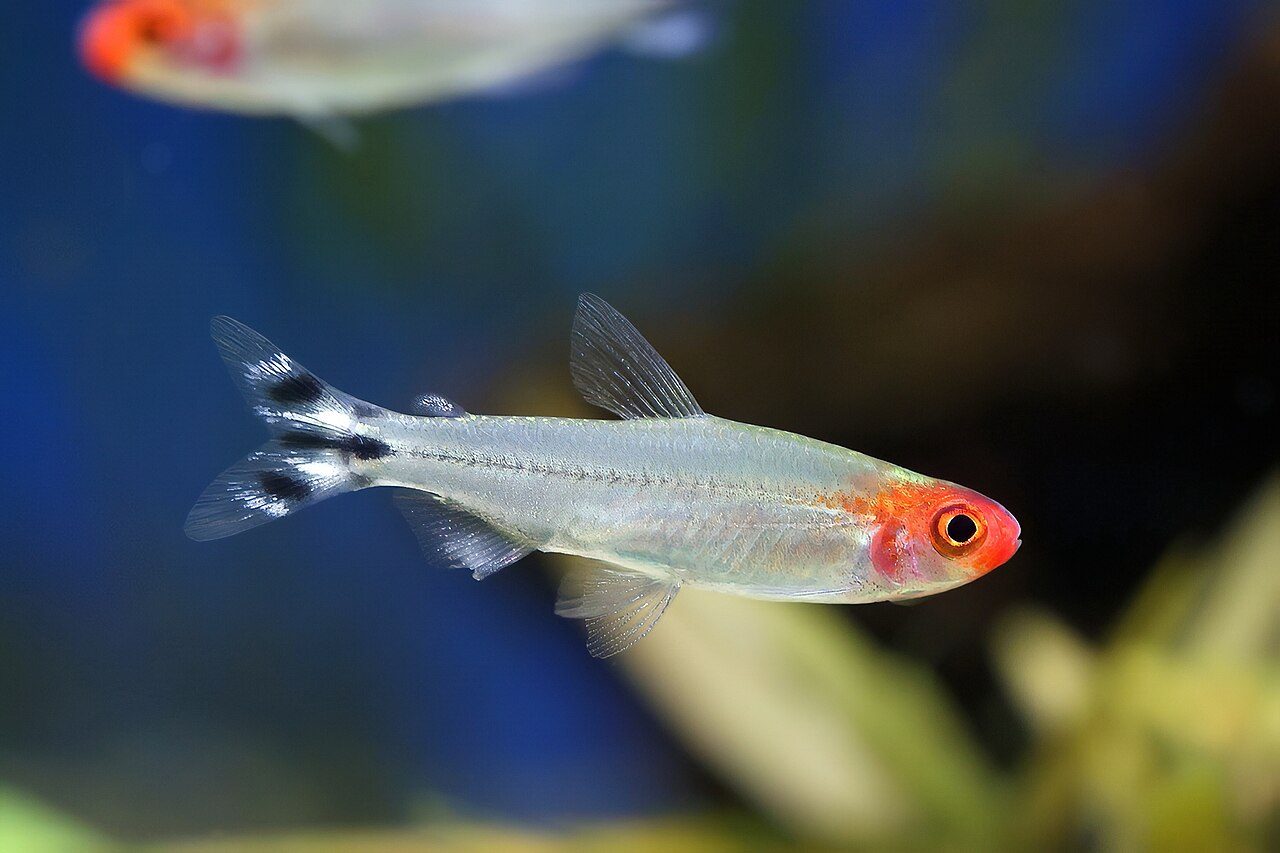
They are the “canaries in the coal mine” for your aquarium, with their bright red faces indicating perfect health and water quality.
In this guide, I will share the secrets I’ve learned to help you achieve that legendary tight-knit formation in your own home.
At a glance: Rummy nose tetra (Hemigrammus rhodostomus)
- Temperature
- 75–82°F (24–28°C)
- Water pH
- 5.5–7.0
- Adult size
- 2 in (5 cm)
- Minimum tank
- 20 gal
- Group size
- Groups of 8+
- Temperament
- Peaceful
- Diet
- Omnivore: flakes, small pellets, frozen foods
- Lifespan
- 5–6 years
Keeper’s tip: A fading red nose is often the first sign of poor water quality, so test before you change anything else.
The Science Behind Rummy Nose Tetra Schooling
To understand why rummy nose tetra schooling is so much more intense than other species, we have to look at their biology.
These fish possess highly sensitive lateral line mechanoreceptors that allow them to feel the slightest pressure changes in the water.
This sensory system enables shoaling cohesion, where each fish reacts to the movement of its neighbor in a fraction of a second.
This isn’t just a random group of fish swimming together; it is a complex social structure designed for survival and efficiency.
Pro Tip: If your school looks scattered or lethargic, it often indicates a lack of water flow or low oxygen levels. I’ve noticed that adding a gentle circular current using a spray bar encourages them to swim against the flow in a tighter formation.
There are actually three distinct species often sold under the same common name, which can lead to confusion for beginners.
The most common and “true” version is Hemigrammus bleheri, but you may also encounter Petitella georgiae or Hemigrammus rhodostomus.
While their appearances are nearly identical, their rummy nose tetra schooling habits remain consistently tight across all three variations.
| Species Name | Common Name | Key Identifier |
|---|---|---|
| Hemigrammus bleheri | True Rummy Nose | Redness extends past the gill covers. |
| Hemigrammus rhodostomus | Common Rummy Nose | Redness stops at the eyes/gill plate. |
| Petitella georgiae | False Rummy Nose | Thinner black line on the caudal peduncle. |
Creating the Ideal Environment for Schooling
The secret to a beautiful display is creating an environment where the fish feel safe enough to explore but communal enough to stick together.
In their natural habitat, these fish settle in in a blackwater biotope filled with leaf litter and submerged wood.
This environment is rich in humic substances, which help lower the pH and provide natural antibacterial properties.
I have found that using peat filtration or adding Indian Almond leaves can drastically improve the intensity of their red coloration.
When the water mimics their native Amazonian tributaries, their stress levels drop, and their natural instincts take over.
This is also where you will see the best results for rummy nose tetra schooling, as they feel “at home” in the dim, stained water.
Essential Water Parameters
Rummy nose tetras are famously sensitive to poor water conditions, particularly high levels of ammonia and nitrite.
They have a significant nitrate sensitivity, so keeping these levels below 20ppm is vital for long-term health.
I always recommend using a high-quality liquid test kit to monitor your specific conductance and general hardness.
| Parameter | Ideal Range |
|---|---|
| Temperature | 75°F to 84°F (24°C – 29°C) |
| pH Level | 5.5 to 7.0 |
| Hardness (dGH) | 2 to 10 degrees |
| Ammonia / Nitrite | 0 ppm (Strict) |
Why Group Size Matters for Rummy Nose Tetra Schooling
One of the most common mistakes I see beginners make is buying only three or four of these fish.
In a group that small, the fish will often hide behind plants or drift aimlessly, losing their iconic synchronized movement.
For rummy nose tetra schooling to shine, you need a minimum of 10 individuals, though 20 or more is even better.
Larger groups provide a sense of security that allows the fish to swim in the open areas of the tank without fear.
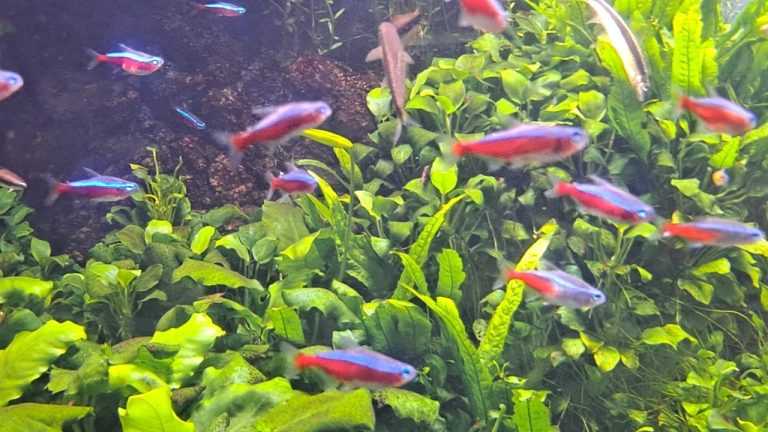
When you have a large enough group, you might also want to compare them with cardinal tetras to see the difference in movement styles.
While cardinals are beautiful, they tend to “hover” more, whereas Rummy Noses are constantly on the move.
Common Mistake: Do not add a full school of Rummy Noses to a brand-new, uncycled aquarium. Their sensitivity to fluctuating parameters means they should only be added to tanks that have been established for at least 2-3 months.
Tank Layout and Swimming Space
Because these tetras are active swimmers, the shape of your tank is more important than the total volume.
A long aquarium is much better for rummy nose tetra schooling than a tall, hexagonal, or cube-shaped tank.
A standard 20-gallon long (30 inches wide) is the absolute minimum I would suggest for a decent school.
In my experience, a 4-foot-long tank (like a 55-gallon or 75-gallon) provides the ultimate “runway” for their high-speed laps.
Help you leave the middle of the tank open for swimming while providing dense planting along the back and sides.
This layout gives them a place to retreat if they feel startled, which actually makes them more likely to stay out in the open.
Health Challenges and Disease Prevention
Because they are often wild-caught or raised in large outdoor ponds, Rummy Noses can be prone to certain ailments.
The most common issue is Ichthyophthirius multifiliis, more commonly known as white spot disease or Ich.
Due to their thin scales, they can be more sensitive to traditional copper-based medications than other hardy fish.
I always recommend a slow increase in temperature and the use of specialized “scale-less fish” safe treatments if an outbreak occurs.
If you notice a fish losing the red color in its face, this is the first sign of stress or impending illness.
A pale face usually means your water parameters have drifted or there is a spike in nitrates that needs immediate attention.
Choosing Compatible Tank Mates
When selecting neighbors, you want species that are peaceful and won’t out-compete your tetras for food.
Since Rummy Noses stay in the middle of the water column, they pair excellently with bottom-dwellers like Corydoras or Kuhli loaches.
If you are looking for other mid-water species, choosing compatible neighbors like Discus or Angelfish can work if the tank is large enough.
However, be cautious with large Angelfish, as they may eventually view the slim-bodied tetras as a snack.
Avoid fin-nipping species or overly aggressive fish that might break up the school and cause the tetras to hide.
The goal is to maintain a tranquil environment where the rummy nose tetra schooling behavior can remain the focal point.
Diet and Nutrition for Bright Coloration
To make sure that “fire engine red” nose looking its best, a varied diet is essential for your school.
In the wild, they are omnivores, feeding on small insects, crustaceans, and plant matter.
In my home aquariums, I rotate between high-quality crushed flakes, micro-pellets, and frozen treats like daphnia or baby brine shrimp.
Feeding frozen bloodworms once or twice a week provides the protein boost they need for growth and energy.
I’ve noticed that fish fed a diet rich in carotenoids maintain much deeper red pigments than those on a basic flake diet.
Always ensure the food particles are small enough for their tiny mouths, as they can struggle with large pellets.
Reader questions
How many rummy nose tetras should I keep together? You should keep a minimum of 10 to 12 individuals to see natural schooling behavior. In larger tanks, a group of 25 to 50 creates a spectacular visual impact.
Why is my rummy nose tetra’s face pale? A pale face is usually a sign of stress, poor water quality, or illness. Check your ammonia, nitrite, and nitrate levels immediately, and make sure the temperature is within the correct range.
Can rummy nose tetras live with shrimp? Yes, they are generally safe with adult dwarf shrimp like Cherry shrimp or Amano shrimp. However, they may eat very small shrimplets if they can catch them, so provide plenty of moss for hiding.
Do rummy nose tetras need a heater? Absolutely. These are tropical fish that require stable temperatures between 75°F and 84°F. They are very sensitive to temperature fluctuations and “chilling” can lead to disease.
How long do rummy nose tetras live? Looked after properly and stable water parameters, these tetras can live for 5 to 8 years. Their longevity is directly tied to the consistency of their environment.
Before you go
Mastering rummy nose tetra schooling is one of the most satisfying milestones for any freshwater aquarist.
If you provide them with a long tank, soft acidic water, and a large group of companions, you bring out their most natural and beautiful behaviors.
Patience is key with this species; they may take a few weeks to settle in and show their full colors.
Keep your nitrates low, your water warm, and your school large, and you will be treated to a daily rhythmic dance that never gets old.

- 2003First tank
- 20+Years keeping
- 40+Tanks kept
- 0Sponsored picks
Howard set up his first 10-gallon planted tank in 2003 and lost half of it within six weeks. Two decades and more than forty aquariums later, he writes the guides he wished he had then: clear numbers, the reasons behind them, and what actually goes wrong in home tanks.