Plant Pearling Vs Algae Bubbles – Which One to Choose
Plant pearling consists of tiny oxygen streams from leaves during peak photosynthesis, whereas algae bubbles are usually trapped gases within slimy mats of Cyanobacteria, often indicating a nutrient imbalance or poor water flow.
Seeing bubbles in your aquarium can be a moment of pure joy or a sign of impending frustration.
In my ten years of aquascaping, I’ve learned that understanding plant pearling vs algae bubbles is the difference between a well-kept ecosystem and a tank on the brink of a crash.
While both involve gas production, their origins and the “health signals” they send to the hobbyist are worlds apart.
What Exactly is Plant Pearling?
Plant pearling is the holy grail for many high-tech aquarium enthusiasts.
It occurs when the rate of photosynthetic oxygen production exceeds the rate at which oxygen can dissolve into the surrounding water.
When the water reaches a state of oxygen supersaturation, the excess gas forms visible, shimmering bubbles on the surface of the leaves.
The Science of Oxygen Supersaturation
During the day, your plants take in light and CO2 to produce energy.
A byproduct of this process is pure oxygen, which usually dissolves invisibly into the water column.
When your PAR light spectrum is optimized and you have a high dissolved CO2 concentration, the plants work so fast that the water simply cannot hold any more gas.
Visual Characteristics of Pearling
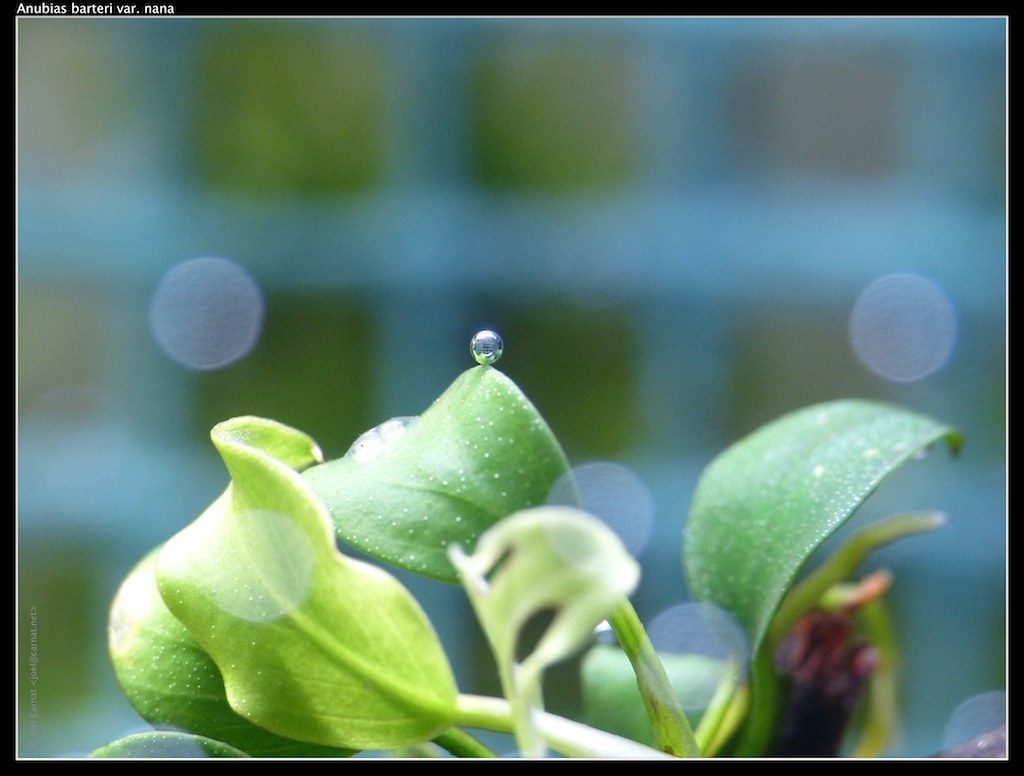
True pearling usually looks like a steady stream of tiny, crystalline bubbles rising from a specific point on a leaf or stem.
Sometimes, you will see a single bubble grow larger and larger until it finally breaks free and floats to the surface.
In my experience, you’ll most often see active pearling in your tank during the last few hours of your daily light cycle.
Pro Tip: If you see a constant, rapid stream of bubbles coming from a single spot on a stem, it might actually be a “leaky” plant.
If a leaf or stem is slightly damaged, the plant’s internal gases escape through the breach.
While it looks cool, it isn’t technically “pearling” from the leaf surface, but it still proves the plant is actively photosynthesizing.
Understanding Algae Bubbles and Cyanobacteria
Not all bubbles are a reason to celebrate.
If you notice bubbles trapped under a layer of green, blue, or brown slime, you are likely witnessing Cyanobacteria gas release.
Unlike plants, these organisms settle in in environments where gaseous exchange dynamics are poor or where there is a significant phosphate nutrient excess.
Why Algae Traps Gas
Algae and Cyanobacteria (often called Blue-Green Algae) create dense, gelatinous mats.
As these organisms undergo aquatic plant cellular respiration or photosynthesis, the gases they produce get stuck underneath their sticky biofilm.
Instead of rising gracefully like pearling, these bubbles look like they are “bloating” the algae mat from underneath.
Biofilm Microbial Activity
Sometimes, these bubbles aren’t even oxygen; they could be nitrogen or even methane.
This happens when biofilm microbial activity becomes intense due to decaying organic matter.
If your substrate is neglected, you might also see substrate anaerobic decomposition, which releases bubbles that smell like rotten eggs when they reach the surface.
Pro Tip: If you are unsure if a bubble is from a plant or algae, use a long pair of tweezers to gently disturb the area.
If the bubble is trapped in a “skin” or “film” that lifts off the surface, it is almost certainly an algae or bacterial issue.
Healthy pearling bubbles should roll off the leaf easily without any slime attached.
plant pearling vs algae bubbles: Key Differences at a Glance
Distinguishing between the two is easier when you know what to look for.
Use the table below to help diagnose what is happening in your aquarium right now.
| Feature | Plant Pearling | Algae Bubbles |
|---|---|---|
| Bubble Appearance | Clear, round, often in streams or single pearls. | Irregular shapes, trapped under a slimy film. |
| Location | Directly on the leaf surface or stem. | On the substrate, rocks, or covering plants. |
| Timing | Starts a few hours after lights-on. | Can be present even when lights are off. |
| Movement | Frequently detach and float to the surface. | Stay trapped until the algae mat is broken. |
| Health Signal | High vitality and right nutrient uptake. | Nutrient imbalance or poor circulation. |
The Role of CO2 and Lighting
When comparing plant pearling vs algae bubbles, we have to look at the “engine” of the tank.
Pearling is almost exclusively a phenomenon of high-tech tanks with pressurized CO2.
Without a high dissolved CO2 concentration, plants rarely photosynthesize fast enough to reach the saturation point required for pearling.
Optimizing CO2 Efficiency
If you have a high-tech setup but aren’t seeing pearling, check your CO2 diffusion techniques.
Using high-quality CO2 diffusion techniques makes sure that the gas is evenly distributed.
If the gas doesn’t reach the plants, they won’t reach the metabolic rate needed to produce those beautiful oxygen streams.
Light Intensity and the PAR Spectrum
Lighting is the second half of the equation.
Plants need a specific PAR light spectrum to drive photosynthesis effectively.
However, be careful; if you increase light without corresponding CO2 and nutrients, you might accidentally encourage a phosphate nutrient excess, which leads straight to algae bubbles.
Troubleshooting Algae Bubbles in Your Aquarium
If you’ve determined that you have algae bubbles rather than pearling, don’t panic.
The presence of gas in algae mats is a clear signal that your tank’s “waste management” system is overwhelmed.
This is often caused by a buildup of organic waste or a lack of water movement in certain areas of the tank.
Managing Nutrient Levels
Excessive phosphates are a primary driver for Cyanobacteria.
I’ve found that managing phosphate levels is vital because while plants need them, too much in a low-flow area is an invitation for “slime” bubbles.
Test your water and make sure your nitrate-to-phosphate ratio is balanced (usually 10:1).
Improving Gaseous Exchange Dynamics
Sometimes the bubbles are caused by stagnant water.
If the water doesn’t move, oxygen and CO2 can’t distribute properly, and waste products accumulate.
Try repositioning your filter intake or adding a small powerhead to eliminate “dead spots” where algae bubbles tend to form.
While we focus on plant pearling vs algae bubbles on the leaves, we shouldn’t ignore the substrate.
Bubbles rising from the gravel or sand are rarely pearling.
These are typically the result of substrate anaerobic decomposition.
Anaerobic Pockets
When the substrate becomes too compacted, oxygen cannot reach the deeper layers.
Bacteria that don’t need oxygen begin to break down organic matter, releasing gases like hydrogen sulfide.
In my experience, if you see a large bubble rise from the sand and it smells like sulfur, you need to gently vacuum your substrate immediately.
Biofilm and Microbes
In some cases, a thick biofilm microbial activity on the substrate surface can trap oxygen produced by algae living on the sand.
This is common in new setups where the biological balance hasn’t quite stabilized.
Increasing the plant biomass can help outcompete these microbes for nutrients.
Practical notes
- Most planted tanks do well with 6–8 hours of light per day; longer photoperiods usually just grow more algae.
- Trim stem plants above a node and replant the tops for denser growth.
- Change one variable at a time (light, CO2 or fertiliser) and wait two weeks to judge the result.
- Root feeders such as swords, crypts and vallisneria need root tabs or a nutrient-rich substrate, not only liquid fertiliser.
Things people often ask
Can plants pearl in a low-tech tank?
It is very rare. Without added CO2, the water rarely reaches the oxygen supersaturation level needed for visible bubbles. You might see it occasionally after a large water change because tap water is often high in dissolved gases.
Are algae bubbles dangerous for my fish?
The bubbles themselves aren’t usually toxic, but the conditions that cause them are. Cyanobacteria can release toxins, and substrate anaerobic decomposition can release harmful hydrogen sulfide. Always investigate the source of the bubbles.
Why do my plants pearl only after a water change?
This is a common “false pearling.” Fresh tap water is often under pressure and contains more dissolved gas than aquarium water. When you add it to the tank, the gases come out of solution and stick to the leaves, looking like pearling.
How do I stop algae bubbles from forming?
Focus on balance. Reduce your lighting duration, increase water flow, and make sure your plants have the right nutrients. Often, a phosphate nutrient excess is the culprit that needs to be addressed through water changes and better feeding habits.
Is pearling necessary for a healthy tank?
Not at all. Many of my most beautiful, healthy tanks have never shown a single “pearl.” Pearling is just a sign of high-speed metabolism. As long as your plants are green and growing, they are healthy.
Cultivating a Healthy Environment
Understanding the nuances of plant pearling vs algae bubbles is a major milestone in your journey as an aquarist.
Pearling represents a peak state of photosynthetic oxygen production and high plant vitality.
Conversely, bubbles trapped in algae are a “check engine light” for your aquarium’s ecosystem.
If you focus on gaseous exchange dynamics, proper lighting, and nutrient management, you can shift the balance in favor of your plants.
I’ve found that patience is the most important tool in any fish keeper’s kit.
Observe your tank daily, learn the patterns of your bubbles, and you will eventually achieve that pristine, bubbling underwater garden we all strive for.

- 2003First tank
- 20+Years keeping
- 40+Tanks kept
- 0Sponsored picks
Howard set up his first 10-gallon planted tank in 2003 and lost half of it within six weeks. Two decades and more than forty aquariums later, he writes the guides he wished he had then: clear numbers, the reasons behind them, and what actually goes wrong in home tanks.