Who Discovered Axolotls? The History And Mystery Of The Mexican
The Aztecs first discovered axolotls in the high-altitude lakes of Mexico, naming them after the god Xolotl. Scientifically, they were first documented by Spanish physician Francisco Hernández in the 1570s and later introduced to Europe by Alexander von Humboldt.
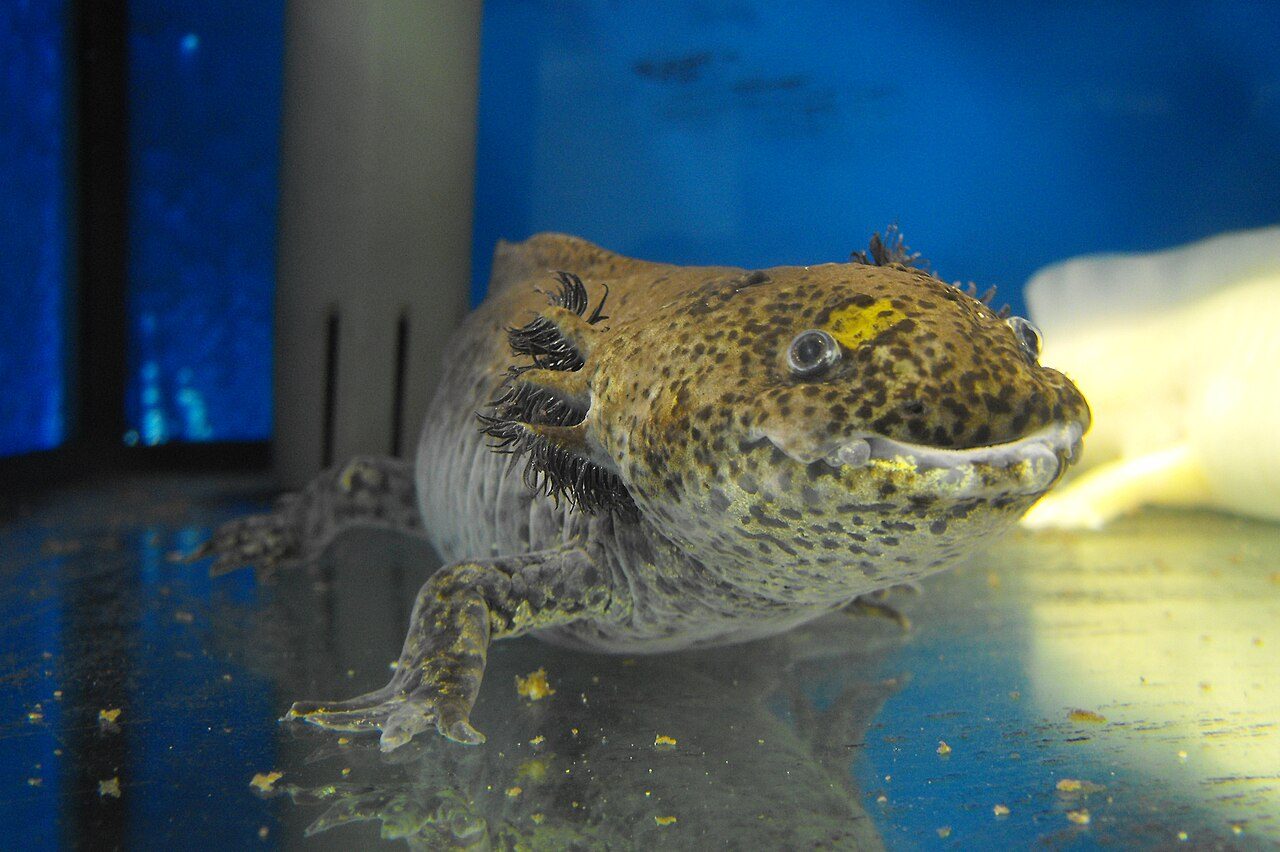
Few creatures in the aquarium hobby capture the imagination quite like the axolotl. With their permanent smiles and feathery external gills, these “water monsters” seem like something out of a fantasy novel.
I have spent over a decade maintaining various freshwater setups, but the first time I saw an axolotl, I was immediately struck by its prehistoric appearance. Understanding who discovered axolotls helps us appreciate why they are so unique in the biological world.
In this guide, we will look closely at the history, scientific classification, and natural habitat of these incredible amphibians.
Pro Tip: When I first started keeping these animals, I didn’t realize how sensitive their external branchiae (gills) were to water flow. Always use a spray bar or a sponge filter to keep the current low, as high flow can stress them and lead to gill degradation.
At a glance: Axolotl (Ambystoma mexicanum)
- Temperature
- 60–64°F (16–18°C)
- Water pH
- 7.0–8.0
- Adult size
- 9–12 in (23–30 cm)
- Minimum tank
- 20 gal long for one
- Group size
- Alone or same-size adults
- Temperament
- Peaceful, no fish tank mates
- Diet
- Carnivore: earthworms, axolotl pellets, bloodworm
- Lifespan
- 10–15 years
Keeper’s tip: Water above 70°F stresses axolotls quickly; a fan or chiller is often needed in summer.
The Ancient Roots: Who Discovered Axolotls First?
The question of who discovered axolotls begins long before modern science. The indigenous Aztec people of the Valley of Mexico were the first to encounter these creatures in the ancient lake complexes of Xochimilco and Chalco.
To the Aztecs, the axolotl was more than just an animal; it was a sacred being. They named it after Xolotl, the god of fire and lightning, who was said to have transformed into the salamander to avoid being sacrificed.
This deep cultural connection means that the “discovery” of the axolotl is rooted in Mesoamerican mythology and survival. The Aztecs even utilized them as a food source and for medicinal purposes, recognizing their incredible regenerative abilities early on.
The Myth of Xolotl
According to legend, the gods were required to sacrifice themselves to set the sun in motion. Xolotl, fearing death, fled into the water and took the form of the axolotl to hide.
This story perfectly mirrors the animal’s biology. Because they exhibit neoteny, they never “grow up” into terrestrial salamanders, remaining in their larval form forever.
Lacustrine Endemism in Ancient Mexico
The axolotl is a prime example of lacustrine endemism. This means they were originally found nowhere else on Earth except for the specific lake systems of the Basin of Mexico.
As the Aztecs built their great city of Tenochtitlan, they shared their environment with these unique amphibians. The chinampas, or “floating gardens,” provided the perfect habitat for axolotls to do well for centuries.
The Scientific Discovery: From Mexico to the Global Stage
While the Aztecs knew them for centuries, the Western world began asking who discovered axolotls during the age of exploration. The first written European record comes from Francisco Hernández, a physician sent by King Philip II of Spain in the 1570s.
Hernández described the creature as a “Mexican fish” with the feet of a lizard. However, it took several more centuries for the axolotl to reach the scientific circles of Europe and receive a formal classification.
In 1804, the famous explorer Alexander von Humboldt collected two specimens during his travels in Mexico. He brought them back to Paris, which sparked an obsession among European naturalists that continues to this day.
Naming the “Water Monster”
The scientific naming process was somewhat confusing for early biologists. At different points, the animal was referred to as Siredon mexicanus before landing on its current name.
Today, we know them scientifically as Ambystoma mexicanum. They belong to the family Ambystomatidae, a group of mole salamanders that are widespread across North America.
The Classification in Order Caudata
Axolotls are members of the order Caudata (also known as Urodela). This order includes all salamanders and newts, characterized by their tails and lizard-like body shapes.
What sets the axolotl apart from most other members of Caudata is their refusal to undergo metamorphosis. This unique trait has made them a cornerstone of biological research for over 150 years.
Biological Wonders: Neoteny and Paedomorphosis
When discussing who discovered axolotls, we must also look at the scientists who discovered their “secret.” In 1863, a group of axolotls was sent to the Jardin des Plantes in Paris.
To the surprise of the researchers, some of the axolotls eventually transformed into terrestrial salamanders. This led to the discovery of metamorphosis inhibition, a key feature of the species.
Most salamanders grow out of their larval stage, lose their gills, and move to land. Axolotls, however, usually remain in a state of paedomorphosis, meaning they retain their larval traits throughout their entire adult lives.
| Trait | Larval/Axolotl Form | Metamorphosed Form (Rare) |
|---|---|---|
| Respiration | External branchiae (gills) | Internal lungs |
| Habitat | Fully aquatic | Terrestrial/Semi-aquatic |
| Dorsal Fin | Present from head to tail | Absent or greatly reduced |
| Eyelids | Absent | Present |
The Role of the Thyroid Gland
Scientists eventually figured out that the reason axolotls don’t transform is due to a lack of thyroid-stimulating hormone. This keeps them in their aquatic, “youthful” state indefinitely.
In my experience, this is what makes them such satisfying pets. You get to witness the beauty of a larval salamander that grows to a significant size without the complications of a land-based enclosure.
Why the Axolotl is a Scientific Marvel
Beyond the question of who discovered axolotls, researchers are deeply interested in how they function. These animals possess an almost miraculous ability to regenerate lost limbs, heart tissue, and even parts of their brain.
This regenerative power is why they are one of the most studied animals in laboratories today. Once you understand how an axolotl regrows a leg without scarring, scientists hope to one day apply similar principles to human medicine.
The Genetic Map of Ambystoma mexicanum
In 2018, scientists finished sequencing the axolotl genome. It was found to be ten times larger than the human genome, containing roughly 32 billion base pairs.
This complexity is likely what allows for their incredible healing properties. It also explains why they have remained relatively unchanged for thousands of years in their native Mexican habitat.
Pro Tip: Many new keepers mistake the “smiling” face of an axolotl for happiness. In reality, a stressed axolotl will tuck its gills forward and curl its tail. Always monitor body language rather than facial expressions!
The Evolution of the Axolotl in the Aquarium Hobby
The journey from who discovered axolotls to how they became popular pets is a long one. Most axolotls found in the hobby today are descendants of the original specimens brought to Paris in the 1860s.
Through selective breeding, we now have a variety of “morphs” that do not exist in the wild. While the wild type is dark and mottled, hobbyists often prefer leucistic (pink with black eyes), albino, or golden varieties.
Maintaining the Modern Axolotl Tank
Keeping an axolotl today requires a different approach than keeping tropical fish. Because they are native to high-altitude lakes, they require cold water and very specific parameters.
In my years of keeping them, the biggest mistake I see is people keeping them too warm. Temperatures above 72°F (22°C) can lead to fungal infections and a weakened immune system.
Water Parameters for Success
To keep your axolotl healthy, you must mimic the clean, cool conditions of Lake Xochimilco. This involves regular water changes and a strong biological filter.
Always use a dechlorinator that does not contain aloe, as aloe can irritate their sensitive skin. Stick to a simple sand substrate or a bare-bottom tank to prevent impaction from swallowing gravel.
The Conservation Crisis in Xochimilco
While we celebrate who discovered axolotls, we must also address their precarious future. In the wild, axolotls are critically endangered due to habitat loss, pollution, and invasive species.
Lake Xochimilco is now a series of canals heavily impacted by urban sprawl from Mexico City. Tilapia and carp, introduced years ago, prey on young axolotls and compete for food.
The Role of Aquarists in Conservation
If you keep axolotls responsibly, we help maintain a “captive insurance population.” However, it is vital to never release a pet axolotl into the wild, as domestic strains are genetically different from wild populations.
Supporting organizations that work to restore the chinampas in Mexico is one of the best ways to keep these “water monsters” don’t disappear forever.
Reader questions
Who discovered axolotls scientifically?
The first formal scientific description was provided by Francisco Hernández in the 16th century, but George Shaw and Frederick Nodder officially gave them a binomial name in 1798.
Are axolotls fish or lizards?
Neither. They are amphibians, specifically salamanders. They belong to the order Caudata and remain in their aquatic larval stage their entire lives.
Can axolotls live on land?
Generally, no. While they can be forced to metamorphose through iodine injections in a lab setting, it is extremely stressful and significantly shortens their lifespan.
Why are they called “water monsters”?
The name “axolotl” comes from the Nahuatl language. “Atl” means water, and “xolotl” can mean dog or monster, leading to the common translation “water dog” or “water monster.”
How long do axolotls live?
With proper care, an axolotl can live for 10 to 15 years in captivity. Some have even been reported to live up to 20 years in ideal conditions.
Before you go
Understanding who discovered axolotls gives us a window into both ancient history and modern science. From the sacred myths of the Aztecs to the high-tech laboratories of today, the axolotl remains a symbol of mystery and resilience.
As an aquarist, keeping an axolotl is like owning a living piece of history. They require specialized care, but the reward of watching these unique Ambystoma mexicanum settle in is well worth the effort.
If you respect their history and providing the cool, clean water they need, you can help preserve the legacy of the “Mexican walking fish” for years to come. Always remember to prioritize their health over aesthetics, and you will have a unusual companion for over a decade.

- 2003First tank
- 20+Years keeping
- 40+Tanks kept
- 0Sponsored picks
Howard set up his first 10-gallon planted tank in 2003 and lost half of it within six weeks. Two decades and more than forty aquariums later, he writes the guides he wished he had then: clear numbers, the reasons behind them, and what actually goes wrong in home tanks.