Planted Tank Circulation – The Key To Lush, Algae-Free Growth
Planted tank circulation is vital for distributing essential CO2 and nutrients to your aquatic plants while preventing stagnant zones that trigger algae growth and poor water quality.
If you have ever stared at your aquarium and noticed patches of debris settling on your substrate or, worse, unsightly Black Brush Algae clinging to your leaves, you are likely dealing with poor flow. In my decade of keeping high-tech and low-tech setups, I have found that the secret to a flourishing jungle isn’t just the light or the fertilizer—it is how the water moves.
Achieving effective circulation in a planted environment is a balancing act. You need enough movement to ensure CO2 distribution reaches every corner, but not so much that you uproot your delicate carpet plants. Understanding how to manage your turnover rate will transform your tank from a struggling setup into a bright, healthy ecosystem.
Why circulation matters for your plants
Many beginners assume that a filter’s primary job is just to clean the water. In a planted tank, however, the filter is the engine of your entire chemical cycle. Proper movement helps make sure that nutrients reach the boundary layer of plant leaves, allowing for efficient uptake.
Without consistent flow, your plants will effectively “starve” in certain areas. This leads to stunted growth, which makes them vulnerable to opportunistic algae. When water moves correctly, you facilitate better gaseous exchange at the surface, ensuring your fish have plenty of oxygen while your plants have the carbon they need during the photoperiod.
Common Mistake: Many hobbyists rely solely on the filter’s output nozzle. If your tank has dense hardscape like driftwood or tall rockwork, you must check for “dead spots” behind these items. These stagnant zones are the number one cause of localized algae blooms in otherwise healthy tanks.
Achieving the perfect laminar flow
When we talk about laminar flow, we are referring to a smooth, non-turbulent movement of water throughout the tank. Unlike the chaotic, choppy flow found in some marine setups, planted tanks prefer a gentle, sweeping current. This movement mimics a slow-moving stream, which is natural for most of our favorite community species.
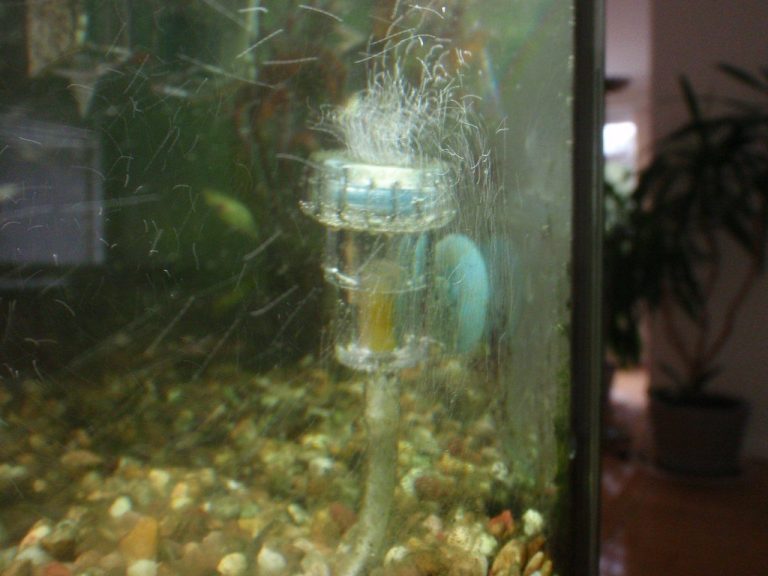
To achieve this, many aquarists turn to the lily pipe. These glass or stainless steel outlets are designed to direct water in a way that creates a soft circular motion. By positioning your outlet near the surface, you can encourage a gentle rippling effect, which improves oxygenation without stripping away too much precious CO2.
Managing CO2 and nutrients
In a high-tech system, your CO2 injection is only as good as your circulation. If your CO2 is pumped into one corner and stays there, your plants in the opposite corner won’t benefit. You want to see the fine bubbles from your diffuser being carried by the current throughout the entire aquarium.
If you are struggling with distribution, consider these common setup variables:
| Circulation Method | Best For | Primary Benefit |
|---|---|---|
| Lily Pipe | Small to medium tanks | Gentle flow; aesthetic look. |
| Spray Bar | Long/large tanks | Even pressure across the length. |
| Surface Skimmer | High-bioload tanks | Removes surface biofilm. |
Avoiding stagnant zones
Stagnant zones are the silent killers of a planted tank. These areas where water barely moves allow organic waste to settle and accumulate. Over time, this buildup releases ammonia and phosphates, creating the perfect conditions for algae.
I have found that using a small, adjustable powerhead can be a lifesaver in larger tanks. Even a very low flow setting can prevent debris from settling in the back corners. Just be sure to position it so it doesn’t blast your community fish or damage your delicate plant stems.
Pro Tip: To test your circulation, add a tiny amount of high-quality fish food or a drop of food-safe dye to the water. Watch how it travels. If it gets stuck behind a rock or hangs out in a corner for more than a few seconds, you need to adjust your outflow direction.
The role of surface agitation
Many aquarists fear that surface agitation will “off-gas” their CO2. While it is true that massive splashing will reduce CO2 levels, some surface movement is essential. A surface skimmer attachment is a fantastic tool to keep the water surface clear of film, which allows for better light penetration and gas exchange.
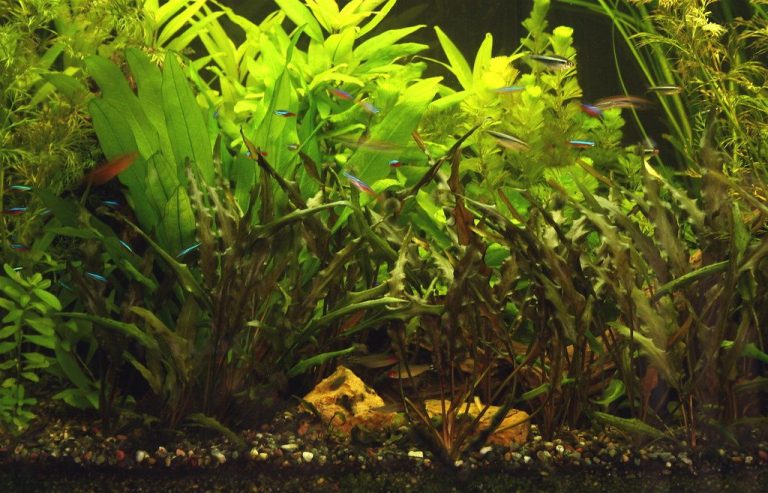
If you have a neon tetra fish tank setup, you want to help the water isn’t too turbulent. These fish prefer calmer waters, so balance your flow to keep the plants happy while keeping the inhabitants stress-free.
Worth knowing before you start
- Yellowing older leaves often point to nitrogen or potassium shortage; yellowing new leaves usually point to iron.
- Epiphytes like java fern and anubias should be tied to rock or wood; burying the rhizome rots it.
- Most planted tanks do well with 6–8 hours of light per day; longer photoperiods usually just grow more algae.
- Trim stem plants above a node and replant the tops for denser growth.
FAQ: Common circulation questions
How often should I check my flow?
I recommend evaluating your flow every time you perform a water change. If you notice plants leaning heavily or debris accumulating on the substrate, adjust your output nozzle slightly.
Does a stronger filter mean better circulation?
Not necessarily. A filter with a high GPH (gallons per hour) rating is useless if the flow is concentrated in one spot. It is better to have a moderate flow that reaches every corner than a high-powered blast that only hits one wall.
Can too much flow hurt my plants?
Yes. If your flow is too strong, it can cause physical damage to the leaves of delicate plants or prevent them from growing in a natural orientation. If your plants look like they are being “flattened” against the glass, you should point the outflow toward the glass or add a diffuser/spray bar to break up the stream.
My final take
Mastering planted tank circulation is a journey of observation and small adjustments. By making sure that your water is moving gently and consistently, you are providing your plants with the tools they need to flourish.
Every tank is unique, and what works for a heavy-carpeting tank might not work for a stem-heavy jungle. Keep an eye on your plants, observe your fish, and trust your intuition. With the right flow, your aquarium will stay healthy for years to come.

- 2003First tank
- 20+Years keeping
- 40+Tanks kept
- 0Sponsored picks
Howard set up his first 10-gallon planted tank in 2003 and lost half of it within six weeks. Two decades and more than forty aquariums later, he writes the guides he wished he had then: clear numbers, the reasons behind them, and what actually goes wrong in home tanks.