Emperor Tetra Breeding – Step-by-Step Guide
Emperor Tetra breeding requires a dedicated tank with soft, acidic water, high-quality live foods for conditioning, and fine-leaved plants for egg-scattering. Success hinges on maintaining stable water parameters and providing microscopic first foods like infusoria for the developing fry.
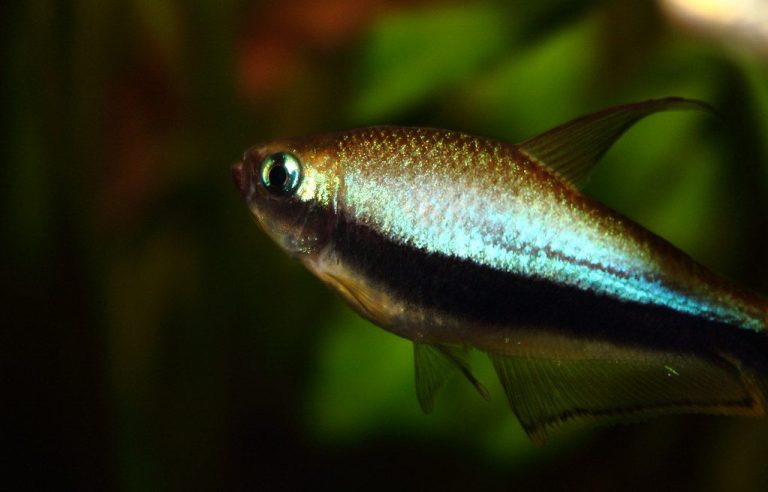
Breeding the majestic Nematobrycon palmeri, commonly known as the Emperor Tetra, is one of the most rewarding experiences for any freshwater aquarist. These fish bring a sense of royal elegance to any aquarium with their shimmering purple hues and unique finnage.
In my experience, many hobbyists find this species slightly more challenging than the average Danio or Guppy, but the effort is well worth it. When I first started breeding these characins over a decade ago, I realized that the secret lies in mimicking their natural Colombian rainforest environment.
If you are just starting out with this species, you might find my guide on Emperor Tetra for beginners helpful before diving into the complexities of spawning. Once you have mastered their basic care, you are ready to witness the remarkable ritual of their reproduction.
At a glance: Emperor tetra (Nematobrycon palmeri)
- Temperature
- 73–81°F (23–27°C)
- Water pH
- 5.0–7.8
- Adult size
- 2 in (5 cm)
- Minimum tank
- 20 gal
- Group size
- Groups of 6+
- Temperament
- Peaceful, males spar
- Diet
- Omnivore: flakes, pellets, frozen foods
- Lifespan
- 5–6 years
Keeper’s tip: Keep more females than males so one dominant male does not stress the rest.
Understanding the Emperor Tetra (Nematobrycon palmeri)
Before you begin your journey into Emperor Tetra breeding, you must understand the unique biology of these fish. Unlike many other tetras that school tightly, male Emperors are somewhat territorial and will claim specific areas of the tank.
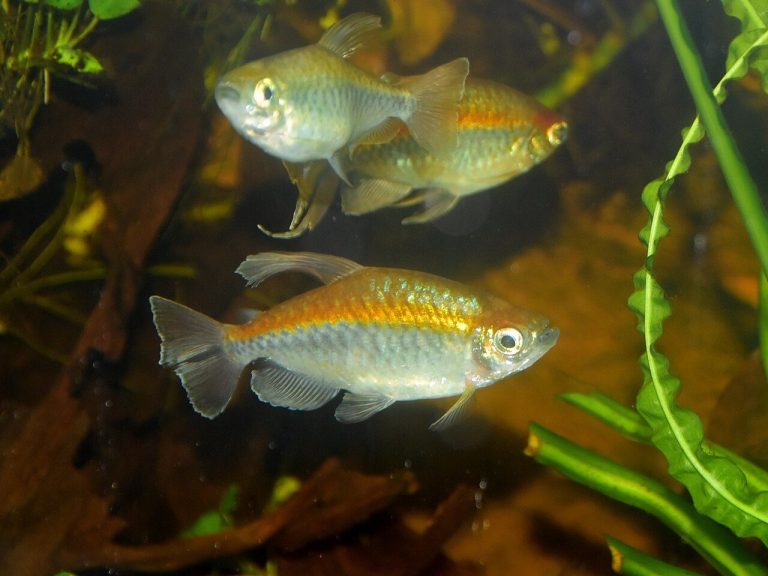
One of the most striking features of a healthy male is the trident caudal fin. This three-pronged tail is a clear indicator of a mature, dominant male and is essential for identifying your breeding stock.
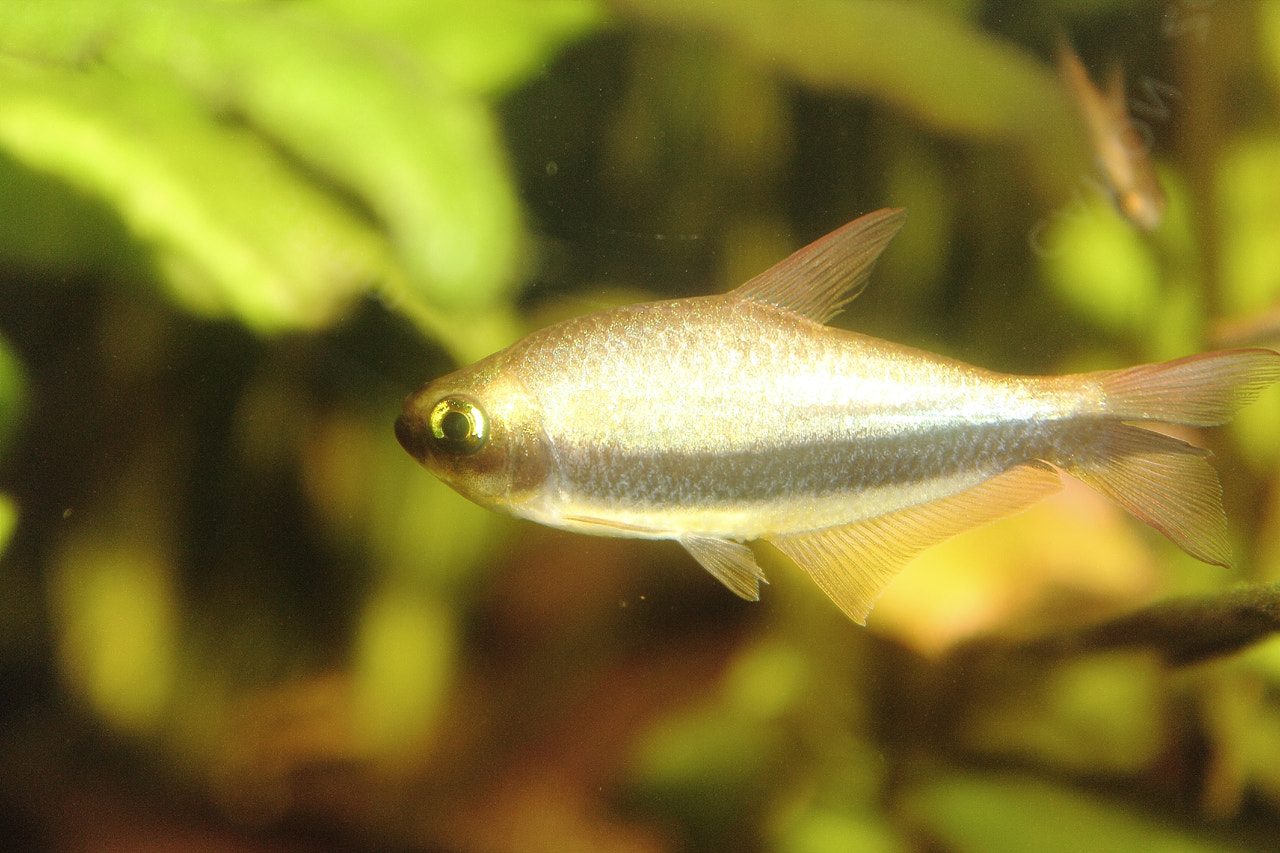
Distinguishing between males and females is relatively straightforward once they reach maturity. Males are typically larger, more colorful, and possess extended dorsal and anal fins, while females are rounder in the belly and show more muted colors.
| Feature | Male Emperor Tetra | Female Emperor Tetra |
|---|---|---|
| Body Shape | Slender and elongated | Plump and rounded (especially when gravid) |
| Caudal Fin | Pronounced trident shape (central ray extended) | Standard fork shape, no long central ray |
| Eye Color | Often brilliant blue | Usually green or turquoise |
| Behavior | Territorial and competitive | Peaceful and social |
Conditioning Your Breeders for Success
The foundation of successful Emperor Tetra breeding is proper conditioning. You cannot expect a pair to spawn if they are not in peak physical condition and brimming with energy.
I have noticed that a diet consisting solely of dry flakes is rarely enough to trigger spawning behavior. You should transition your chosen pair to a diet rich in live and frozen foods at least two weeks before you intend to move them to the breeding tank.
Freshly hatched Artemia nauplii (baby brine shrimp) and bloodworms are excellent choices for building up the female’s egg production. High-quality nutrition ensures that the eggs are viable and the fry will be strong upon hatching.
Pro Tip: When conditioning, try to separate the males and females for 7–10 days. This separation increases their eagerness to spawn once they are reunited in the breeding setup.
During this time, make sure your water quality remains pristine. Using the best fish food for tetras will not only help with breeding but will also boost the deep purple and gold colors of your Emperors.
Preparing the Ideal Breeding Tank
Emperor Tetra breeding requires a controlled environment separate from your community tank. A 10 to 15-gallon aquarium is usually sufficient for a single pair or a small group.
The water parameters are the most critical factor here. These fish originate from slow-moving, shaded rivers in Colombia, meaning they prefer soft, acidic water with plenty of tannins.
I highly recommend using Reverse osmosis water (RO water) to achieve the low carbonate hardness (KH) required. Mixing RO water with a small amount of tap water can help you dial in the perfect pH level.
| Parameter | Ideal Range for Breeding |
|---|---|
| Temperature | 78°F to 82°F (25°C to 28°C) |
| pH Level | 6.0 to 6.5 |
| Water Hardness (dGH) | 1 to 5 degrees |
| Lighting | Dim or diffused |
Using Natural Elements for Water Conditioning
To mimic their natural habitat, I often utilize Peat filtration or add Indian almond leaves to the tank. These release humic substances that naturally lower the pH and provide antifungal properties for the eggs.
The substrate should be dark, or you can even leave the bottom bare for easier cleaning. If you choose a bare-bottom tank, you must provide plenty of spawning sites.
I find that a dense clump of Taxiphyllum barbieri (Java Moss) is the perfect medium. Alternatively, a synthetic spawning mop made of dark acrylic yarn works exceptionally well and is easier to sterilize between uses.
The Emperor Tetra Breeding Process
Once your breeding tank is seasoned and your pair is conditioned, it is time to introduce them. I prefer to add the female first in the evening, followed by the male a few hours later.
Spawning usually occurs in the early morning hours, often triggered by the first rays of light hitting the tank. The male will perform an elaborate dance, shimmying alongside the female to lead her toward the plants or mop.
Unlike some species that lay hundreds of eggs at once, Emperors are continuous spawners but in smaller batches. A single female may lay between 50 and 100 eggs over the course of several hours.
Common Mistake: Leaving the parents in the tank after spawning is a recipe for disaster. Emperor Tetras have no parental instincts and will quickly consume their own eggs if given the chance.
To protect the eggs, you can also use a spawning grate at the bottom of the tank. This allows the non-adhesive eggs to fall through the mesh where the adults cannot reach them.
Egg Incubation and Hatching
Once you notice the female is noticeably thinner and the male has stopped chasing, remove the adults immediately. The eggs are tiny, transparent, and very sensitive to light and fungus.
I suggest keeping the breeding tank in near darkness during the incubation period. This prevents light-sensitive embryos from being damaged and slows the growth of harmful bacteria.
The eggs typically hatch within 24 to 36 hours depending on the temperature. At this stage, the fry are “wrigglers” and will stay attached to surfaces or hide in the moss while they absorb their yolk sacs.
It will take another 3 to 4 days before the fry become free-swimming. This is the most critical window for the survival of your new brood.
Raising the Fry: From Infusoria to Juveniles
Feeding Emperor Tetra fry is the biggest challenge for many hobbyists. Because the fry are exceptionally small, they cannot eat traditional crushed flakes or even standard baby brine shrimp immediately.
Your first line of defense should be Infusoria. These microscopic organisms are the perfect size for the tiny mouths of newly free-swimming tetras.
I usually start a culture of infusoria a week before I expect a spawn. If you don’t have infusoria, specialized liquid fry foods can work, but they often foul the water quickly.
Growth Stages and Feeding Schedule
After about a week of feeding infusoria, the fry should be large enough to handle Artemia nauplii. This is where you will see a massive explosion in their growth rate.
| Age of Fry | Recommended Food Source |
|---|---|
| Days 1-4 | Yolk sac absorption (no feeding) |
| Days 5-12 | Infusoria, vinegar eels, or liquid food |
| Day 13-30 | Freshly hatched brine shrimp (Artemia) |
| Month 2+ | Crushed flakes, micro-pellets, daphnia |
Water cleanliness is essential during the first month. I perform daily 10% water changes using a small airline tube to avoid sucking up the fry.
Be sure that the replacement water matches the tank water exactly in temperature and pH. Sudden shifts can be fatal to delicate fry.
Troubleshooting Common Breeding Issues
Even experienced breeders face setbacks. If your Emperors are not spawning, the first thing to check is your water hardness.
If the water is too hard, the eggs may fail to fertilize or the shells may become too tough for the fry to break through. This is why Reverse osmosis water is often non-negotiable for this species.
Another common issue is egg fungus. If you see white, fuzzy eggs, they are likely infertile and are being attacked by fungus. Using methylene blue or alder cones can help prevent this from spreading to healthy eggs.
If you enjoy the challenge of breeding characins, you might also be interested in my guide on Congo Tetra breeding, which requires a slightly different approach due to their larger size.
A few common questions
How many eggs do Emperor Tetras lay?
A single healthy female typically lays between 50 and 100 eggs during a spawning session. They are egg-scatterers, meaning they drop them among plants rather than guarding a nest.
How long does it take for Emperor Tetra eggs to hatch?
In a tank kept at 80°F, the eggs usually hatch within 24 to 36 hours. Higher temperatures can speed up the process, but they also increase the risk of bacterial bloom.
Can I breed Emperor Tetras in a community tank?
While it is possible for them to spawn in a community tank, it is highly unlikely that any fry will survive. The eggs and fry are seen as a high-protein snack by almost all tank mates, including the parents.
What is the best age for breeding Emperor Tetras?
Emperor Tetras are usually ready to breed when they are 8 to 12 months old. I have found that younger pairs are often more productive than very old specimens.
Why are my Emperor Tetra fry dying after a week?
This is usually due to starvation or poor water quality. Help you are providing enough infusoria and performing small, frequent water changes to remove waste.
In short
Mastering Emperor Tetra breeding is a significant milestone for any aquarist. It requires patience, attention to detail, and a deep understanding of the species’ natural needs.
If you provide soft, acidic water, high-quality live foods, and a safe environment for the eggs, you can successfully raise a new generation of these regal fish. The sight of a dozen shimmering juvenile Emperors schooling together is a reward like no other.
Remember to keep your parameters stable and your fry well-fed. With persistence, you will find that the Emperor Tetra is one of the most fulfilling species to breed in the home aquarium.
, and I wish you the best of luck with your spawning efforts.

- 2003First tank
- 20+Years keeping
- 40+Tanks kept
- 0Sponsored picks
Howard set up his first 10-gallon planted tank in 2003 and lost half of it within six weeks. Two decades and more than forty aquariums later, he writes the guides he wished he had then: clear numbers, the reasons behind them, and what actually goes wrong in home tanks.