Congo Tetra Breeding – Step-by-Step Guide
Congo Tetra breeding involves setting up a dedicated bare-bottom tank with soft, acidic water and a spawning mop, conditioning a healthy pair, and carefully raising the delicate fry on infusoria and newly hatched brine shrimp nauplii.
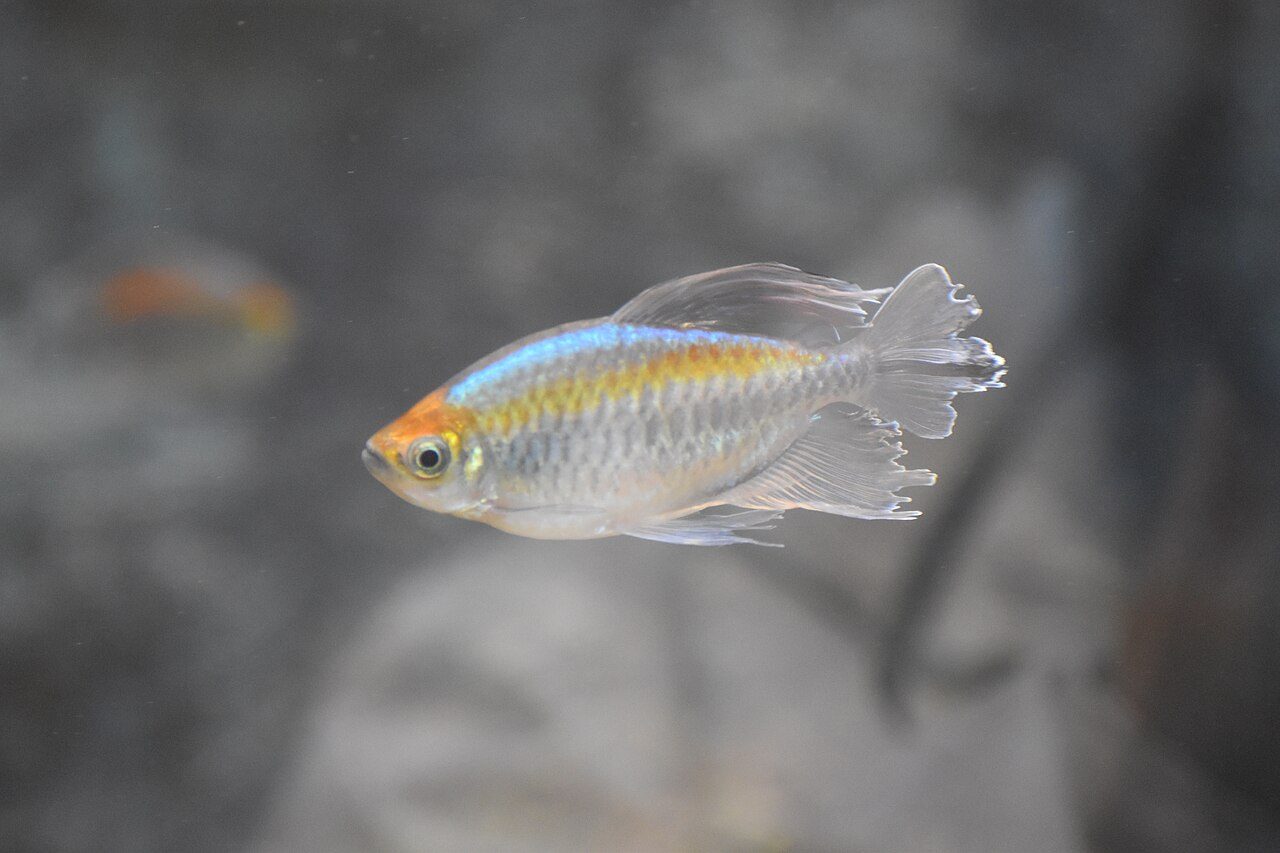
The bright, iridescent scales and flowing fins of the Congo Tetra (Phenacogrammus interruptus) make them a true centerpiece in any community aquarium. While commonly available in fish stores, successfully breeding these magnificent fish at home offers an immensely satisfying experience. It allows you to observe their intricate natural behaviors and contribute to the hobby by raising a new generation of these remarkable African tetras.
In my decade-plus experience keeping a diverse range of freshwater fish, I’ve found that Congo Tetra fish are beautiful and also unusual subjects for aquaculture. This comprehensive guide will walk you through every step of the Congo Tetra breeding process, from setting up the ideal environment to raising the delicate fry, making sure you have all the knowledge for success.
At a glance: Congo tetra (Phenacogrammus interruptus)
- Temperature
- 73–82°F (23–28°C)
- Water pH
- 6.0–7.5
- Adult size
- 3 in (8 cm)
- Minimum tank
- 30 gal
- Group size
- Groups of 6+
- Temperament
- Peaceful, can nip long fins
- Diet
- Omnivore: flakes, pellets, frozen brine shrimp
- Lifespan
- 3–5 years
Keeper’s tip: Males develop their full colour and fin extensions only in a calm, well-planted tank with dim areas.
Understanding Congo Tetras: A Brief Overview
Before diving into breeding specifics, it’s helpful to understand the natural history and general care of Congo Tetras. These striking fish originate from the Congo River basin in Central Africa, inhabiting slow-moving, heavily vegetated waters. Their natural environment provides specific cues that trigger spawning behaviors.
Adult Congo Tetras can reach impressive sizes, often up to 3.5 inches (9 cm) for males, with females being slightly smaller. Their elongated bodies, shimmering scales, and distinctive finnage, especially the extended dorsal and caudal fins of mature males, are remarkable. For more detailed information on their general care, you can refer to our Congo Tetra care guide.
Identifying Male vs. Female Congo Tetras
Distinguishing between male and female Congo Tetras is important for successful breeding. Males are typically larger and more colorful, exhibiting significantly longer and more elaborate dorsal, caudal, and anal fins. Their fins often have a feathery, trailing appearance.
Females, on the other hand, are generally rounder in the belly, especially when gravid (full of eggs), and their fins are noticeably shorter and less ornate. The differences become more pronounced as they mature. For a comprehensive visual guide, check out our article on identifying male vs female Congo Tetras.
Why Undertake Congo Tetra Breeding?
Beyond the personal satisfaction, breeding Congo Tetras offers several benefits. It provides an intimate look into the reproductive cycle of a magnificent species, improving your understanding of fish biology. You also gain the opportunity to raise fish that are perfectly acclimated to your local water conditions, potentially leading to hardier, healthier specimens.
Furthermore, successfully propagating these fish helps reduce demand for wild-caught specimens, supporting sustainable aquarium keeping practices. There’s a unique joy in seeing a new generation of these shimmering jewels stay healthy under your care.
Essential Equipment for Your Congo Tetra Breeding Setup
A dedicated breeding tank is essential for successful Congo Tetra breeding. Attempting to breed them in a community tank is rarely fruitful, as adults will readily consume eggs and fry.
The Breeding Aquarium
A 10 to 20-gallon aquarium is ideal for a single breeding pair or a trio (one male, two females). A 15-gallon tank is often a sweet spot, providing enough space without being excessively large.
The tank should be a bare-bottom breeding aquarium, which makes it easier to spot and remove eggs after spawning. While some hobbyists use a substrate, a bare bottom simplifies hygiene and fry collection.
Filtration and Heating
A gentle sponge filter is perfect for a breeding tank. It provides biological filtration without creating strong currents that could harm delicate eggs or fry. Make sure the filter is mature, pre-cycled, or seeded with media from an established tank.
An adjustable heater is essential to maintain a stable spawning temperature range. Consistent temperature is a key trigger for many egg-laying species, including the Congo Tetra. A reliable thermometer is also vital for monitoring.
Spawning Media
Congo Tetras are egg scatterers, meaning they will deposit their adhesive eggs on fine-leaved plants or other fibrous materials. A spawning mop made from synthetic yarn is an excellent choice. You can easily create one by tying strands of dark-colored yarn to a cork or small weight, allowing it to float or sink.
Alternatively, fine-leaved plants like Java moss or hornwort can be used, but mops are often preferred for their ease of removal and hygiene. The spawning media provides a safe place for the eggs to attach and offers some protection from hungry parents.
Pro Tip: Always sterilize your spawning mop or plants before introducing them to the breeding tank. A quick dip in a mild bleach solution (then thoroughly rinsed and dechlorinated) or a strong salt bath can eliminate unwanted pests or pathogens.
Optimizing Water Parameters for Spawning Success
Water quality is perhaps the most critical factor in encouraging Congo Tetra breeding. These fish require very specific conditions that mimic their natural soft, acidic rainforest habitats.
Key Water Parameters
Here’s a breakdown of the best water parameters for successful spawning:
| Parameter | Right Range |
|---|---|
| Temperature | 77-82°F (25-28°C) |
| pH | 5.5-6.5 (acidic pH water) |
| General Hardness (dGH) | 1-5 dGH (low dGH, very soft water) |
| Carbonate Hardness (dKH) | 0-2 dKH |
Achieving these parameters often requires using reverse osmosis (RO) water mixed with a small amount of tap water or specialized buffering solutions. Indian almond leaves or blackwater extract can help lower pH and add beneficial humic substances, mimicking their natural environment.
Common Mistake: Many hobbyists try to breed Congo Tetras in moderately hard, neutral pH water. This is a common pitfall. Congo Tetras absolutely require very soft, acidic conditions to trigger spawning and for their delicate eggs to properly develop. Don’t skip this important step!
Selecting and Conditioning Your Breeding Pair
Choosing healthy, mature fish is fundamental to successful Congo Tetra breeding. Select individuals that are colorful, active, and free from any signs of disease or stress.
Pair Selection
Look for a well-developed male with impressive finnage and a plump, healthy female. Aim for fish that are at least 8-12 months old, as they will be sexually mature and more likely to spawn successfully. If you have a group, observe which individuals seem to interact and display courtship behaviors.
Diet and Conditioning
A high-quality, varied diet is essential for conditioning your breeding pair. Feed them a mix of live foods like bloodworms, brine shrimp, daphnia, and blackworms. Frozen alternatives are also excellent.
Supplement this with high-quality flake or pellet food. A rich diet helps make sure the fish are in peak physical condition, which is essential for egg and milt production, as well as overall vitality for spawning. Condition them for at least 1-2 weeks before attempting to breed.
The Spawning Process: From Courtship to Egg Scattering
Once your breeding tank is set up and your chosen pair is conditioned, it’s time to introduce them. This is where the magic of Congo Tetra breeding begins.
Introducing the Pair
Introduce the male and female to the breeding tank, ideally in the late afternoon or evening. This allows them to acclimate overnight. Spawning usually occurs in the early morning, often with the first light of day.
Dim lighting or indirect natural light can help encourage them. Help the water parameters are stable within the ideal ranges discussed earlier.
Courtship and Egg Laying
The courtship ritual of Congo Tetras is quite engaging. The male will display his impressive fins, often chasing the female gently around the tank. He may quiver and nudge her, encouraging her to swim into the spawning mop or fine-leaved plants.
The female will then release small, clear, adhesive eggs, typically one or two at a time, which the male will immediately fertilize. This egg scattering behavior can last for several hours, with hundreds of eggs being laid. I’ve noticed that a well-conditioned pair can lay 100-300 eggs in a single spawning session.
Post-Spawning Care: Protecting Eggs and Hatchlings
Once spawning is complete, the critical next step is to protect the delicate eggs from predation.
Removing the Parents
Congo Tetras, like many other tetras, are notorious egg eaters. As soon as you observe that spawning has finished (often indicated by the pair no longer actively engaging or the female’s belly appearing noticeably slimmer), remove the adult fish from the breeding tank. Place them back into their main display aquarium.
Egg Incubation and Hatching
The eggs typically hatch within 24-36 hours at the best temperature. The clear eggs are generally viable, while any white or opaque eggs are infertile or fungused and should be gently removed with a pipette to prevent fungal spread. A very mild methylene blue solution can sometimes be used as an anti-fungal, but precise dosing is critical.
The newly hatched fry will be tiny and almost transparent. They will initially cling to surfaces and absorb their yolk sacs. During this stage, they are extremely vulnerable and require stable, pristine water conditions.
Raising Congo Tetra Fry: The Delicate Art
This is arguably the most challenging but also the most satisfying part of Congo Tetra breeding: successfully raising the fry. The fry rearing protocol is vital for their survival.
First Foods for Fry
Once the fry are free-swimming (usually 3-5 days post-hatching, after their yolk sacs are absorbed), they need microscopic food. Their mouths are incredibly small, so traditional fry foods are too large.
The first food should be infusoria culture. You can build infusoria yourself using decaying lettuce leaves or specialized cultures. Feed small amounts multiple times a day. After a few days, when they’ve grown slightly, they can transition to larger foods.
Transitioning to Larger Foods
As the fry grow, usually within a week or so of free-swimming, they can begin to accept newly hatched brine shrimp nauplii. This is a big help for fry development, providing essential protein and nutrients. Hatching brine shrimp at home requires a simple setup and is highly recommended.
Micro-worms are another excellent transitional food. Continue feeding small amounts frequently, about 4-6 times a day, to support their rapid growth.
Water Changes and Growth
Maintaining impeccable water quality is non-negotiable for fry. Perform small, daily water changes (10-20%) using aged, temperature-matched, and parameter-matched water. Airstone aeration should be minimal to avoid strong currents.
As the fry grow, gradually introduce finely crushed high-quality flake food. Within a few weeks, they will start to resemble miniature versions of their parents. The Ember Tetra breeding guide also offers some general fry-raising principles that can be helpful.
Common Challenges and Troubleshooting
Even with careful planning, challenges can arise during Congo Tetra breeding. Here are some common issues and how to address them.
No Spawning Activity
If your pair isn’t spawning, re-evaluate your conditioning and water parameters. Are they in peak health? Is the water soft enough, acidic enough, and within the correct temperature range? Sometimes, a slight drop in temperature followed by a gradual rise can stimulate spawning.
Make sure the tank is quiet and free from disturbances. Sometimes, simply trying a different male or female, or introducing a trio, can make a difference.
Fungused Eggs
Infertile eggs will quickly develop fungus, which can spread to viable eggs. Remove fungused eggs promptly. Using a gentle air stone in the breeding tank can increase water circulation around the eggs, helping to prevent fungus.
Making sure very clean water and proper pH also reduces fungal issues. A very short-term, low-dose anti-fungal treatment can be considered, but with caution.
Fry Mortality
High fry mortality is often due to poor water quality or insufficient first foods. Be diligent with small, frequent water changes and ensure a continuous supply of appropriate microscopic food. Overfeeding can also foul the water, so feed sparingly but often.
Sudden changes in temperature or pH can be deadly for fry. Stability is key.
A few common questions About Congo Tetra Breeding
How long does it take for Congo Tetra eggs to hatch?
Congo Tetra eggs typically hatch within 24 to 36 hours when kept at an right temperature of 77-82°F (25-28°C).
What do Congo Tetra fry eat as their first food?
Newly hatched Congo Tetra fry require microscopic food like infusoria for their first few days. After about a week, they can transition to newly hatched brine shrimp nauplii or micro-worms.
Can Congo Tetras breed in a community tank?
While it’s possible for them to spawn in a community tank, successful Congo Tetra breeding with fry survival is highly unlikely. Adults and other tank mates will readily consume the eggs and fry, necessitating a dedicated breeding setup.
What water parameters are essential for Congo Tetra spawning?
For successful spawning, Congo Tetras need very soft water (1-5 dGH), acidic pH (5.5-6.5), and a stable temperature between 77-82°F (25-28°C). These conditions mimic their natural habitat.
How often can Congo Tetras breed?
If conditioned properly and kept in ideal breeding conditions, Congo Tetras can spawn every few weeks. However, it’s best to give the breeding pair a rest period in their main tank between spawning attempts to prevent stress and exhaustion.
Putting it all together
Successfully engaging in Congo Tetra breeding is a satisfying endeavor that deepens your connection to the aquarium hobby. It requires attention to detail, patience, and a commitment to providing the precise environmental cues these beautiful fish need to reproduce.
Once you understand their specific water parameter requirements, carefully conditioning your breeding pair, and diligently caring for the delicate fry, you can experience the joy of raising these shimmering African jewels. This journey will expand your expertise and also allow you to appreciate the intricate life cycle of one of the aquarium world’s most beautiful tetras. Happy breeding.

- 2003First tank
- 20+Years keeping
- 40+Tanks kept
- 0Sponsored picks
Howard set up his first 10-gallon planted tank in 2003 and lost half of it within six weeks. Two decades and more than forty aquariums later, he writes the guides he wished he had then: clear numbers, the reasons behind them, and what actually goes wrong in home tanks.