Blind Cave Tetra How Do They See/Navigate – A Guide
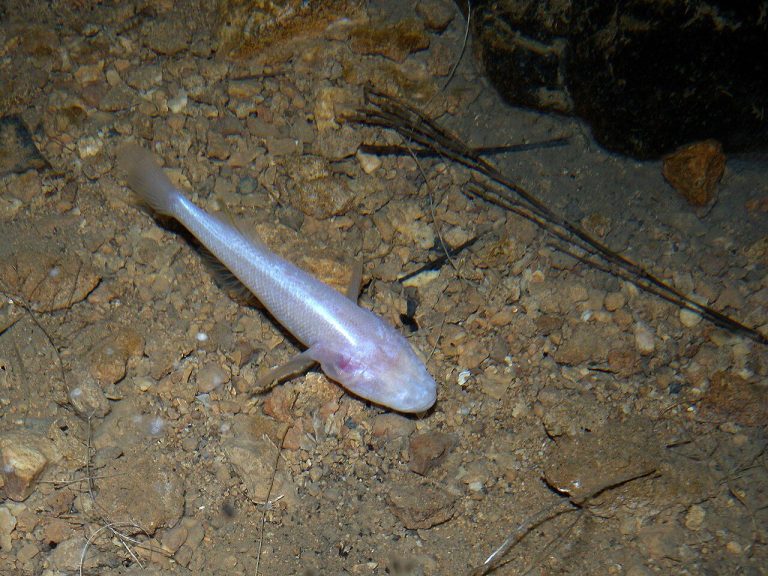
Blind cave tetras work through using a highly developed lateral line system that detects minute changes in water pressure and vibrations, allowing them to create a mental 3D map of their environment through hydrodynamic imaging.
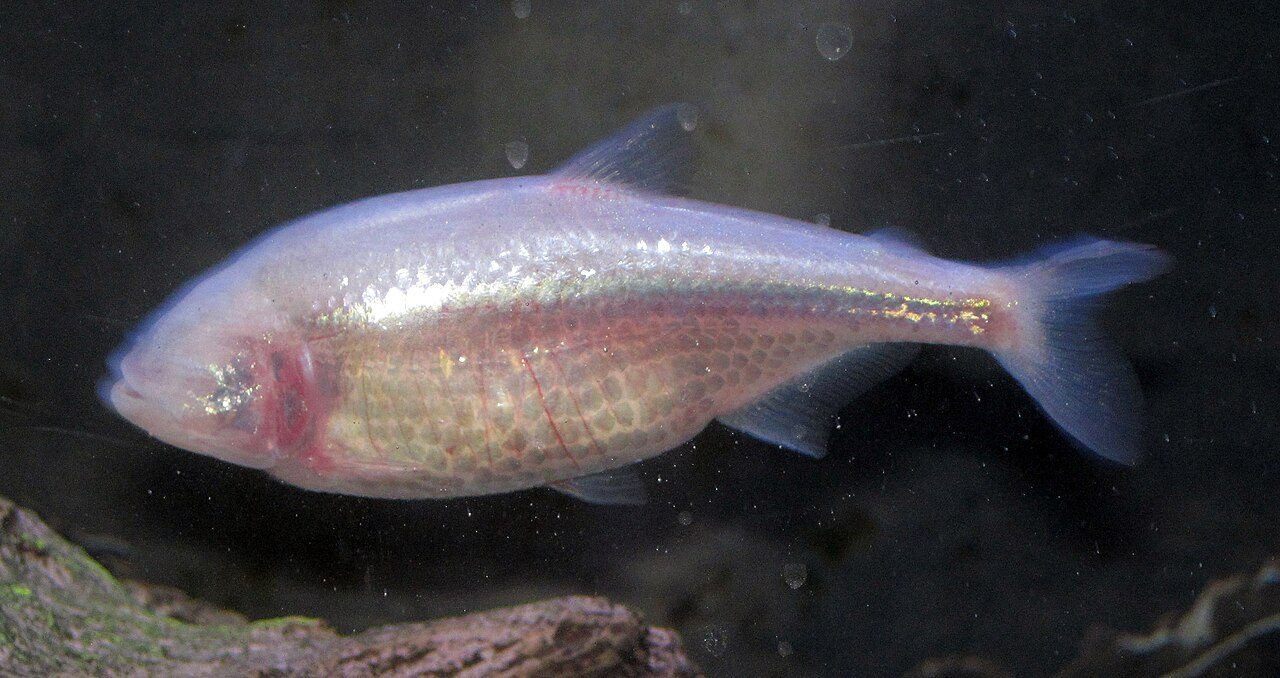
Watching a school of these pale, eyeless fish glide effortlessly through a complex hardscape is one of the most striking sights in the hobby.
I remember the first time I brought home a group of Astyanax mexicanus; I spent hours worrying they would constantly bump into the glass or my driftwood.
To my surprise, they moved with more precision and confidence than many of my sighted fish, demonstrating a mastery over their environment that seems almost supernatural.
In this guide, we will explore the interesting mechanics of blind cave tetra how do they see/work through and how you can use this knowledge to build the perfect habitat for them.
At a glance: Blind cave tetra (Astyanax mexicanus)
- Temperature
- 68–77°F (20–25°C)
- Water pH
- 6.5–8.0
- Adult size
- 3.5 in (9 cm)
- Minimum tank
- 30 gal
- Group size
- Groups of 4+
- Temperament
- Peaceful to semi-aggressive
- Diet
- Omnivore: sinking pellets, flakes, frozen foods
- Lifespan
- 10–15 years
Keeper’s tip: They find food by smell and lateral line, so sinking foods spread across the floor work best.
The Secret Behind Blind Cave Tetra How Do They See/Handle
The primary way these fish understand their world is through a process known as mechanoreception.
While they lack functional eyes, their bodies are covered in specialized sensory organs that act as a high-definition radar system.
This system is so sensitive that it allows them to detect the presence of a single piece of floating food or the slight movement of a tank mate from several inches away.
Pro Tip: When you first introduce these fish to a new tank, avoid moving the decor for the first few weeks. They are literally “mapping” the water pressure zones in the aquarium, and consistency helps them settle in much faster.
The Lateral Line System Explained
The lateral line is a visible “stripe” running down the side of most fish, but in the blind cave tetra, it is a masterwork of evolutionary engineering.
It consists of thousands of tiny sensory structures called neuromasts, which come in two distinct varieties.
Superficial neuromasts sit on the surface of the skin, while canal neuromasts are tucked away in tiny pores along the scales.
Superficial vs. Canal Neuromasts
Superficial neuromasts are primarily responsible for detecting the flow of water across the fish’s body.
In contrast, canal neuromasts are shielded from constant flow, allowing them to pick up much finer vibrations and pressure pulses.
Together, these organs provide the fish with a constant stream of data about their surroundings, effectively replacing the need for sight.
Hydrodynamic Imaging: Seeing with Water
The most impressive aspect of how these fish move is a phenomenon called hydrodynamic imaging.
As the fish swims, it pushes a small “bow wave” of water ahead of itself, much like a boat moving through a lake.
When this wave hits an object, like a rock or a plant, the water pressure changes and bounces back toward the fish.
Mapping the Environment
The neuromasts on the fish’s head and body detect these subtle pressure reflections instantly.
The fish’s brain processes this information to determine the size, shape, and distance of the object in its path.
This allows them to work through tight crevices in their native karst topography without ever touching the walls.
Detecting Moving Objects
This system is not just for avoiding stationary rocks; it is also perfect for tracking movement.
In my experience, blind cave tetras are often the first to know when it is feeding time because they feel the vibration of the lid opening.
They can even sense the “wake” left behind by other fish, helping them maintain a tight school despite being unable to see their neighbors.
The Evolution of Sensory Mastery
To understand why these fish handle this way, we have to look at their origins in the deep caves of Mexico.
Over thousands of years, these populations became isolated in total darkness where eyes were useless and also a massive waste of energy.
This led to a process where the eyes regressed, and the energy was diverted to boosting their other senses.
Orbital Bone Ossification
As the fish evolved, the eye sockets began to close through a process called orbital bone ossification.
This structural change provided more room for sensory nerves and strengthened the skull for life in rocky, lightless environments.
It is a perfect example of “use it or lose it” in the natural world, where efficiency is the key to survival.
Chemoreception and Taste
Beyond their pressure-sensing abilities, these tetras have an incredible sense of smell and taste, known as chemoreception.
They possess sensory cells all over their bodies that can “taste” the water for chemical signatures of food or predators.
When searching for the best fish food for tetras, you will notice they home in on high-protein pellets almost immediately.
Common Mistake: Many beginners think these fish are “disabled” and require special slow-feeding techniques. In reality, they are highly efficient foragers and will easily outcompete slower fish like fancy goldfish for food.
Setting Up an Aquarium for Blind Cave Tetras
Because we now understand how blind cave tetra how do they see/handle, we can design a tank that caters to their strengths.
They do not need bright lights, which makes them excellent candidates for low-tech setups or even “blackwater” style tanks.
However, they do appreciate a tank with plenty of flow, as this “charges” their lateral line system with more data.
| Requirement | Ideal Range |
|---|---|
| Temperature | 68°F – 77°F (20°C – 25°C) |
| pH Level | 7.0 – 8.5 |
| Water Hardness | 10 – 25 dGH (Harder water is preferred) |
| Minimum Tank Size | 20 – 30 Gallons |
| Water Flow | Moderate to High |
Decor and Substrate Choices
When scaping for these fish, I recommend using smooth rocks and driftwood without sharp, jagged edges.
While they are experts at navigation, high-speed “sprints” during spawning can occasionally lead to accidental bumps.
Using a dark substrate can also make their pale, iridescent bodies pop, creating a striking visual contrast in your aquarium.
Tank Mates for Blind Cave Tetras
These are active, boisterous fish that can sometimes nip at the long fins of slower companions.
They do best with other hardy freshwater tetra fish that can handle their energy levels.
Avoid keeping them with very timid species that might be startled by the blind tetra’s constant, sightless “investigations.”
Feeding Strategies for Eyeless Fish
You might wonder how they find food so quickly without being able to see it fall through the water column.
The answer lies in their ability to detect the “vibration signature” of a sinking pellet.
They also use their highly sensitive barbels and facial neuromasts to “root” through the substrate for leftovers.
Using Scent to Your Advantage
Since their sense of smell is heightened, using high-quality, fragrant foods will trigger an immediate feeding response.
Frozen bloodworms or brine shrimp are particular favorites that they can track with pinpoint accuracy.
I have found that they are often more efficient at cleaning the bottom of the tank than many species of catfish.
Avoiding Overfeeding
Because they are so good at finding food, it is easy to overfeed them, leading to water quality issues.
Keep an eye on their bellies; they should look slightly rounded but not bloated after a meal.
A clean tank is essential, as high nitrate levels can damage the sensitive neuromasts they rely on for navigation.
Common Myths About Blind Cave Tetras
One of the biggest misconceptions is that these fish live in a world of “nothingness” because they are blind.
In reality, their world is likely more “vivid” than ours, filled with a complex map of vibrations, currents, and scents.
They are not “lost” in the tank; they are simply seeing the world through a different medium.
Are They Completely Blind?
While most aquarium specimens are the eyeless cave form, some still possess vestigial light-sensing cells under their skin.
They can often tell the difference between day and night, even if they cannot form a visual image.
This is why they still maintain a regular circadian rhythm and are active during the day.
Do They Bump Into Things?
Occasionally, you might see a blind cave tetra tap against the glass or a piece of decor.
This is usually a deliberate action used to “echo-locate” or explore a new addition to the tank.
It is rarely a sign of distress and is simply part of their natural investigative behavior.
Questions and answers
Can blind cave tetras live in a planted tank?
Yes, they do very well in planted tanks, though they may occasionally nibble on very soft-leaved plants.
Do they need a heater?
They prefer cooler to temperate water, so a heater is usually necessary to keep the tank stable around 72-75°F.
Why is my blind cave tetra swimming in circles?
This is often how they “scout” a new area to build a 3D map of the pressure zones in that corner of the tank.
Can they live with shrimp?
I would be cautious, as their high activity levels and “tasting” behavior might lead to them eating smaller shrimp.
How long do they live?
With proper care, these hardy fish can easily live for 5 to 7 years in a well-maintained aquarium.
Where that leaves you
The story of the blind cave tetra how do they see/work through is one of the most unusual chapters in aquatic biology.
By trading their sight for a high-tech lateral line system, they have become masters of an environment where most other fish would perish.
As an aquarist, providing them with a habitat that respects their unique sensory needs will reward you with a group of active, healthy, and endlessly interesting pets.
Keep your water clean, your flow moderate, and your decor safe, and you will enjoy these eyeless wonders for years to come.

- 2003First tank
- 20+Years keeping
- 40+Tanks kept
- 0Sponsored picks
Howard set up his first 10-gallon planted tank in 2003 and lost half of it within six weeks. Two decades and more than forty aquariums later, he writes the guides he wished he had then: clear numbers, the reasons behind them, and what actually goes wrong in home tanks.