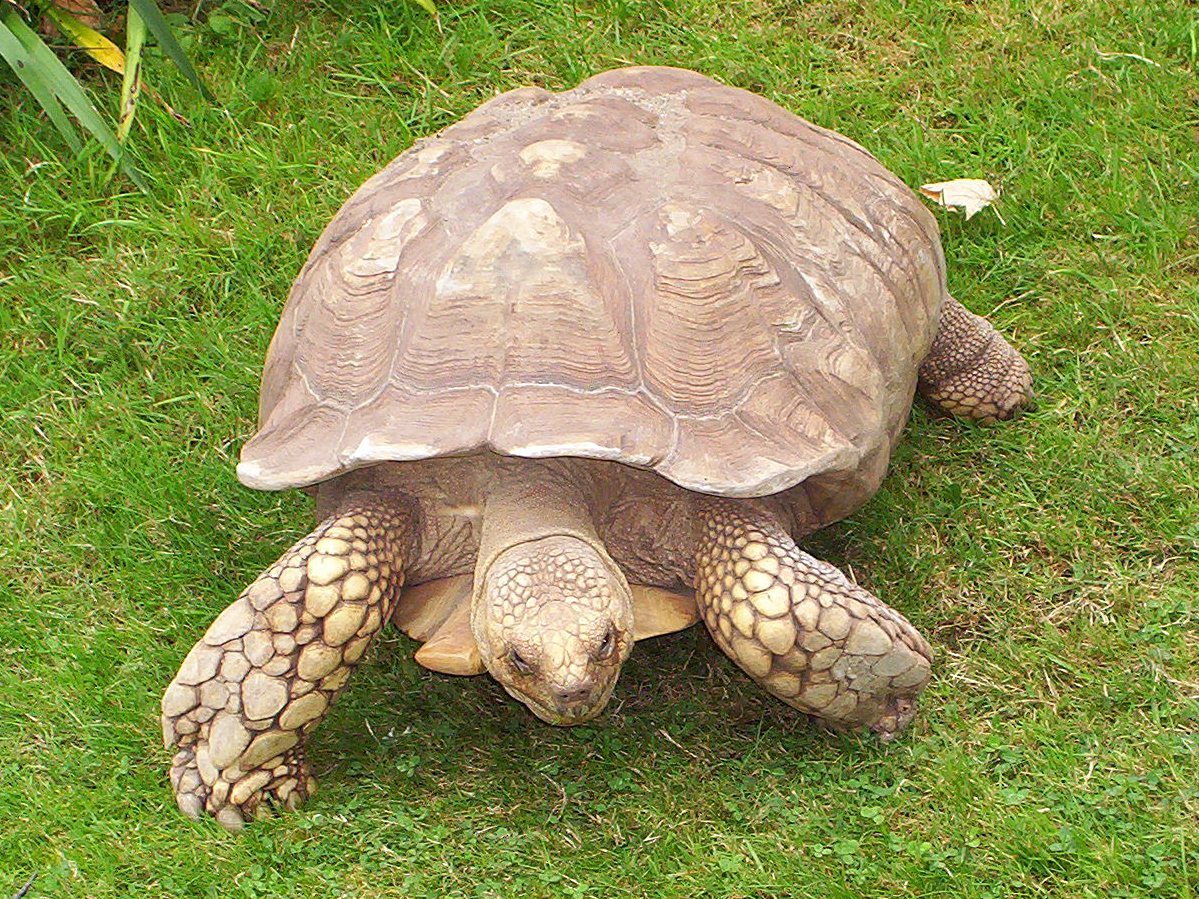
African Sulcata Tortoise Male Or Female – How to Tell Them Apart
To determine if an african sulcata tortoise is male or female, examine the plastron (bottom shell) for a concave shape in males and look for a longer, thicker tail that is often tucked to the side.
Determining if your african sulcata tortoise is male or female is one of the most common challenges for keepers once their pet reaches sub-adult size. In my decade of experience keeping various exotic species, I have found that while tortoises aren’t as delicate as a school of identifying fish gender, they require the same level of observational detail.
When you first bring home a hatchling, it is virtually impossible to tell the difference without professional DNA testing or endoscopy. However, as they grow into the third-largest tortoise species in the world, the physical markers become much more pronounced and easier to spot for the trained eye.
In this guide, I will walk you through the specific anatomical markers, behavioral cues, and timing requirements for accurately sexing your Sulcata. Whether you are planning to breed or simply want to know if “Hercules” should have been “Hera,” these methods are the gold standard in the hobby.
At a glance: Sulcata tortoise (Centrochelys sulcata)
- Temperature
- Basking 95–100°F (35–38°C)
- Adult size
- 24–30 in shell (60–76 cm)
- Enclosure
- Outdoor pen for adults
- Group size
- Alone
- Temperament
- Docile, strong diggers
- Diet
- Herbivore: grasses, hay, weeds, low-sugar greens
- Lifespan
- 70+ years
Keeper’s tip: Adults outgrow any indoor enclosure; plan for a secure outdoor pen early.
Understanding the African Sulcata Tortoise Male or Female Physical Traits
The primary way to distinguish between sexes is through secondary sexual characteristics that develop as the tortoise matures. Most keepers find that these traits only become reliable once the tortoise reaches a length of 10 to 12 inches, which usually occurs between 3 and 5 years of age.
Unlike telling angelfish apart, where subtle fin shapes are the key, tortoise sexing relies heavily on the structure of the shell and the tail. These differences are biological adaptations designed to facilitate successful mating in the harsh African scrubland.
The Plastron: The “Belly” Test
The plastron is the flat, bottom part of the tortoise’s shell, and it is perhaps the most reliable indicator of sex in adults. In males, the plastron develops a distinct inward curve, or concavity, near the rear of the shell.
This concave shape allows the male to fit securely over the high, domed carapace of the female during mating. Females, on the other hand, maintain a completely flat plastron to allow more internal space for egg development and to keep their center of gravity stable.
Tail Length and Thickness
If you look closely at the tail, you will notice significant differences in both length and the position of the vent (cloaca). Males possess a much longer, thicker tail that they often fold or tuck to the side along the rear of their shell.
The female’s tail is notably shorter, thinner, and generally points straight down rather than being tucked. This difference is necessary because the male’s tail must house the hemipenes, which requires more physical volume than the female’s reproductive tract.
Pro Tip: When checking the tail, never force it to move or pull on it, as this can cause significant stress or injury. Instead, place the tortoise on a clear glass table (if small enough) or wait for them to walk naturally to get a clear view from behind.
Direct Comparison: African Sulcata Tortoise Male vs Female
To help you visualize these differences, I have compiled a comparison table based on the most common physical markers. These traits are most visible in tortoises that have surpassed the juvenile stage.
| Feature | Male Characteristics | Female Characteristics |
|---|---|---|
| Plastron Shape | Concave (indented) | Flat |
| Tail Size | Long, thick, and muscular | Short, thin, and conical |
| Anal Notch | Wide, “V” shaped opening | Narrower, “U” shaped opening |
| Gular Scutes | Longer, used for ramming | Shorter and more rounded |
| Overall Size | Generally larger (up to 200lbs) | Slightly smaller (up to 150lbs) |
The Anal Notch and Gular Scutes
Beyond the belly and the tail, there are two other shell features that experts use to confirm the sex of an african sulcata tortoise male or female. These involve the very front and the very back of the plastron.
The anal notch is the gap in the shell right where the tail emerges. In males, this notch is wider and shaped more like a “V” to accommodate the movement of the larger tail.
The Gular Scutes
At the front of the shell, under the neck, are the gular scutes. These are two protruding pieces of the shell that Sulcatas use for defense and territorial disputes.
Males tend to have much longer and more pronounced gular scutes. They use these like a fork to get under the shell of a rival male and flip them over during a fight for dominance or mating rights.
Why Gular Scutes Matter for Females
Females still have gular scutes, but they are significantly shorter and less aggressive in appearance. While a female might use them to nudge a rival away from a choice piece of cactus, they lack the “ramming” length seen in mature males.
I have often noticed that keepers mistake long gular scutes for a health deformity. In reality, it is just a sign that your male is maturing and becoming ready for the territorial world of adult tortoises.
Behavioral Clues in Males and Females
If you are still unsure based on physical traits, behavior can provide excellent secondary evidence. Just as we see specific behaviors when monitoring shimmering African jewels in an aquarium, tortoises exhibit sex-specific actions.
Males are notoriously more territorial and aggressive, especially during the warmer months. You might see a male ramming into inanimate objects, like large rocks or even your boots, as a display of dominance.
Mounting Behavior
It is a common misconception that only males mount. While males mount females for mating, both sexes may mount other tortoises to establish a social hierarchy.
However, if you see a tortoise mounting another and emitting a distinct, high-pitched “vocalizing” sound, you are almost certainly looking at a male. Females are generally quieter and more focused on foraging and nesting.
Nesting and Digging
Females exhibit a very specific type of digging behavior when they are gravid (carrying eggs). They will use their hind legs to excavate a deep, flask-shaped hole in the soil.
While both sexes dig burrows to escape the heat, only the female will spend hours carefully crafting a nest site with her rear flippers. If you see your tortoise focusing heavily on deep, rear-leg digging, you likely have a female.
Common Mistake: Many beginners assume that “flashing” (the protrusion of the male organ during soaking or defecation) is a prolapse or a medical emergency. If it retracts quickly on its own, it is simply a natural biological function and a 100% confirmation that your tortoise is male.
Size and Growth Considerations
The african sulcata tortoise male or female question is often complicated by growth rates. In many reptile species, females are larger, but in the Sulcata world, males usually take the crown for maximum size.
A large male can easily exceed 200 pounds and reach lengths of 30 inches or more. Females are by no means small, often reaching 100 to 150 pounds, but they rarely reach the massive proportions of the largest males.
Growth Spurts and Sexing Accuracy
In my experience, trying to sex a Sulcata under 10 pounds is mostly guesswork. The shell is still growing rapidly, and the “V” notch or plastron concavity hasn’t had time to harden into its final form.
If you have a young tortoise, focus on providing high-fiber diets and proper calcium supplementation first. The sex will reveal itself in time, and there is no rush unless you are planning a specific breeding colony.
Feeding and Hormones
Diet can indirectly affect how early these traits appear. A tortoise that is overfed or grows too quickly may develop “pyramiding” of the shell, which can sometimes obscure the natural shape of the anal notch.
Always aim for slow, steady growth with a diet consisting of 80% grasses and hay. This helps keep the shell develops naturally, making it much easier to identify the sex when the time comes.
A few common questions About Sexing Sulcatas
Can I sex a hatchling Sulcata?
No, hatchlings are sexually monomorphic, meaning they look identical. You must wait until they are several years old and have reached a significant size (usually over 10 inches) for physical traits to appear.
Is one sex better as a pet?
Females are generally considered slightly “easier” because they are less likely to be aggressive toward their keepers or enclosure furniture. Males are impressive and full of personality but require much more secure fencing due to their ramming behavior.
Do males and females need different diets?
Their nutritional requirements are nearly identical. However, breeding females require significantly higher levels of calcium and hydration to support egg production and prevent egg-binding (dystocia).
Can two males live together?
I strongly advise against housing two males together. They are highly territorial and will likely fight until one is flipped over or seriously injured. A male and a female, or a group of females, is a much safer social dynamic.
What is “flashing” in male tortoises?
Flashing is when a male tortoise extends his penis, usually while soaking in water or during a bowel movement. It is often dark purple or black and heart-shaped. It is a normal behavior and the most definitive way to identify a male.
Conclusion: Knowing Your Sulcata
Accurately determining if your african sulcata tortoise is male or female is a rewarding milestone in the hobby. It allows you to better prepare for their future size, understand their behavioral quirks, and provide the specific care they need to do well for 70 years or more.
Remember to look for the “Big Three”: the concave plastron of the male, the longer tail of the male, and the wider V-shaped anal notch. If your tortoise is still small, be patient; the traits will become unmistakable as they grow.
Whether you have a territorial male or a nesting female, these “Spur-Thighed” giants are incredible companions. Once you understand their biology, you are ensuring a healthy, happy life for one of the most magnificent creatures in the reptile world.

- 2003First tank
- 20+Years keeping
- 40+Tanks kept
- 0Sponsored picks
Howard set up his first 10-gallon planted tank in 2003 and lost half of it within six weeks. Two decades and more than forty aquariums later, he writes the guides he wished he had then: clear numbers, the reasons behind them, and what actually goes wrong in home tanks.