Neon Tetra Disease – Causes and Treatment
Neon tetra disease is a fatal condition caused by the microsporidian parasite Pleistophora hyphessobryconis. It spreads through spore ingestion, causing muscle necrosis and spinal deformities, and currently has no known cure in home aquaria.
Few things are as disheartening to an aquarist as watching a bright school of fish slowly waste away. Over my ten years of keeping tropical tanks, I have seen many challenges, but neon tetra disease remains one of the most misunderstood and feared.
This condition is not just a simple infection; it is a complex parasitic invasion that can wipe out an entire community if not handled with precision. When I first encountered this in a 20-gallon long tank years ago, I realized that understanding the biology of the parasite is the only way to protect your remaining fish.
In this guide, we will look closely at the causes, symptoms, and the strict protocols required to manage neon tetra disease.
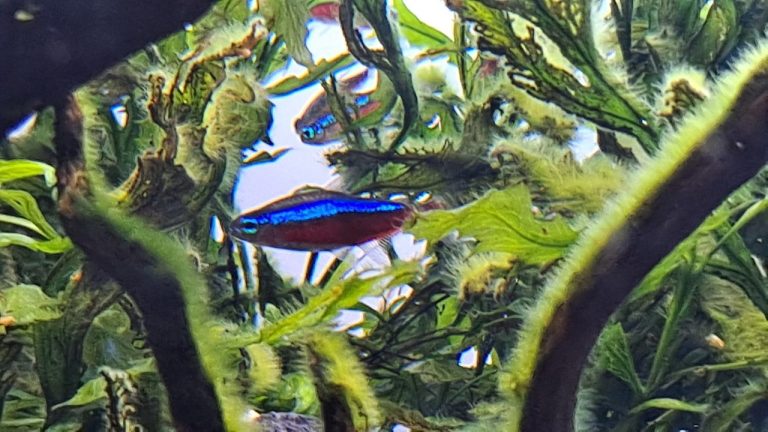
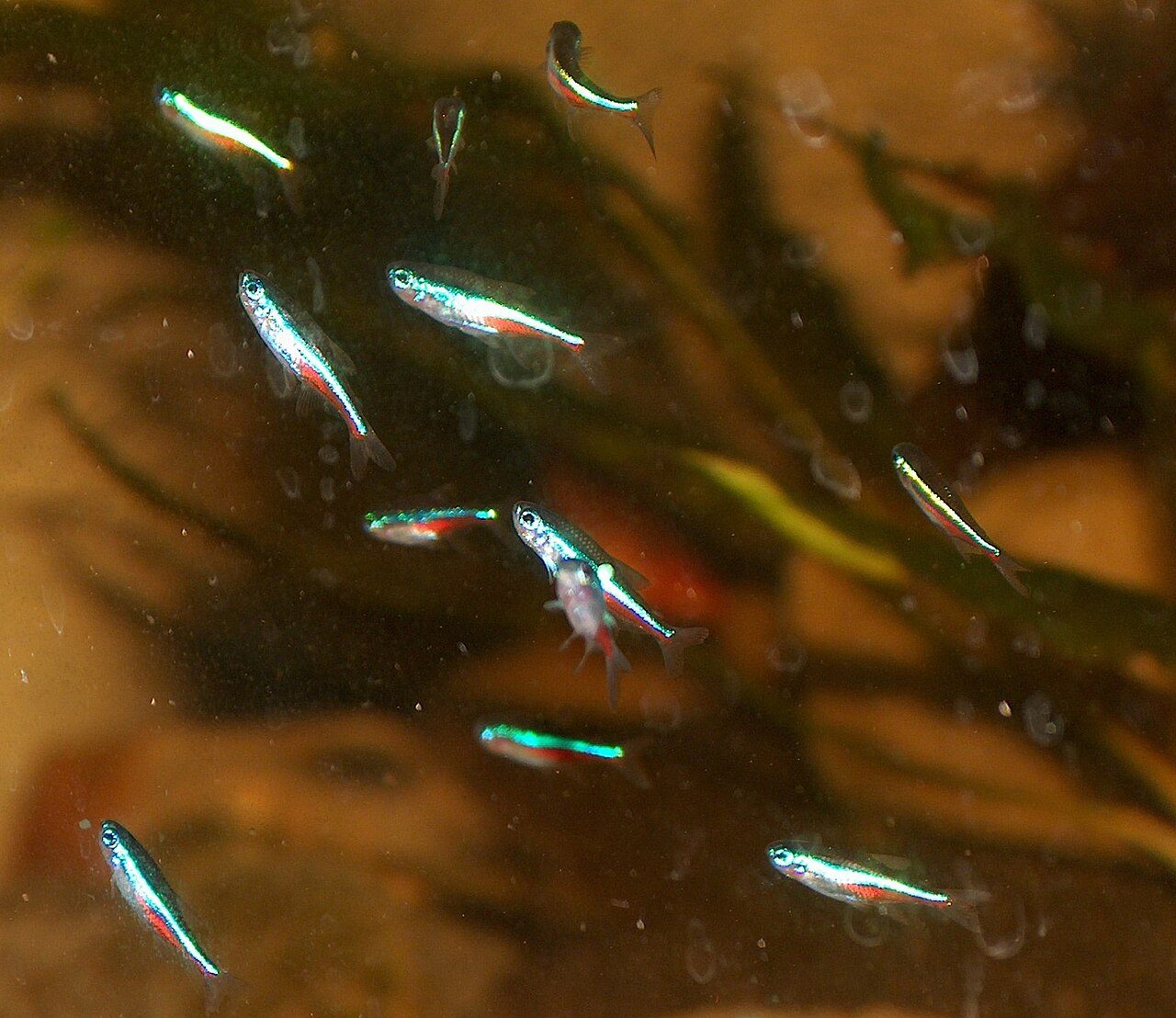
At a glance: Neon tetra (Paracheirodon innesi)
- Temperature
- 72–78°F (22–26°C)
- Water pH
- 6.0–7.0
- Adult size
- 1.5 in (4 cm)
- Minimum tank
- 10 gal (20 gal for a proper school)
- Group size
- Groups of 8+
- Temperament
- Peaceful
- Diet
- Omnivore: micro pellets, flakes, frozen daphnia
- Lifespan
- 5–8 years
Keeper’s tip: Add neons only to a fully cycled, stable tank; they are among the first fish to suffer from ammonia swings.
What Exactly is Neon Tetra Disease?
To fight an enemy, you must first know its name and its nature. The technical name for the culprit behind this condition is Pleistophora hyphessobryconis, a type of Microsporidia.
This is an intracellular parasite, meaning it actually enters and lives inside the cells of your fish. Specifically, it targets the muscle tissues of the Paracheirodon innesi, which is the scientific name for the common Neon Tetra.
While the name suggests it only affects one species, this is a dangerous misconception. Many other tetras, danios, and even some barbs can fall victim to this relentless parasite.
The Life Cycle of the Parasite
The infection begins with spore ingestion. Fish often consume these spores when they scavenge on the remains of a deceased tank mate or eat contaminated live foods.
Once inside the host, the spores germinate and release a tube that pierces the gut wall. This allows the parasite to travel through the bloodstream and settle into the muscle fibers.
As the parasite multiplies, it replaces healthy tissue with a mass of spores. This process leads to the visible muscle necrosis that gives the disease its characteristic “faded” look.
Pro Tip: In my experience, the most dangerous moment for a tank is immediately after a fish dies. If you don’t remove a casualty within minutes, others will likely peck at it, causing a massive spore ingestion event.
Key Symptoms to Watch For
Identifying neon tetra disease early is the difference between losing one fish and losing your entire school. The symptoms usually progress in a predictable, yet tragic, sequence.
Initially, you might notice a single fish that seems “off.” It may stop schooling with its peers and prefer to hide in the corners or behind ornaments.
As the parasite takes over, the physical changes become much more obvious. You must be vigilant during feeding times, as this is when behavioral changes are easiest to spot.
Physical Indicators of Infection
The most hallmark sign is the loss of coloration. In Neon Tetras, the brilliant red stripe often begins to fade or turn a milky white color.
This “whitening” is actually the dead muscle tissue showing through the skin. Shortly after, you may notice a distinct spinal curvature as the muscles can no longer support the fish’s frame.
Lumps or cysts may also form on the body. These are concentrated pockets of spores waiting to be released back into the water column upon the host’s death.
Behavioral Red Flags
A healthy tetra is a social creature that stays with the group. A sick fish will often exhibit erratic swimming or “looping” motions.
As the spinal curvature worsens, the fish will struggle to maintain its position in the water column. You may see it pointing its nose downward or gasping near the surface.
Finally, the fish will stop eating entirely. At this stage, the internal damage is usually too great for the animal to recover, even if a treatment existed.
| Symptom Type | Specific Sign | Severity Level |
|---|---|---|
| Color Change | Milky white patches or faded red stripe | Moderate |
| Deformity | Bent spine or “lumpy” appearance | Severe |
| Behavior | Separation from the school | Early Warning |
| Swimming | Difficulty staying level (loss of equilibrium) | Critical |
Differentiating Between True and False Neon Tetra Disease
It is vital to distinguish between the parasitic version and “False Neon Tetra Disease.” The latter is actually a bacterial infection caused by Flavobacterium columnare.
Columnaris can mimic some of the symptoms of neon tetra disease, such as white patches on the skin. However, Columnaris usually moves much faster and can sometimes be treated with antibiotics.
True neon tetra disease is much slower to kill but is significantly more resistant to medication. If you treat for bacteria and see no improvement, you are likely dealing with the parasite.
If you are looking for resilient aquarium species, it is important to know which fish are most at risk and which might withstand these pathogens better.
The Hard Truth About Treatment
I wish I had better news, but there is currently no known cure for neon tetra disease that can be safely administered in a home aquarium. Because it is an intracellular parasite, medications struggle to reach it without killing the host.
Once a fish shows clear signs of muscle necrosis and a curved spine, the most humane option is euthanasia. This prevents the fish from suffering and, more importantly, stops the spread of spores.
If you choose to try and save a fish that is only showing minor symptoms, you must move it to a quarantine aquarium immediately. Never leave a suspected case in your main display tank.
Common Mistake: Many hobbyists try to “wait and see” if the fish gets better. In my experience, this usually results in the fish dying overnight and being eaten by others, which restarts the infection cycle for the entire tank.
Preventative Measures: Your Best Defense
Since treatment is largely ineffective, prevention is the only real strategy. Maintaining high water quality and a stress-free environment is the foundation of any healthy tank.
Neon tetras are frequently cited as the top choice for community tanks, but their health is fragile and requires consistency.
The Importance of Quarantine
The number one way neon tetra disease enters a tank is through new additions. I never add a new fish to my main display without at least four weeks in a quarantine aquarium.
During this time, I observe them for any signs of fading or odd swimming. It is much easier to manage an outbreak in a 10-gallon bare-bottom tank than in a 100-gallon planted showpiece.
Using a UV Sterilizer
A UV sterilizer can be a powerful tool in your arsenal. While it won’t cure an already infected fish, it can kill free-floating spores in the water column.
By passing the water through a high-intensity ultraviolet light, the DNA of the parasites is disrupted. This prevents them from reproducing and infecting new hosts.
High-Quality Nutrition
A fish with a strong immune system is less likely to succumb to low-level exposure. Feed a variety of high-quality flakes, pellets, and frozen foods.
Avoid cheap fillers that can lead to digestive stress. A healthy gut is a primary barrier against spore ingestion.
Managing an Outbreak
If you confirm that neon tetra disease has hit your tank, do not panic. You can still save many of your fish by following a strict protocol.
First, remove all fish showing any symptoms. Do not hesitate. If a fish looks even slightly suspicious, move it to isolation.
Second, perform a series of large water changes. I recommend 30-50% every other day for a week. This helps physically remove any spores that might be drifting in the water.
Third, consider adding a UV sterilizer if you don’t already have one. This will act as a safety net for the remaining healthy inhabitants.
Finally, do not add any new fish to that aquarium for at least two to three months. You need to make sure the parasite has no hosts to infect and eventually dies out.
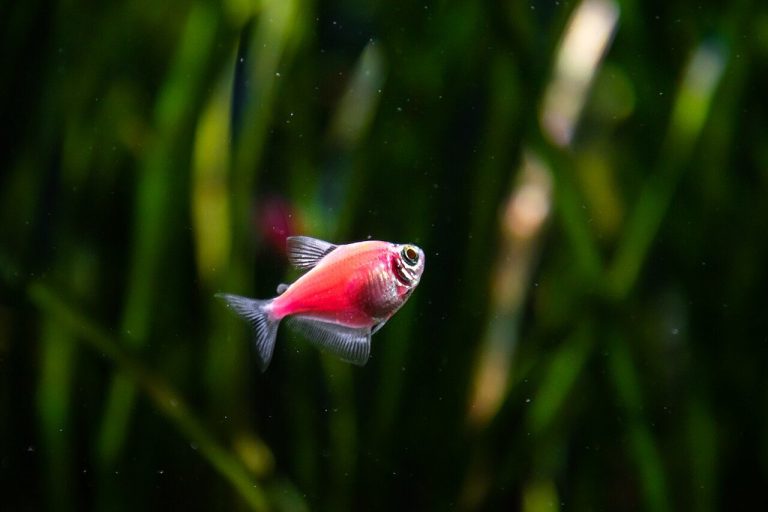
For those who keep specialized tanks, like those with bright neon wonders, these protocols are even more vital due to the high density and visibility of the fish.
FAQ
Can neon tetra disease spread to humans?
No, Pleistophora hyphessobryconis is specific to fish and does not pose a threat to humans or other mammals. However, you should always wash your hands after working in an aquarium.
Are shrimp and snails affected?
Invertebrates like shrimp and snails are not hosts for this specific parasite. They can safely remain in a tank where the disease is present, though they may accidentally help spread spores if they consume a dead fish.
Can I use salt to treat the disease?
Aquarium salt can help reduce stress and improve gill function, but it has no effect on the intracellular parasite itself. It is not a cure for NTD.
How long do spores live in the gravel?
Spores can remain dormant in the substrate for several weeks. This is why it is critical to vacuum the gravel thoroughly during an outbreak.
Will a UV sterilizer kill all the parasites?
A UV sterilizer only kills the spores that pass through the unit. It will not help a fish that is already infected internally, but it reduces the risk of transmission.
Final Thoughts on Keeping a Healthy School
Dealing with neon tetra disease is one of the most challenging aspects of the hobby. It tests your patience and your ability to make difficult decisions for the welfare of your aquatic pets.
Remember that the key is observation. Spend ten minutes every day just watching your fish. Look at their colors, their swimming patterns, and their interactions.
By catching the early signs of muscle necrosis or spinal curvature, you can intervene before the parasite takes hold of your entire collection.
While the loss of a fish is always sad, maintaining a rigorous quarantine aquarium protocol and investing in tools like a UV sterilizer will set you up for long-term success. Stay diligent, keep your water clean, and your aquarium will remain the beautiful centerpiece you intended it to be.

- 2003First tank
- 20+Years keeping
- 40+Tanks kept
- 0Sponsored picks
Howard set up his first 10-gallon planted tank in 2003 and lost half of it within six weeks. Two decades and more than forty aquariums later, he writes the guides he wished he had then: clear numbers, the reasons behind them, and what actually goes wrong in home tanks.