How Often To Do Water Changes In A Freshwater Aquarium
Most freshwater aquariums require a 25% water change every week to maintain health. However, the exact frequency depends on your nitrate levels, stocking density, and plant growth, with 10-50% bi-weekly or weekly being common.
Maintaining a beautiful aquarium is one of the most satisfying hobbies I have pursued over the last decade. There is a specific kind of peace that comes from watching a well-balanced ecosystem stay healthy right in your living room.
However, the question of how often to do water changes in a freshwater aquarium is often the biggest point of confusion for new keepers. I remember my first ten-gallon tank, where I mistakenly thought the filter did all the work for me.
In reality, water changes are the single most effective tool you have to prevent disease and keep your fish vivid. Think of it as opening a window in a stuffy room; it brings in fresh “air” and removes the stale, invisible waste.
how often to do water changes in a freshwater aquarium
For the vast majority of hobbyists, performing a 25% water change once every week is the gold standard. This frequency ensures that nitrate levels remain low while preventing a massive shift in water chemistry that could shock your fish.
If you have a very lightly stocked tank with many live plants, you might find that you can stretch this to once every two weeks. Conversely, a heavily stocked tank with large, messy eaters may require two changes per week to keep the environment safe.
In my experience, consistency is far more important than the specific day you choose. Establishing a routine helps you spot potential issues, like a failing heater or a clogged intake, before they become disasters.
Pro Tip: Never wait until the water looks “dirty” to change it. By the time you see yellowing or cloudiness, the dissolved toxins like nitrates and phosphates are likely already at dangerous levels for your fish.
Factors That Dictate Your Maintenance Schedule
Not every aquarium is built the same, which means a “one size fits all” approach rarely works perfectly. You must look at the specific inhabitants and the biological load they place on the system.
If you are keeping beginner-friendly freshwater fish, they are often more forgiving, but they still produce waste. The more fish you have in a smaller volume of water, the faster those toxins accumulate.
Stocking Density and Bio-load
The “bio-load” refers to the amount of biological waste produced by your fish and invertebrates. A tank full of large cichlids or goldfish will produce significantly more ammonia than a school of tiny tetras.
When I first started keeping larger species, I was shocked at how quickly the nitrate levels spiked. If your tank is crowded, you will almost certainly need to perform larger or more frequent water changes.
The Role of Live Plants
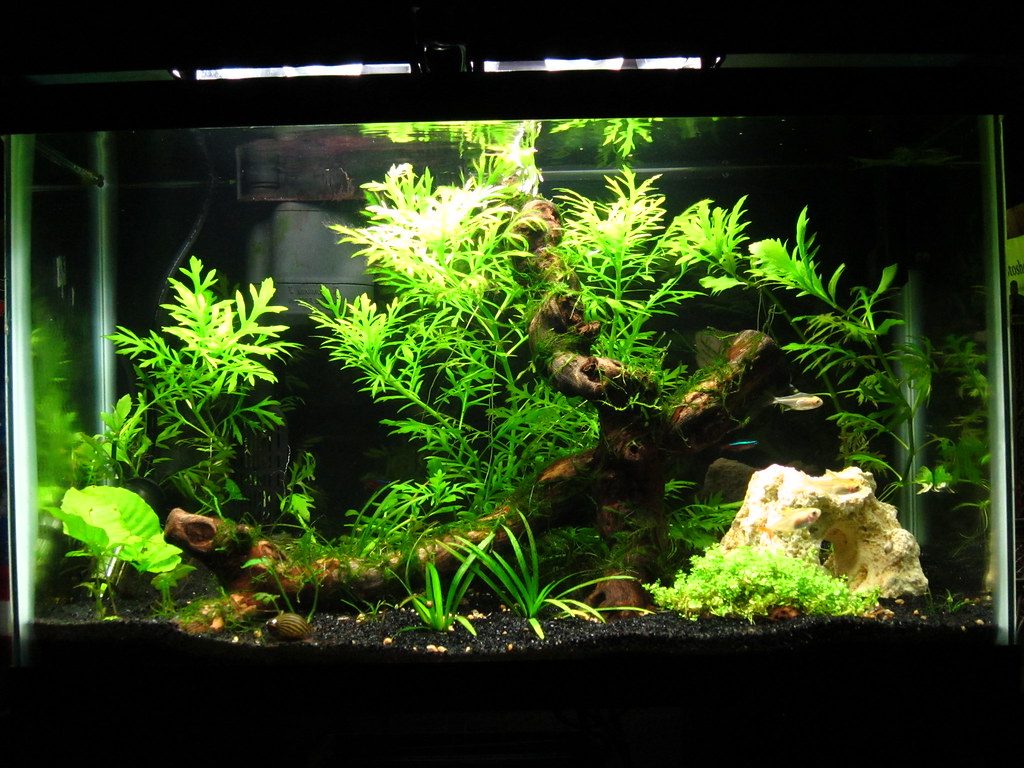
Live plants act as a natural filter by consuming nitrates and phosphates for growth. This process, known as aquarium plant nutrient uptake, can drastically improve your water quality.
In a “Dutch style” or heavily planted tank, the plants may consume waste as fast as the fish produce it. In these cases, water changes are less about removing toxins and more about replenishing essential minerals for the plants.
Filtration Efficiency
A high-quality canister filter or a well-maintained hang-on-back filter provides a home for beneficial bacteria. While these bacteria convert ammonia to nitrate, they do not remove the nitrate itself.
Mechanical filtration removes large particles, but it doesn’t eliminate the need for fresh water. Even the most expensive filter cannot replace the mineral replenishment that comes with a bucket of clean water.
| Tank Setup Type | Recommended Frequency | Change Volume |
|---|---|---|
| Standard Community Tank | Weekly | 20-30% |
| Heavily Planted Tank | Every 10-14 Days | 15-20% |
| Overstocked / Cichlid Tank | Weekly (or twice weekly) | 40-50% |
| Shrimp/Nano Tank | Weekly | 10-15% |
Understanding Water Chemistry and Waste
To master the art of water changes, you have to understand what you are actually trying to remove. The nitrogen cycle is the foundation of every successful aquarium.
Fish breathe and excrete waste, creating ammonia, which is highly toxic. Beneficial bacteria turn that ammonia into nitrite (also toxic) and then into nitrate (less toxic).
Nitrates are the end product of this cycle, and in a closed system, they have nowhere to go but up. High nitrate levels can lead to stunted growth, suppressed immune systems, and unsightly algae blooms.
Testing Your Water
The only way to know for sure how often to do water changes in a freshwater aquarium is to use a liquid test kit. I always recommend the liquid drop tests over the paper strips for better accuracy.
Ideally, you want your ammonia and nitrite levels to be at 0 ppm. Your nitrates should ideally stay below 20 ppm, though some hardy fish can tolerate up to 40 ppm.
If your test shows nitrates hitting 40 ppm in just three days, you know you need to increase your frequency. This data-driven approach takes the guesswork out of maintenance.
Step-by-Step Guide to a Successful Water Change
Performing a water change is about more than just dumping out old water and pouring in new. You want to minimize stress for your freshwater animals for fish tank during the process.
Over the years, I have refined my process to be as efficient and safe as possible. Following a set order of operations prevents common mistakes like forgetting to dechlorinate or flooding the floor.
Step 1: Preparation and Safety
Start by unplugging your heater and your filter. Heaters can crack if they are exposed to the air while still hot, and filter motors can burn out if they run dry.
Gather your supplies, including a clean bucket (used only for the aquarium), a siphon, and your water conditioner. Help your hands are clean and free of soaps or lotions.
Step 2: Siphoning and Gravel Vacuuming
Use your siphon to pull water from the bottom of the tank rather than the top. This allows you to “vacuum” the substrate where fish waste and uneaten food settle.
I’ve noticed that focusing on the areas behind rocks or under plants where debris collects makes a huge difference. Don’t worry about getting every speck, but try to cover the most heavily soiled areas.
Step 3: Cleaning the Glass
While the water level is low, it is the perfect time to scrub any algae off the glass. Use a dedicated algae scraper or a clean sponge that has never touched household cleaners.
I find that doing this right before refilling helps make sure that any loosened algae gets sucked up or diluted. It keeps the tank looking pristine without much extra effort.
Step 4: Refilling and Dechlorinating
The new water must be as close to the tank’s temperature as possible. Use your hand or a thermometer to match the temp; a sudden 5-degree drop can cause Ich or other stress-related illnesses.
Always use a high-quality water conditioner to remove chlorine and chloramines from tap water. I prefer to dose the entire volume of the tank if I am refilling directly from a hose, or dose the bucket if I am using that method.
Pro Tip: If you use a sand substrate, place a small plate or your hand over the sand while pouring water back in. This prevents the water flow from digging a hole and creating a cloudy mess.
Common Mistakes to Avoid
Even seasoned aquarists can fall into bad habits that jeopardize the health of their fish. One of the biggest mistakes is performing a 100% water change.
This “reset” button often kills off the beneficial bacteria living on your decorations and substrate. It also causes a massive shift in pH and hardness, which can be fatal to sensitive species.
Neglecting the Filter
While you shouldn’t clean your filter every single week, you shouldn’t ignore it either. Every month or two, gently rinse your filter media in a bucket of old tank water.
Never use tap water to rinse your sponges or ceramic rings. The chlorine in tap water will instantly kill your beneficial bacteria, effectively “crashing” your cycle and causing ammonia spikes.
Over-Cleaning the Substrate
In a planted tank, some waste in the substrate is actually beneficial as it provides nutrients for roots. If you vacuum too deeply and too often, you might starve your plants.
I generally vacuum the open areas of the foreground and leave the heavily planted areas alone. This balance keeps the water clean while maintaining a nutrient-rich environment for growth.
Tools for Efficient Maintenance
Investing in the right tools can turn a dreaded chore into a quick 15-minute task. If you have a large tank (over 30 gallons), a sink-link siphon system is a lifesaver.
These systems connect directly to your faucet, allowing you to drain and fill the tank without ever carrying a heavy bucket. It was a complete real improvement for my 75-gallon community tank.
For smaller nano tanks, a simple airline tubing siphon is often better. It allows for precise cleaning without removing too much water too quickly, which is vital for sensitive shrimp.
Practical notes
- Scrape algae from the glass before the water change so loose debris gets siphoned out.
- Persistent algae usually means too much light or too many nutrients; fix the cause, not only the symptom.
- Vacuum the substrate in sections, a third of the tank each week, to avoid disturbing all the bacteria at once.
- Nerite snails, otocinclus and amano shrimp help with algae but do not replace regular maintenance.
Reader questions
Can I skip water changes if my water is clear?
No, clear water does not mean clean water. Dissolved toxins like nitrates and growth-inhibiting pheromones are invisible to the naked eye.
Do I need to change the water during the nitrogen cycle?
Generally, if you are doing a “fish-in” cycle, you need frequent small changes to keep ammonia levels safe. If doing a “fishless” cycle, you usually wait until the end to do a large change.
Is it okay to use bottled water for changes?
Distilled or R/O water is very pure but lacks the minerals fish need. If you use bottled water, you must remineralize it to make sure the proper osmotic balance for your fish.
How much water is too much to change?
In an emergency (like an ammonia spike), you can change up to 50%. In normal circumstances, exceeding 50% in one go can be risky as it may drastically change the water chemistry.
Does the water change frequency change in winter?
Usually, the frequency stays the same, but you must be extra careful about temperature matching. Tap water is often much colder in the winter, which can lead to heater overwork or fish shock.
Before you go
Determining how often to do water changes in a freshwater aquarium is the first step toward becoming a master keeper. While a weekly 25% change is the standard, listening to what your water tests tell you is the real what really counts.
By staying consistent, using the right tools, and understanding the chemistry behind the glass, you create a stable environment where your fish can live their longest, healthiest lives. You aren’t just keeping fish; you are keeping water. If the water is healthy, the fish will follow suit.
Don’t view maintenance as a burden, but rather as an investment in your aquatic world. Your fish will reward you with bright colors, active behavior, and perhaps even the joy of seeing them breed in a perfectly maintained home.

- 2003First tank
- 20+Years keeping
- 40+Tanks kept
- 0Sponsored picks
Howard set up his first 10-gallon planted tank in 2003 and lost half of it within six weeks. Two decades and more than forty aquariums later, he writes the guides he wished he had then: clear numbers, the reasons behind them, and what actually goes wrong in home tanks.