How to Reduce Water Hardness – Best Aquarium Methods
Reducing water hardness in an aquarium is most effectively achieved by mixing tap water with Reverse Osmosis (RO) or distilled water. Alternatively, using water-softening resins or natural botanicals like peat moss can gradually lower mineral content.
Aquarium water chemistry can often feel like a complex balancing act, especially when dealing with mineral content. Understanding how to reduce water hardness is a vital skill for any hobbyist looking to keep delicate species like Discus, Cardinal Tetras, or soft-water shrimp.
Water hardness refers to the concentration of dissolved minerals, primarily calcium and magnesium, present in your tank. When these levels are too high, it can lead to stress, poor growth, and even health failure in fish that evolved in soft, acidic environments.
Once you learn the various methods of softening your water, you create a stable and healthy environment for your aquatic life. This guide will walk you through professional techniques, from high-tech filtration to natural botanical solutions.
Understanding General Hardness and Carbonate Hardness
Before you can effectively lower your mineral levels, you must understand what you are measuring. General Hardness (GH) measures the concentration of calcium and magnesium ions in the water.
Carbonate Hardness (KH) measures the concentration of bicarbonate and carbonate ions, which acts as a buffer for your pH levels. Most aquarists aim to reduce GH to mimic the natural habitats of tropical fish, but KH also plays a important role in maintaining stability.
When we talk about how to reduce water hardness, we are often looking at lowering the General Hardness (GH). High GH is usually caused by Calcium carbonate (CaCO3) leaching from rocks or being present in your local tap water supply.
Pro Tip: Always test your tap water before attempting to adjust your aquarium parameters. Knowing your baseline prevents you from “fighting” your water source during every weekly maintenance session.
How to Reduce Water Hardness Using Reverse Osmosis
The most reliable and professional method for controlling mineral content is the use of a Reverse Osmosis (RO) system. This system forces water through a Reverse Osmosis membrane, which strips away up to 99% of dissolved minerals and impurities.
Many advanced hobbyists combine RO filtration with Deionization (DI) to create “zero” water. This pure water has a Total Dissolved Solids (TDS) reading of nearly zero, giving you a blank canvas to work with.
Because RO water is devoid of all minerals, you should never use it 100% pure in a freshwater tank. Instead, mix it with a specific ratio of tap water or use specialized remineralizing salts to reach your target hardness.
Benefits of RO/DI Systems
Using an RO system provides total control over your aquarium water parameters. It eliminates the unpredictability of seasonal changes in municipal tap water quality.
While the initial investment in an RO unit is higher than other methods, it is the most cost-effective solution for large tanks or multiple setups. It makes sure that your fish are never exposed to heavy metals or high nitrate levels often found in well water.
How to Mix RO Water
To achieve a specific GH level, you can use a simple mixing ratio. For example, mixing 50% RO water with 50% tap water will effectively cut your GH and KH levels in half.
Always prepare your water in a separate container before adding it to the tank. This allows the temperature and chemistry to stabilize, preventing osmotic shock to your fish and shrimp.
Using Cation Exchange Resins for Softening
Another effective way to manage mineral levels is through the use of a Cation exchange resin. These resins are typically placed inside your filter media compartment in a fine mesh bag.
The resin works by attracting calcium and magnesium ions and replacing them with sodium or potassium ions. This process effectively lowers the GH of the water without requiring a massive plumbing installation.
Common Mistake: Do not rely on “rechargeable” water softening pillows indefinitely. Over time, they lose their capacity to exchange ions and must be replaced or properly recharged with specific salt solutions to remain effective.
Application in the Filter
Resins are ideal for smaller aquariums where an RO system might be impractical. They provide a relatively quick reduction in hardness, which is useful if you discover your tap water has recently become harder.
Monitor your GH levels closely when using resins. If the hardness drops too quickly, it can stress sensitive inhabitants like dwarf shrimp or fry.
Limitations of Water Softening Resins
One drawback of some resins is that they may increase the sodium content of the water. While this lowers the GH, it doesn’t necessarily lower the total mineral load in a way that benefits all soft-water species.
For keepers of specialized species like Altum Angelfish, RO water remains the superior choice. Resins are best viewed as a supplemental tool rather than a primary solution for very hard water.
Natural Methods to Lower Hardness and pH
If you prefer a more “blackwater” or natural approach, certain organic materials can help. These materials release Humic acid and tannins into the water, which naturally bind to minerals and lower the pH.
Peat moss is a popular choice among breeders of soft-water fish. When placed in a filter bag, it slowly leaches acids that help soften the water and create a tea-colored tint that many tropical fish find comforting.
Using Botanical Elements
Adding dried leaves, such as Terminalia catappa (Indian Almond Leaves), is another excellent natural method. These leaves provide a natural aesthetic while offering mild anti-fungal benefits to the aquarium.
While botanicals are not as “strong” as RO systems, they are perfect for maintaining low hardness in a tank that is already close to the target range. They also provide foraging surfaces for shrimp and microorganisms.
Driftwood and Its Effects
Large pieces of natural driftwood, particularly Malaysian or Mopani wood, also release tannins. Over time, these tannins will contribute to a more acidic and softer environment.
Be aware that natural methods work slowly and can be unpredictable. Regular testing is essential to make sure your Carbonate Hardness (KH) doesn’t drop so low that your pH becomes unstable.
Comparing Methods for Reducing Hardness
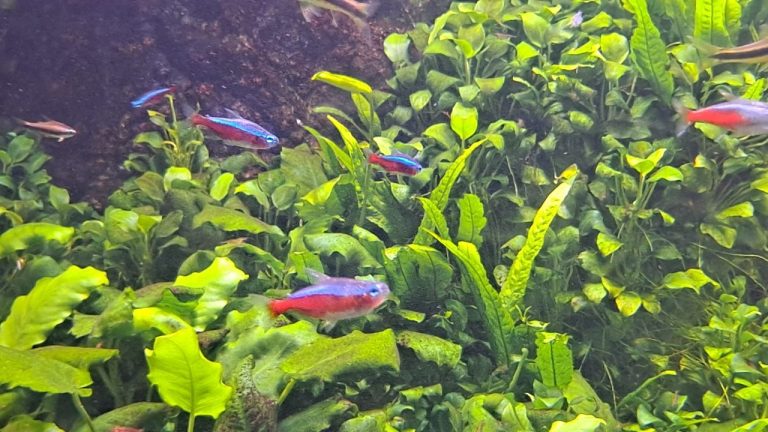
Choosing the right method depends on your budget, tank size, and the specific needs of your fish. For example, cardinal tetra water parameters require very soft water, making RO almost mandatory in hard-water areas.
The following table compares the most common ways to manage water chemistry:
| Method | Primary Effect | Ease of Use | Cost |
|---|---|---|---|
| Reverse Osmosis (RO) | Removes 99% of minerals | Moderate (Equipment Setup) | High Initial / Low Ongoing |
| Softening Resins | Exchanges Ca/Mg for Na/K | Easy (Filter Media) | Low to Moderate |
| Peat Moss / Botanicals | Releases Humic Acids | Easy (Natural) | Low |
| Distilled Water | Zero Mineral Content | Very Easy (Buy & Pour) | High (Long-term) |
The Importance of Osmoregulation in Fish
Fish maintain their internal salt balance through a process called Osmoregulation. When fish from soft-water rivers are kept in hard water, their organs must work significantly harder to pump out excess minerals.
This constant internal stress weakens the immune system, making the fish more susceptible to bacterial infections and parasites. Once you learn how to reduce water hardness, you are directly improving the lifespan and vigor of your aquatic pets.
Hard water can also interfere with the breeding process. Many fish eggs have a permeable membrane that will “harden” too quickly in mineral-rich water, preventing fertilization or causing the embryo to fail.
Maintaining Stability During Water Changes
One of the biggest risks when softening water is causing a sudden shift in chemistry. Fish are remarkably adaptable to slightly “incorrect” parameters, but they are very sensitive to rapid changes.
When you perform routine water changes, help the new water matches the tank’s hardness. If you are trying to lower the hardness of an existing tank, do so gradually over several weeks.
Replacing 10-15% of the water with softer water every few days is much safer than a single 50% change. This allows the fish to adjust their internal biological processes without going into shock.
Keeper’s notes
- Use a dechlorinator that also neutralises chloramine if your water supplier uses it.
- Match the temperature and roughly the hardness of new water to the tank during water changes.
- Keep nitrate below 20–40 ppm for most freshwater fish with regular partial water changes.
- GH measures calcium and magnesium; KH measures carbonate buffering, which keeps pH from crashing.
A few common questions About Reducing Water Hardness
Can I boil water to reduce its hardness?
Boiling water only removes “temporary” hardness (bicarbonates). It does not remove permanent hardness (sulfates and chlorides) and actually increases the concentration of minerals as the water evaporates. Boiling is not a recommended method for aquariums.
Is distilled water safe for fish?
Pure distilled water lacks the essential minerals required for fish health. It should only be used as a dilutant for hard tap water or remineralized with aquarium-specific buffers before use.
Will aquarium salt increase water hardness?
Aquarium salt (sodium chloride) does not increase GH or KH, but it does increase the Total Dissolved Solids (TDS). It should be used sparingly and for specific therapeutic reasons rather than for chemistry adjustment.
How often should I test my hardness?
If you are actively using resins or peat moss, you should test your GH and KH weekly. If you use a stable RO/tap mix, testing once a month during your routine maintenance is usually sufficient.
Final Thoughts on Managing Water Hardness
Learning how to reduce water hardness is a fundamental step toward keeping a wider variety of exotic fish and plants. Whether you choose the precision of a Reverse Osmosis system or the gentle approach of natural botanicals, consistency is the biggest factor.
Always prioritize stability over “perfect” numbers. A slightly higher hardness that remains steady is often better for your fish than a fluctuating hardness that hits the “ideal” mark only occasionally. With patience and regular testing, you can create a well-kept soft-water ecosystem in your home.

- 2003First tank
- 20+Years keeping
- 40+Tanks kept
- 0Sponsored picks
Howard set up his first 10-gallon planted tank in 2003 and lost half of it within six weeks. Two decades and more than forty aquariums later, he writes the guides he wished he had then: clear numbers, the reasons behind them, and what actually goes wrong in home tanks.