How Is Aquaponics Different From Traditional Farming
Aquaponics combines aquaculture and hydroponics into a closed-loop system where fish waste provides nutrients for plants, whereas traditional farming relies on soil, fertilizers, and separate water management systems.
If you have spent any amount of time keeping fish, you have likely marveled at the natural balance of a healthy aquarium. I have personally maintained tanks for over a decade, and nothing is more satisfying than seeing a flourishing ecosystem where every inhabitant plays a role.
When people ask me how is aquaponics different from traditional farming, I tell them it is like moving from a manual labor job to an automated, self-sustaining partnership. While traditional farming extracts nutrients from soil, aquaponics creates a circular economy right in your living room or backyard.
Understanding the Core Mechanisms of Aquaponics
In a traditional garden, you add compost or synthetic fertilizers to soil to feed your plants. In an aquaponic system, you are essentially mimicking nature’s nitrogen cycle.
The process begins with the fish, which produce waste that contains Total Ammonia Nitrogen. This would be toxic to your fish if left to accumulate, but in aquaponics, we rely on beneficial bacteria.
Nitrosomonas and other nitrifying bacteria convert that ammonia into nitrites and eventually into nitrates. These nitrates act as a natural, organic fertilizer that your plants absorb, effectively cleaning the water before it cycles back to your fish.
| Feature | Traditional Farming | Aquaponics |
|---|---|---|
| Primary Medium | Soil | Water & Expanded Clay Aggregate |
| Nutrient Source | Fertilizers / Compost | Fish Waste (Biofiltration) |
| Water Usage | High (Loss to runoff) | Low (Closed-loop recycling) |
How is Aquaponics Different from Traditional Farming in Practice?
The most striking difference is the reliance on a Recirculating Aquaculture System. In traditional farming, water moves through the soil and carries away precious nutrients or pesticides.
In contrast, an aquaponic setup keeps the water contained. You monitor Dissolved Oxygen levels to ensure both the fish and the beneficial bacteria in your grow beds are healthy.
Pro Tip: When setting up your grow beds, use Expanded Clay Aggregate as your medium. It provides excellent surface area for bacteria to colonize while remaining lightweight and pH-neutral, which is vital for maintaining stable water parameters.
Key Methodologies: NFT vs. DWC
When exploring how to scale your system, you will encounter two primary methods. Nutrient Film Technique (NFT) involves a shallow stream of nutrient-rich water passing over plant roots.
This is highly efficient for smaller plants like leafy greens. Alternatively, Deep Water Culture (DWC) suspends plants in rafts directly over a large volume of water.
DWC is often more forgiving for beginners because the large volume of water provides a buffer against sudden changes in chemistry. If you are choosing different types of fish tanks for a DWC setup, make sure they are sturdy enough to support the weight of the water and the floating rafts.
The Role of Mineralization
One challenge in aquaponics that traditional farmers do not face is the lack of certain trace minerals. Fish waste provides excellent nitrogen, but plants often require other elements like iron.
In my experience, you will eventually need to add Chelate Iron to your system to prevent yellowing leaves. This process of Mineralization—where solid fish waste is broken down into simpler compounds—is the secret to moving from a struggling system to a flourishing one.
Common Mistake: Many beginners overfeed their fish, thinking it will help the plants grow faster. This leads to an ammonia spike that can crash your biofilter. Always feed only what the fish can consume in two minutes to keep the water chemistry stable.
Water Quality and System Maintenance
Unlike traditional farming, where you might check your soil once a season, aquaponics requires daily attention to water. Because you are essentially making sure an aquarium that happens to grow vegetables, your fish’s health is the foundation of the whole system.
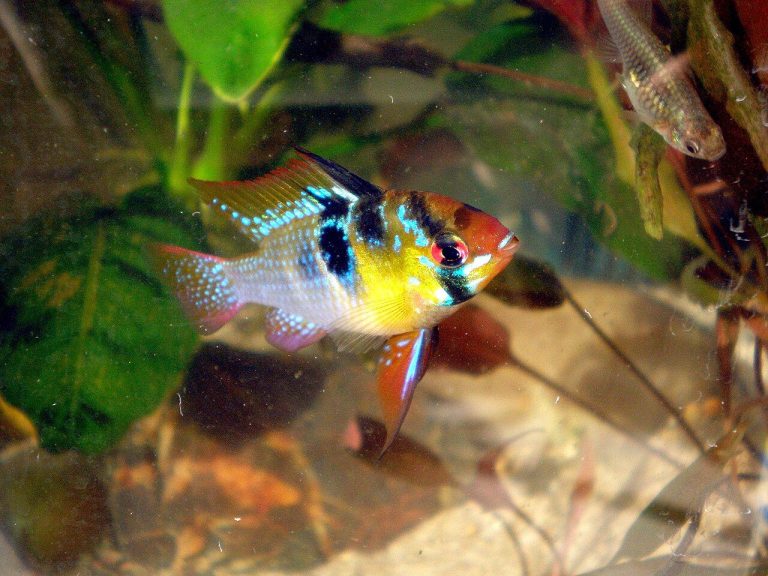
You must maintain a stable pH and monitor for any sudden drops in quality. If you are considering different types of fishes for aquarium integration, prioritize hardy species that can handle the slight fluctuations inherent in a grow-bed system.
Worth knowing before you start
- Keep aquaponics water near pH 6.8–7.2, a compromise between fish, plants and nitrifying bacteria.
- Stocking density drives water quality in any aquaculture setup; more fish per gallon means more filtration and aeration.
- In aquaponics the fish are the nutrient source, so feeding rate sets how many plants the system can support.
- Tilapia, goldfish and koi are common aquaponics fish because they tolerate a wide range of conditions.
Things people often ask
Is aquaponics more expensive to set up than traditional gardening?
Initially, yes. You have to invest in pumps, plumbing, and a tank. However, over time, you save money on fertilizers, water, and soil amendments.
Can I grow any plant with aquaponics?
You can grow most leafy greens and herbs very easily. Fruiting plants like tomatoes are possible but require a more mature, stable system with higher nutrient concentrations.
Do I need to use pesticides in aquaponics?
No, and you shouldn’t. Most pesticides are toxic to fish. Because aquaponics is a closed system, you must use biological pest control or physical removal instead of harsh chemicals.
The short version
Understanding how is aquaponics different from traditional farming opens up a world of possibilities for the modern aquarist. It transforms your hobby into a food-producing powerhouse that respects the environment.
If you focus on the biological synergy between your fish and your plants, you are not just keeping an aquarium—you are managing a living, breathing cycle. Start small, monitor your water closely, and enjoy the reward of home-grown greens paired with a healthy, active tank.

- 2003First tank
- 20+Years keeping
- 40+Tanks kept
- 0Sponsored picks
Howard set up his first 10-gallon planted tank in 2003 and lost half of it within six weeks. Two decades and more than forty aquariums later, he writes the guides he wished he had then: clear numbers, the reasons behind them, and what actually goes wrong in home tanks.