Are Sulcata Tortoises Good Pets? The Ultimate Guide To The African
Sulcata tortoises are good pets for dedicated keepers who have ample outdoor space and the ability to provide care for 70+ years. While satisfying, their massive size and specialized diet require a significant lifelong commitment.
Many hobbyists who excel at maintaining delicate aquatic ecosystems eventually find themselves looking toward the terrestrial world for their next challenge.
In my experience, the leap from keeping sensitive shrimp to a massive African Spurred Tortoise (Chelonoidis sulcata) is more common than you might think.
The question of are sulcata tortoises good pets often arises because of their undeniable charm and prehistoric appearance.
However, moving from a glass box to a backyard-sized enclosure requires a shift in mindset and a deep understanding of desert tortoise husbandry.
I have spent over a decade observing how different species interact with their environments, and the Sulcata is easily one of the most demanding yet charismatic animals you could own.
In this guide, we will explore every facet of their care to help you decide if this “land tank” is the right fit for your home.
At a glance: Sulcata tortoise (Centrochelys sulcata)
- Temperature
- Basking 95–100°F (35–38°C)
- Adult size
- 24–30 in shell (60–76 cm)
- Enclosure
- Outdoor pen for adults
- Group size
- Alone
- Temperament
- Docile, strong diggers
- Diet
- Herbivore: grasses, hay, weeds, low-sugar greens
- Lifespan
- 70+ years
Keeper’s tip: Adults outgrow any indoor enclosure; plan for a secure outdoor pen early.
Understanding the African Spurred Tortoise
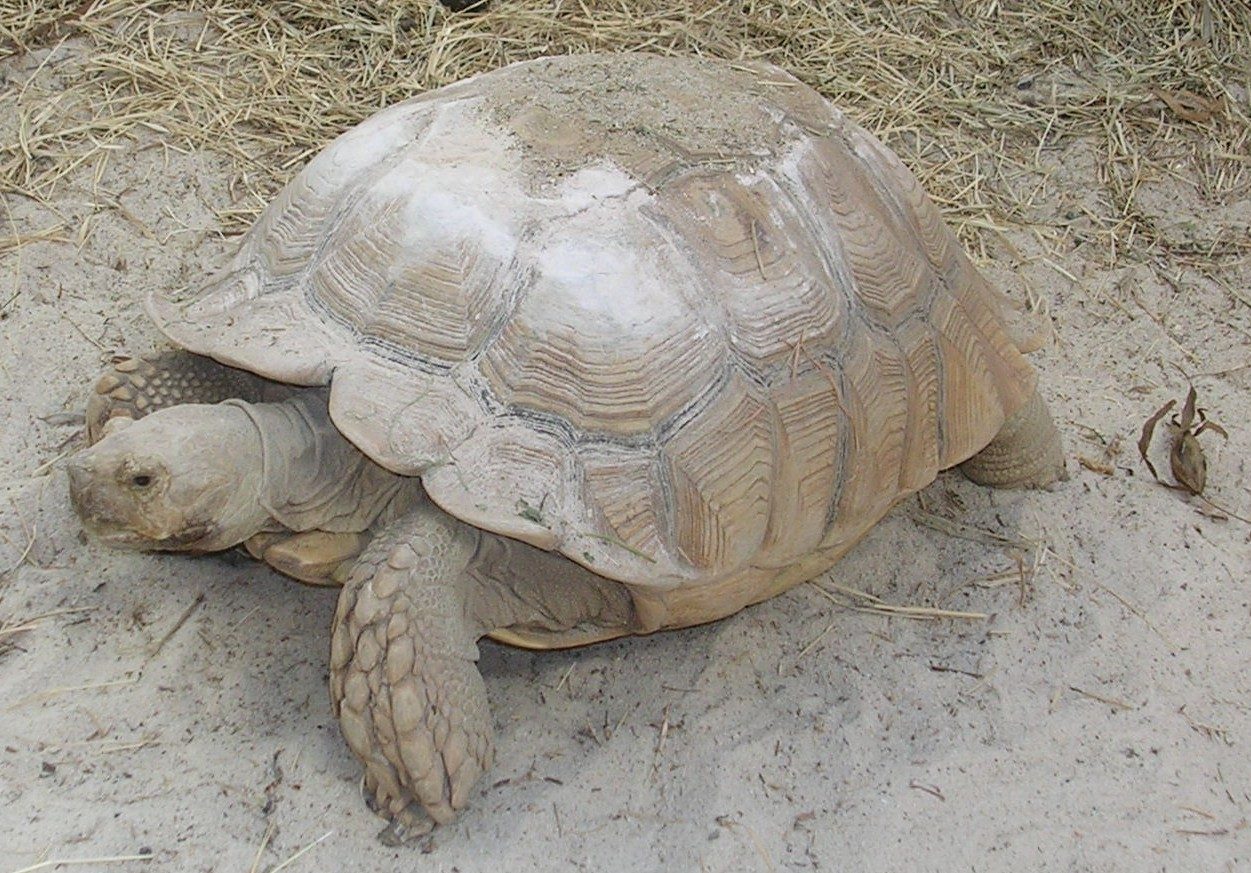
The Sulcata tortoise is the third-largest tortoise species in the world, surpassed only by the giants of the Galapagos and Aldabra.
Originally hailing from the southern edge of the Sahara Desert, these animals are built for harsh, arid conditions and extreme temperature fluctuations.
They are known for their beautiful tan shells and the “spurs” on their hind legs, which give them their common name.
Size and Longevity Realities
When you see a Sulcata hatchling at a pet store, it is often no larger than a silver dollar and looks incredibly cute.
However, I have noticed that many new owners are unprepared for the rapid growth spurt these tortoises undergo in their first five to ten years.
A healthy Sulcata can easily reach 100 to 200 pounds and live for 70 to 100 years, often outliving their original owners.
Pro Tip: Always have a “tortoise trust” or a plan in your will. Because these animals live so long, you must keep someone is prepared to inherit a 150-pound bulldozer in the future.
Temperament and Intelligence
Unlike many smaller reptiles, Sulcatas are surprisingly personable and often display distinct individual personalities.
They learn to recognize their keepers, often following them around the yard in anticipation of a snack or a head rub.
While they are not “cuddly” in the traditional sense, they are highly engaging and provide a level of interaction that many fish keepers find refreshing.
Are sulcata tortoises good pets for your lifestyle?
When asking are sulcata tortoises good pets, the answer depends entirely on your resources, space, and patience.
They are not “set and forget” animals, and their environmental needs change drastically as they transition from hatchlings to adults.
If you enjoy a pet that requires active management and has a presence that fills a room (or a yard), they might be perfect for you.
The Space Requirement
For the first year or two, a large indoor enclosure can suffice, but an adult Sulcata must live outdoors in most climates.
They are active grazers and need hundreds of square feet to roam, dig, and explore to maintain their physical health.
I’ve seen many well-meaning keepers try to keep adults in small spare rooms, which almost always leads to respiratory issues and muscle atrophy.
Financial Commitment
While the initial cost of the tortoise might be low, the long-term expenses for high-quality hay, exotic reptile veterinary diagnostics, and heating can be substantial.
Building a secure, predator-proof, and climate-controlled outdoor shed for the winter months is a major investment.
If you are used to the costs of high-end reef tanks, you may find the budget similar, though the money goes toward electricity and bulk food rather than corals.
| Requirement | Hatchling (0-3 Years) | Adult (10+ Years) |
|---|---|---|
| Enclosure Size | 40-75 Gallon Tank or Tub | Minimum 20′ x 20′ Outdoor Pen |
| Primary Diet | Fresh Grasses, Leafy Greens | Timothy Hay, Orchard Grass |
| Heating Needs | Basking Lamps & Heat Mats | Heated Shed / Greenhouse |
| Maintenance | Daily Soaking & Cleaning | Weekly Waste Removal |
Creating the Perfect Arid Habitat
Setting up a home for a Sulcata is very similar to setting up a specialized aquarium; you are trying to replicate a specific biome.
In this case, you are creating a grassland/desert transition zone that balances heat, light, and humidity.
Properly managing these factors is the only way to help your tortoise stays healthy rather than just survives.
Choosing the Right Arid Terrarium Substrate
For young tortoises kept indoors, the arid terrarium substrate you choose is critical for both hygiene and hydration.
I prefer a mixture of organic topsoil and coconut coir, as it holds just enough moisture to prevent dehydration without becoming swampy.
Avoid using purely sandy substrates, as these can be accidentally ingested, leading to intestinal impaction.
Lighting and UVB Radiation Intensity
Just as corals need specific light spectrums to grow, tortoises require high UVB radiation intensity to process calcium.
Without adequate UVB, a tortoise cannot synthesize Vitamin D3, which is essential for bone and shell development.
I recommend using high-quality T5 HO fluorescent tubes or mercury vapor bulbs, replaced every six to twelve months regardless of whether they still “look” bright.
Common Mistake: Many keepers assume that because Sulcatas are desert animals, they need to be bone-dry. In reality, hatchlings need moderate humidity to prevent shell deformities.
Maintaining the Thermal Gradient and Humidity
Temperature regulation is a cornerstone of reptile health because they are ectothermic and rely on their environment to manage their metabolism.
You must provide an ambient thermal gradient that allows the tortoise to move between a hot basking spot and a cooler retreat.
Failure to provide this gradient can lead to digestive shut-down or heat stroke.
Hygrometer Humidity Regulation
Using a reliable hygrometer humidity regulation strategy is vital, especially for tortoises under five years old.
While adults are more resilient, young Sulcatas are prone to “pyramiding” if their environment is too dry.
I suggest keeping the humidity levels around 70% for hatchlings by lightly misting the substrate and providing a humid hide box.
The Importance of Hydration
Even though they are desert dwellers, Sulcatas need regular access to water.
I have found that shallow, daily soakings in lukewarm water are the best way to ensure a young tortoise stays hydrated.
This also encourages them to “clear their pipes,” as they often defecate and urinate while soaking, making enclosure maintenance much easier.
Nutrition and Preventing Metabolic Bone Disease
A Sulcata’s diet is vastly different from that of a tropical tortoise or a pond turtle.
They are high-fiber specialists, meaning their digestive systems are designed to extract nutrients from tough, dry grasses.
Feeding them too much “wet” food, like fruit or high-protein vegetables, can cause serious internal damage.
The Role of Calcium Carbonate Supplementation
To support their massive skeletal growth, calcium carbonate supplementation is a non-negotiable part of their diet.
I typically dust their greens with a phosphorus-free calcium powder three times a week.
Providing a cuttlebone in their enclosure also allows them to self-regulate their calcium intake while keeping their beaks trimmed.
Avoiding Common Dietary Pitfalls
One of the most frequent issues I see is metabolic bone disease (MBD), which results from a lack of calcium or UVB.
Symptoms include a soft shell, lethargic movement, and a “beak” that looks overgrown or deformed.
Feeding a diet consisting mostly of grocery store lettuce is a recipe for disaster; focus instead on timothy hay, orchard grass, and hibiscus leaves.
If you are interested in other unique and interesting species that require specialized diets, the tortoise is certainly at the top of that list.
Common Health Issues: Pyramiding and Beyond
Even with the best care, tortoises can face health hurdles that require a keen eye to spot.
Because they are prey animals in the wild, they are experts at hiding illness until it is quite advanced.
Regularly weighing your tortoise and inspecting their shell is the best way to catch problems early.
Understanding Pyramiding Shell Deformity
Pyramiding shell deformity is a condition where the scutes of the shell grow vertically into points rather than staying flat.
While it was once thought to be caused solely by too much protein, we now know it is primarily a result of low humidity during the growth phases.
While a mildly pyramided shell is mostly a cosmetic issue, severe cases can interfere with the tortoise’s lung capacity and mobility.
Respiratory and Parasitic Concerns
If you notice your tortoise has “bubbles” at the nose or is wheezing, they likely have a respiratory infection.
This is often caused by temperatures that are too low or environments that are excessively dusty.
Additionally, captive tortoises can harbor internal parasites that may flare up during times of stress, requiring a visit to a vet who specializes in desert tortoise husbandry.
Sulcata Tortoise Maintenance Checklist
To keep your tortoise healthy, consistency is key. Much like maintaining unusual pets in an aquatic setting, a schedule prevents small issues from becoming big ones.
| Frequency | Task |
|---|---|
| Daily | Provide fresh water and hay-based diet. |
| Daily | Soak hatchlings for 15-20 minutes. |
| Weekly | Check weight and inspect shell for soft spots. |
| Monthly | Deep clean indoor enclosure and replace substrate. |
| Every 6 Months | Replace UVB bulbs and check heating elements. |
Things people often ask
Are sulcata tortoises good pets for children?
While they are docile, I generally do not recommend them as pets for children. Their long lifespan and massive size mean the parent will eventually be the primary caregiver for decades.
How fast do sulcata tortoises grow?
In my experience, they grow exponentially. A hatchling can go from 2 inches to 10 inches in just three years if fed properly and kept in the right conditions.
Can I keep a Sulcata tortoise in an apartment?
Only for the first year or two. An adult Sulcata is entirely unsuitable for apartment living due to its size and its instinct to dig and ram through furniture.
What do I do with my tortoise in the winter?
If you live in a cold climate, you must provide a large, heated indoor space, such as a basement room or a specialized insulated shed with a “tortoise door.”
Do sulcata tortoises hibernate?
No, they do not hibernate. Because they come from tropical Africa, they remain active year-round and require constant heat even during the winter months.
Conclusion: The Final Verdict
So, are sulcata tortoises good pets? The answer is a resounding “yes,” but only for a very specific type of keeper.
If you have the space, the financial stability, and the long-term vision to care for a 150-pound animal for the rest of your life, they are incredibly satisfying.
They offer a unique connection to the natural world that few other pets can provide, acting as living relics of a prehistoric era.
However, if you are looking for a low-maintenance pet or have limited outdoor space, you might find more success with a smaller species or a well-planned aquarium.
Owning a Sulcata is not just about having a pet; it is about committing to a lifelong partnership with one of nature’s most impressive wanderers.

- 2003First tank
- 20+Years keeping
- 40+Tanks kept
- 0Sponsored picks
Howard set up his first 10-gallon planted tank in 2003 and lost half of it within six weeks. Two decades and more than forty aquariums later, he writes the guides he wished he had then: clear numbers, the reasons behind them, and what actually goes wrong in home tanks.