Egg Bound Angelfish – A Complete Guide To Identification, Prevention
An egg bound angelfish is a female unable to release her eggs, leading to severe abdominal swelling and potential infection. This condition, known as dystocia, requires immediate attention through water quality improvements, diet adjustments, or Epsom salt treatments.
Seeing your beautiful female angelfish struggling with a bloated belly can be a heart-wrenching experience for any hobbyist. In my 10 years of keeping these “kings of the aquarium,” I have learned that reproductive health is just as vital as filtration or feeding.
If you suspect you have an egg bound angelfish, you are likely dealing with a condition called dystocia. This happens when the eggs within the female’s ovaries become stuck or fail to be expelled through the ovipositor.
While it sounds intimidating, understanding the biology behind the process and acting quickly can save your fish’s life. This guide will walk you through everything I have learned about identifying, treating, and preventing this common breeding complication.
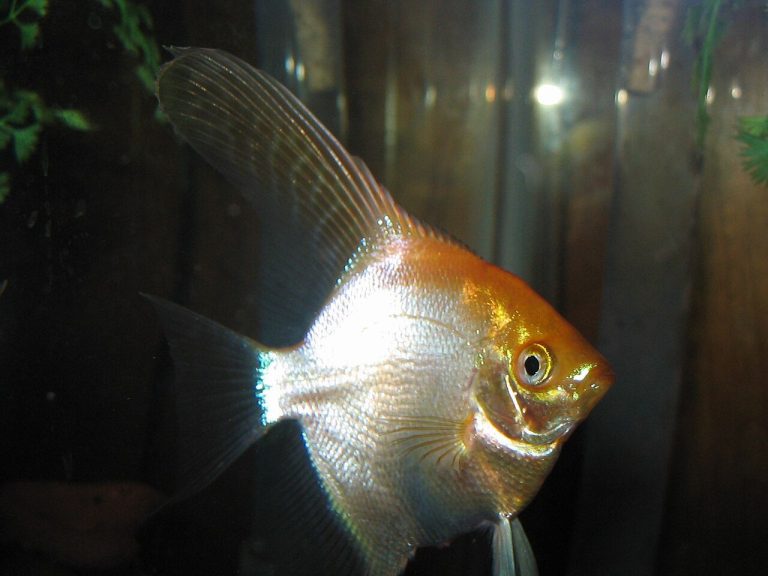
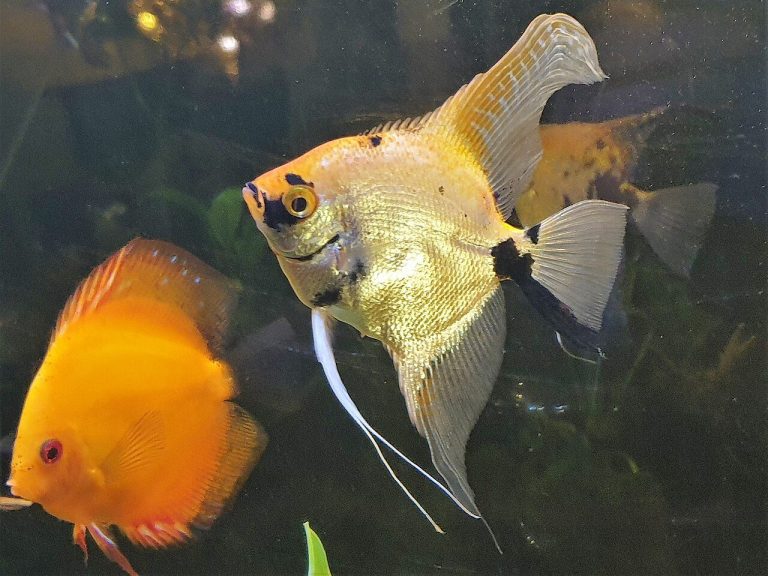
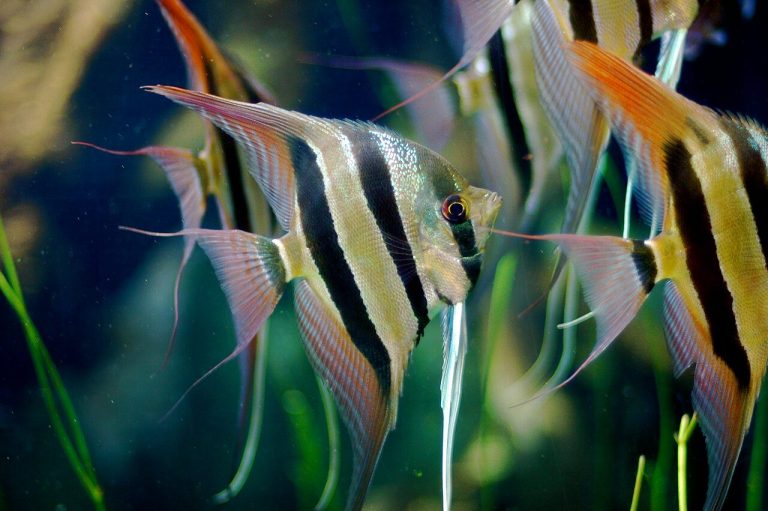
At a glance: Freshwater angelfish (Pterophyllum scalare)
- Temperature
- 76–84°F (24–29°C)
- Water pH
- 6.0–7.5
- Adult size
- 6 in long, 8 in tall (15 × 20 cm)
- Minimum tank
- 30 gal for a pair, 55 gal tall for a group
- Group size
- Pair or group of 5+
- Temperament
- Semi-aggressive, territorial when breeding
- Diet
- Omnivore: pellets, flakes, frozen bloodworm and brine shrimp
- Lifespan
- 10–12 years
Keeper’s tip: Choose a tall tank; height matters more than length for a fish that grows taller than it is long.
What is an Egg Bound Angelfish?
To understand why a female Pterophyllum scalare becomes egg bound, we have to look at the process of vitellogenesis. This is the biological stage where yolk is deposited into the oocytes (developing eggs).
During a normal breeding cycle, the female’s body produces eggs that move toward the vent for release. If environmental or physical factors interrupt this, the eggs remain inside, increasing intraperitoneal pressure.
If the eggs are not released or naturally resorbed through a process called oocyte atresia, they can begin to decay. This internal decay often leads to secondary bacterial infections or even the formation of an ovarian cyst.
Pro Tip: Don’t confuse a well-fed fish with one that is egg bound. A healthy female will show a gentle curve after a meal, but an egg bound fish will have a distinct, asymmetrical bulge that persists even if you skip a day of feeding.
How to Identify Symptoms of Egg Binding
The most obvious sign is a significantly distended abdomen that looks “lumpy” rather than just full. You might also notice the ovipositor—the small tube between the ventral fins—is visible but nothing is coming out.
Behavioral changes are equally important to watch for in your aquarium. An egg bound angelfish will often become lethargic, hovering near the surface or hiding in the corners of the tank.
As the condition progresses, the fish may lose its appetite and exhibit labored breathing. The pressure on the internal organs can also affect the swim bladder, causing the fish to struggle with its buoyancy.
| Symptom | Egg Bound Appearance | Normal Bloating Appearance |
|---|---|---|
| Abdominal Shape | Sharp, asymmetrical, or lumpy bulge. | Smooth, rounded, and symmetrical. |
| Ovipositor | Extended but no eggs produced for days. | Usually retracted or only visible during spawning. |
| Appetite | Refusal to eat or very picky. | Eager to eat (often the cause of the bloat). |
| Activity Level | Lethargic, hiding, or gasping. | Active and swimming normally. |
Common Causes of Egg Binding in Angelfish
In my experience, the most frequent cause of an egg bound angelfish is a lack of a suitable environment or partner. If a female is ready to spawn but doesn’t feel the tank is safe, she may hold onto her eggs.
Stress from aggressive tank mates or poor water quality can also trigger dystocia. High nitrates or fluctuating temperatures can disrupt the hormonal signals needed for a successful spawn.
Dietary deficiencies, particularly a lack of fiber or essential minerals, can also play a role. If the fish is slightly constipated, the resulting pressure can physically block the passage of eggs.
The Importance of Water Parameters
Angelfish are sensitive to their environment, and breeding females are even more so. If the water is too hard or the pH is too high, the female may struggle to complete the spawning process.
Maintaining a consistent environment helps the fish feel secure enough to lay. You can learn more about the specific water parameters angelfish need to stay healthy and avoid reproductive stress.
Effective Treatments for an Egg Bound Angelfish
If you have confirmed your egg bound angelfish is in distress, the first step is to check your water. Perform a 25% water change to reduce nitrates and provide a fresh, clean environment.
One of the most effective treatments for dystocia is the use of Magnesium sulfate, commonly known as Epsom salt. This acts as a muscle relaxant and can help the female pass the eggs by reducing internal swelling.
To use Epsom salt, I recommend a dosage of 1 to 2 teaspoons per 5 gallons of tank water. Help you use pure Epsom salt with no added scents or oils to avoid harming the fish.
Pro Tip: When treating with Epsom salt, always dissolve it in a separate container of tank water before adding it to the aquarium. Adding crystals directly can cause a localized osmotic shock if they land on the fish’s skin.
Temperature and Diet Adjustments
Raising the temperature slightly can also help. Increasing the tank to about 82°F (28°C) speeds up the fish’s metabolism and can encourage the natural release of eggs.
Stop feeding heavy proteins like bloodworms for a few days. Instead, try feeding deshelled boiled peas, which act as a natural laxative and can help clear any intestinal blockages that might be contributing to the pressure.
How to Prevent Your Angelfish from Becoming Egg Bound
Prevention is always better than a cure, especially when it comes to the delicate reproductive system of a cichlid. Providing a spawning slate or a broad-leafed plant gives the female a designated place to lay her eggs.
Ensuring you have a compatible pair is also vital. If you are trying to pair up angelfish, make sure the female feels comfortable with her chosen mate.
A diverse diet is the final piece of the puzzle. Rotate between high-quality flakes, pellets, and frozen foods to make sure she has all the nutrients required for healthy egg development.
| Parameter | Target Range |
|---|---|
| Temperature | 80°F – 82°F (26.5°C – 28°C) |
| pH Level | 6.5 – 7.0 |
| Water Hardness | 3 – 8 dGH |
| Nitrate | Below 20 ppm |
| Decor | Vertical slates or Amazon Sword plants |
When Is It Too Late?
Unfortunately, not every case of an egg bound angelfish can be resolved at home. If the swelling becomes extreme and the fish begins to pine (scales sticking out like a pinecone), she likely has dropsy.
Dropsy is usually a sign of organ failure resulting from the long-term infection caused by decaying eggs. At this stage, the prognosis is very poor, and humane euthanasia may be the kindest option.
However, many fish recover if the hobbyist catches the symptoms early. If you keep a stress-free environment and using Epsom salt, you give your angelfish the best chance at a full recovery.
Quick answers
Can a female angelfish lay eggs without a male?
Yes, a female can and often will lay eggs without a male present. However, without a male to fertilize them, the eggs will not hatch and will eventually turn white and grow fungus.
How long can an angelfish stay egg bound?
It varies, but a fish can survive in the early stages of being egg bound for several days to a week. Once internal infection or organ pressure becomes severe, the situation becomes critical within 24 to 48 hours.
Can I manually squeeze the eggs out?
I strongly advise against this for anyone who is not a professional aquatic veterinarian. Angelfish are very delicate, and the risk of causing internal bruising, rupturing the swim bladder, or damaging the ovaries is extremely high.
Does Epsom salt affect other fish in the tank?
In the recommended dosages (1-2 tsp per 5 gallons), Epsom salt is generally safe for most freshwater community fish and plants. It is much gentler than standard aquarium salt (Sodium chloride).
Final Thoughts on Managing Egg Bound Angelfish
Dealing with an egg bound angelfish is a challenge that many experienced breeders have faced. It serves as a reminder that successful fish keeping is about more than just feeding; it is about providing a holistic environment that supports every stage of life.
If you keep your water clean, monitoring for lumpy abdominal swelling, and having Magnesium sulfate on hand, you are well-equipped to handle this situation. Remember that a calm, stable environment is the greatest tool in your arsenal.
Stay observant, keep your parameters steady, and don’t hesitate to act if you notice your female angelfish looking “heavier” than usual. Looked after properly, she can overcome dystocia and return to being the majestic queen of your aquarium.

- 2003First tank
- 20+Years keeping
- 40+Tanks kept
- 0Sponsored picks
Howard set up his first 10-gallon planted tank in 2003 and lost half of it within six weeks. Two decades and more than forty aquariums later, he writes the guides he wished he had then: clear numbers, the reasons behind them, and what actually goes wrong in home tanks.