When Were Axolotls Discovered – Unearthing The Ancient Secrets
Axolotls (Ambystoma mexicanum) were largely “discovered” by the Western scientific world in the late 18th and early 19th centuries, though they had been known and revered by the indigenous peoples of Mexico, particularly the Aztecs, for centuries prior in their native habitat of Lake Xochimilco.
Welcome, fellow aquarists, to “Successful Aquarium”. Today, we’re diving deep into the unusual history of one of the aquarium hobby’s most unique and popular residents: the axolotl. These charming amphibians, with their perpetual smiles and feathery external gills, captivate everyone who encounters them. But beyond their adorable appearance lies a rich history and a astounding biology.
In my years of keeping a wide variety of aquatic creatures, few have sparked as much curiosity and conversation as the axolotl. Understanding their origins isn’t just a historical footnote; it’s key to appreciating their unique needs and ensuring their well-kept health in our home aquariums. Let’s start a journey to uncover not just when these incredible creatures were first recognized by the wider world, but also the profound significance of their existence.
At a glance: Axolotl (Ambystoma mexicanum)
- Temperature
- 60–64°F (16–18°C)
- Water pH
- 7.0–8.0
- Adult size
- 9–12 in (23–30 cm)
- Minimum tank
- 20 gal long for one
- Group size
- Alone or same-size adults
- Temperament
- Peaceful, no fish tank mates
- Diet
- Carnivore: earthworms, axolotl pellets, bloodworm
- Lifespan
- 10–15 years
Keeper’s tip: Water above 70°F stresses axolotls quickly; a fan or chiller is often needed in summer.
Tracing the Origins: When Were Axolotls Discovered?
The question of “when were axolotls discovered” isn’t as straightforward as pinpointing a single date. For the indigenous Nahua people of central Mexico, particularly the Aztecs, the axolotl was never “discovered” because it was always a part of their world. These unique salamanders, known scientifically as Ambystoma mexicanum, played a significant role in their mythology, cuisine, and daily life.
They were considered sacred, linked to the deity Xolotl – the god of lightning, death, and monstrous beings – from whom their name is derived. The Aztecs had a deep understanding of these animals, long before any European explorer or scientist ever laid eyes on them.
The first documented encounters by Europeans likely occurred during the Spanish conquest of Mexico in the 16th century. However, it wasn’t until much later that the axolotl entered the scientific consciousness of the Western world. Naturalists and explorers began to document the unique fauna of Mexico more systematically in the late 18th and early 19th centuries.
One of the earliest detailed scientific descriptions is attributed to French naturalist Georges Cuvier in 1806, who initially classified it as a type of fish due to its aquatic nature and external gills. This early classification highlights just how perplexing their unique biology was to scientists at the time. It took further study and observation for their true amphibian nature to be understood.
Pro Tip: Understanding Their Ancient Roots
When considering the axolotl’s “discovery,” keep in mind that true expertise in keeping them means acknowledging their deep cultural and biological history. This helps us appreciate why their native habitat and unique traits are so vital to their well-being, even today in our tanks.
The Axolotl’s Endemic Home: Lake Xochimilco and Ancient Cultures
The natural habitat of the axolotl is remarkably specific: the ancient lake systems of Mexico City, primarily Lake Xochimilco. This unique environment, characterized by its network of canals and “chinampas” (floating gardens), provided the perfect conditions for these perpetually aquatic salamanders. This endemic lacustrine habitat is a vital piece of their story.
For centuries, Lake Xochimilco was a bustling hub of biodiversity and human activity. The calm, relatively shallow, and nutrient-rich waters allowed axolotls to do well, forming a stable population alongside other aquatic life. The distinct conditions of these lakes contributed directly to the evolution of the axolotl’s most famous trait: neoteny.
The Aztec civilization, which flourished in the Valley of Mexico, relied heavily on these lake systems. Axolotls were not just mystical figures but also a sustainable food source. This long-standing relationship between humans and axolotls shows their deep integration into the region’s ecological and cultural fabric.
However, modern urbanization has dramatically impacted this delicate ecosystem. Lake Xochimilco has shrunk significantly, polluted, and fragmented, leading to a drastic decline in wild axolotl populations. Today, the axolotl is critically endangered in its native habitat, making captive breeding and responsible hobbyist keeping even more key for its survival.
A Biological Marvel: Understanding Axolotl Neoteny and Paedomorphosis
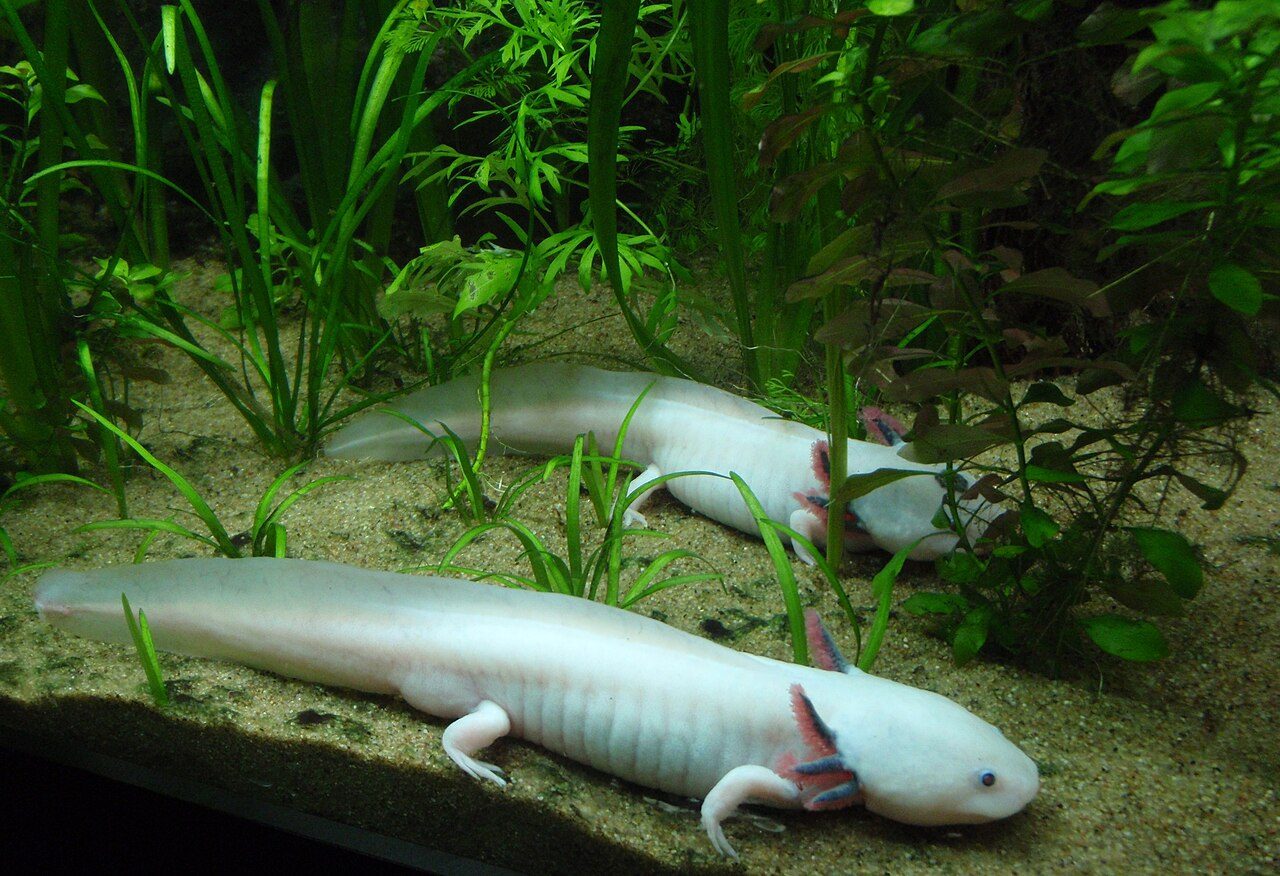
The axolotl’s lasting scientific fascination stems from its extraordinary biology, particularly its ability to retain larval features throughout its adult life. This phenomenon is known as neoteny, or more broadly, paedomorphosis. Unlike most amphibians, which undergo metamorphosis from an aquatic larval stage to a terrestrial or semi-aquatic adult, the axolotl remains fully aquatic, never losing its distinctive external gill rami.
These feathery gills, which are so characteristic of the axolotl’s wild-type phenotype and many captive color morphs, are a hallmark of its aquatic lifestyle. They are highly efficient at extracting oxygen from the water, allowing the axolotl to breathe underwater without developing lungs or other adult-stage respiratory organs. It’s a prime example of evolutionary adaptation to a stable, aquatic environment.
While axolotls typically remain neotenous, they do possess the genetic potential to metamorphose. This can occasionally happen naturally under extremely rare and stressful environmental conditions, or it can be artificially induced in laboratories through exposure to hormones like thyroxine. Thyroxine-induced metamorphosis transforms the axolotl into a terrestrial salamander, losing its gills and developing lungs, but this is not typical for the species and significantly shortens its lifespan.
This unique biological trait not only makes them incredibly interesting to scientists studying regeneration and development but also contributes to their distinctive appearance that hobbyists adore. As members of the order Urodela (salamanders and newts) and the family Caudata (tailed amphibians), axolotls stand out due to their permanent larval state.
Here’s a quick comparison to highlight their uniqueness:
| Feature | Axolotl (Ambystoma mexicanum) | Typical Salamander |
|---|---|---|
| Metamorphosis | Typically absent (neotenous) | Present, transforms from aquatic larva to terrestrial adult |
| Gills (Adult Stage) | Prominent external gills retained | Gills absorbed, lungs and skin used for respiration |
| Habitat (Adult Stage) | Fully aquatic | Terrestrial or semi-aquatic |
| Regenerative Abilities | Exceptional (limbs, organs, brain) | Good, but often less extensive than axolotls |
From Wild Waters to Home Aquariums: The Journey of the Axolotl
The journey of the axolotl from its ancient lake home to our glass boxes is another interesting chapter in its history. Once scientists understood their unique biology, axolotls became invaluable laboratory animals. Their incredible regenerative abilities, allowing them to regrow limbs, organs, and even parts of their brain, made them a prime subject for biomedical research.
This scientific interest led to extensive captive breeding programs, which ironically saved the species from extinction in the wild. While their numbers dwindled in Lake Xochimilco, sturdy populations were established in research facilities and, eventually, among hobbyists. This is why, despite being critically endangered, axolotls are relatively common in the pet trade today.
Bringing an axolotl into your home aquarium is a commitment to conservation. Each captive-bred axolotl represents a living legacy of its wild ancestors and proof of its enduring scientific and cultural significance. It’s a privilege to house such an extraordinary creature.
Common Mistake: Thinking They’re Tropical Fish
Many new hobbyists mistake axolotls for tropical fish or amphibians that can tolerate warm water. This is a critical error. Axolotls are coldwater creatures. Maintaining stable, cool water temperatures is essential for their health and longevity. Never house them with tropical fish or in warm tanks.
Caring for Your Living Relic: Essential Axolotl Husbandry
Keeping axolotls successfully requires specific care tailored to their unique needs. Drawing from my own experience, I’ve found that consistency and attention to detail are key. They are relatively low-maintenance once their environment is stable, but that initial setup is key.
Tank Setup and Water Parameters
Axolotls need cool, clean, and well-oxygenated water. A 20-gallon long tank is the minimum for a single adult, but larger is always better. When setting up a proper coldwater tank, keep in mind that temperatures should ideally be between 60-68°F (16-20°C). Higher temperatures can cause stress, fungal infections, and even death.
Substrate choice is also vital. Fine sand is generally safe, but bare-bottom tanks or large, smooth river stones are often preferred to prevent impaction, as axolotls tend to swallow whatever is on the tank floor while feeding. Filtration is essential, but avoid strong currents as they prefer still water. A sponge filter or a baffled hang-on-back filter works well.
Regularly testing and maintaining stable water parameters is non-negotiable. Ammonia and nitrites should always be zero, and nitrates kept below 20 ppm through consistent weekly water changes. A good water conditioner that neutralizes chlorine, chloramines, and heavy metals is also a must.
Diet and Feeding
Axolotls are carnivores and need a varied diet. In my early days, I mostly fed them pellets, but I’ve noticed a significant improvement in their vibrancy and health when I offer a mix. Their primary diet should consist of high-quality sinking pellets formulated for axolotls or carnivore bottom-feeders.
Supplement this with nutritious treats like earthworms (nightcrawlers are excellent), bloodworms, and occasional brine shrimp. When I first tried feeding my axolotls earthworms, I was amazed at how quickly they took to them. Avoid feeder fish, as they can carry diseases and parasites, and lack proper nutritional value. A dedicated article on feeding aquatic amphibians can provide more details.
Compatibility and Health
Axolotls are best kept alone or with other axolotls of similar size. They are opportunistic predators and will attempt to eat anything that fits in their mouths, including tank mates and even each other’s limbs! While their regenerative abilities are remarkable, constant nips from tank mates cause stress and can lead to infections.
Always monitor your axolotl for signs of stress or illness, such as curled gills, refusal to eat, or fungal growths. Early detection is key to successful treatment. For a comprehensive overview, refer to our axolotl care guide.
The Future of the Axolotl: Conservation and Responsible Keeping
The story of “when were axolotls discovered” is intertwined with their ongoing struggle for survival. From being revered by ancient civilizations to becoming a scientific marvel, their journey highlights both their resilience and vulnerability. Today, the future of Ambystoma mexicanum rests largely in the hands of conservationists and responsible hobbyists.
If you provide excellent care, advocating for their species, and supporting ethical breeding programs, we contribute to their continued existence. The knowledge we gain from understanding their natural history and unique biology empowers us to be better stewards of these incredible creatures.
Common questions About Axolotl Discovery and Biology
Q1: What is the scientific name for the axolotl?
A: The scientific name for the axolotl is Ambystoma mexicanum. It is a type of salamander belonging to the order Urodela.
Q2: Where are axolotls naturally found?
A: Axolotls are endemic to the ancient lake systems of Mexico City, primarily Lake Xochimilco and Lake Chalco, though Lake Chalco no longer exists.
Q3: What does “neoteny” mean in the context of axolotls?
A: Neoteny refers to the retention of larval characteristics in the adult stage. Axolotls remain in their aquatic larval form throughout their lives, retaining external gills and fins, and do not typically metamorphose into a terrestrial form.
Q4: Can axolotls really regrow lost limbs?
A: Yes, axolotls possess extraordinary regenerative capabilities. They can regrow lost limbs and also parts of their spinal cord, heart, brain, and other organs with remarkable precision and without scarring.
Q5: Are wild axolotls still found today?
A: Wild axolotls are critically endangered due to habitat loss, pollution, and the introduction of invasive species in Lake Xochimilco. While small populations may persist, they are extremely rare in their native habitat.
Q6: How long have humans known about axolotls?
A: Indigenous peoples of Mexico, particularly the Aztecs, have known about and revered axolotls for centuries, long before European scientists formally “discovered” and classified them in the late 18th and early 19th centuries.
Conclusion: Honoring the Axolotl’s Legacy
The answer to “when were axolotls discovered” is more than just a date; it’s a narrative that spans ancient civilizations, scientific breakthroughs, and the ongoing challenges of conservation. These magnificent creatures, with their eye-catching neotenous forms, are living relics of a bygone era and ambassadors for their dwindling wild cousins.
As aquarists, we have a unique opportunity and responsibility to provide a safe, healthy, and enriching environment for these incredible amphibians. Once you understand their history, respecting their biology, and diligently meeting their care requirements, we keep their well-being in our homes and also play a vital role in honoring their ancient legacy. Keep exploring, keep learning, and keep flourishing in your aquarium keeping.

- 2003First tank
- 20+Years keeping
- 40+Tanks kept
- 0Sponsored picks
Howard set up his first 10-gallon planted tank in 2003 and lost half of it within six weeks. Two decades and more than forty aquariums later, he writes the guides he wished he had then: clear numbers, the reasons behind them, and what actually goes wrong in home tanks.